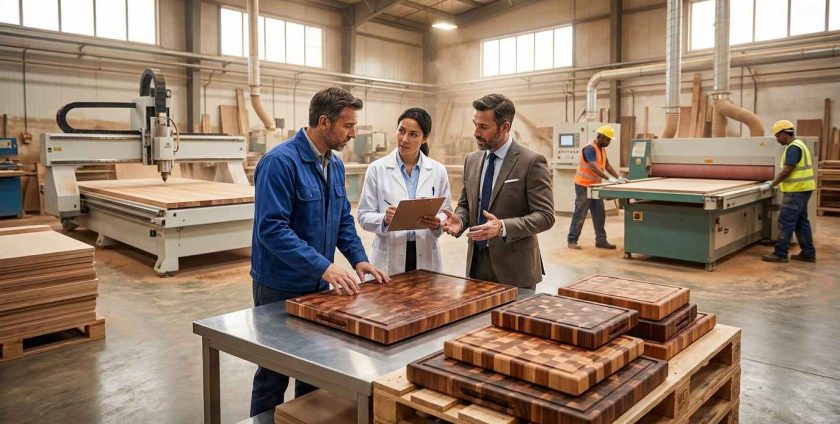
Choosing the right cutting board manufacturer can be more important than it first appears. For retailers, distributors, restaurant suppliers, and kitchenware brands, the manufacturer behind a product directly influences its consistency, appearance, durability, and overall customer experience. A cutting board may look simple, but producing one that performs well requires careful material selection, precise processing, proper drying, accurate assembly, and reliable finishing.
Among the different constructions available, an end grain cutting board has become a popular choice for customers looking for a durable and knife-friendly kitchen surface. Its distinctive construction places the wood fibers vertically, allowing the knife to move between the fibers rather than simply cutting across them. However, not every manufacturer produces boards to the same standard.
When sourcing from a manufacturer, buyers should look beyond product photographs and prices. The quality of the raw material, production equipment, moisture control, joining process, finishing system, and quality inspection can all affect the final product. A manufacturer with strong production capabilities can also offer greater flexibility when businesses need OEM, wholesale, or customized solutions.
What Makes a Quality End Grain Cutting Board?
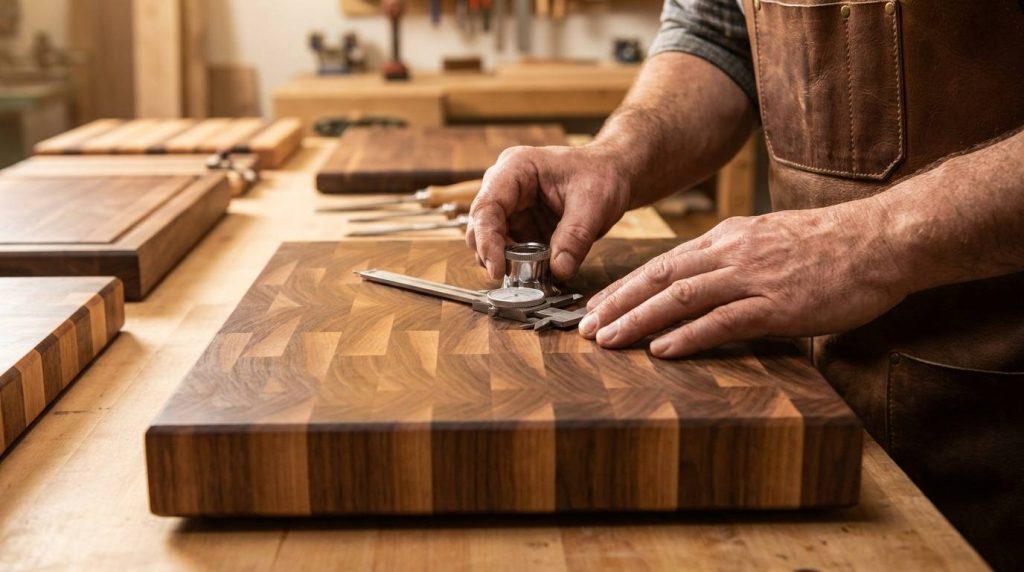
When evaluating Wood Cutting Boards, the first thing to examine is the construction itself. An end-grain board is made by arranging and joining sections of wood so that the cut ends of the fibers form the working surface. This construction can provide a durable cutting area while being relatively gentle on knife edges compared with some harder surfaces.
The quality of the joints is especially important. Individual wood blocks should fit together neatly, with clean and consistent seams. Poorly prepared pieces or inconsistent adhesive application can eventually create gaps or structural weaknesses. A manufacturer should therefore have a controlled process for cutting, assembling, pressing, and finishing each board.
Thickness also deserves attention. A board that is too thin may feel unstable during heavy food preparation, while an unnecessarily thick board can become difficult to handle. The ideal specification depends on the intended market and application, so manufacturers should provide clear dimensions and discuss available options.
Surface finishing is another important consideration. The board should feel smooth without appearing excessively coated. For products intended for direct food contact, the finishing materials and application process should be appropriate for their intended use. JLA, for example, lists food-grade oil finishing for its cutting board products, with both mahogany and acacia options available.
Visual consistency matters as well, particularly for businesses selling multiple units under one brand. Boards within the same production batch should have reasonably consistent color, grain appearance, dimensions, and finishing quality. A manufacturer capable of maintaining that consistency is easier to work with when building a recognizable product line.
Choosing the Right Wood for End Grain Cutting Boards
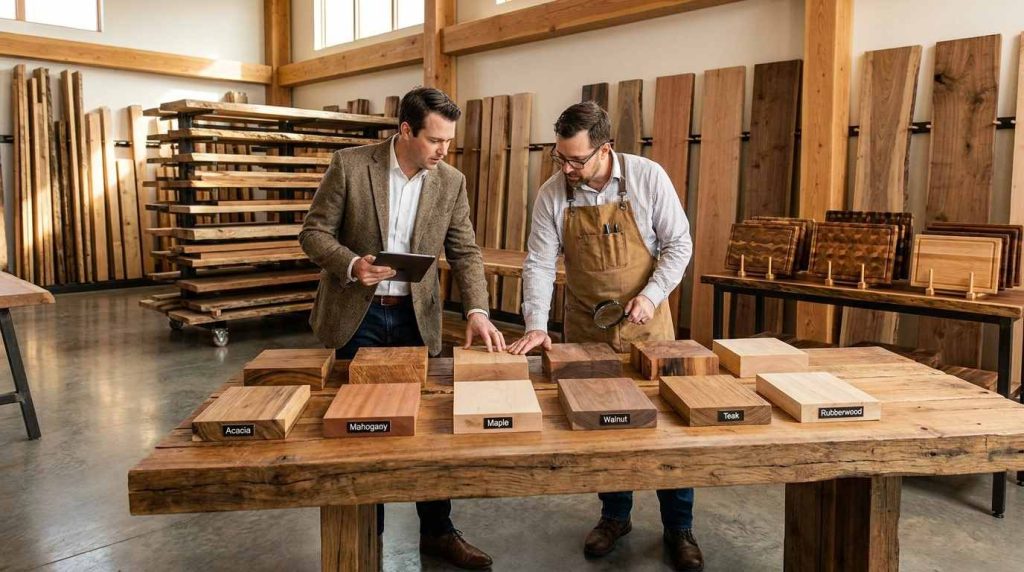
Wood selection can shape the performance and appearance of a cutting board. Different species have varying levels of hardness, grain structure, stability, color, workability, and moisture response. Therefore, a manufacturer should understand which materials are appropriate for the intended application.
Acacia, mahogany, maple, walnut, teak, and rubberwood are among the species considered for wooden cutting boards. Each has distinct visual and physical characteristics.
Acacia, for instance, is appreciated for its grain and durability, while mahogany offers warm reddish-brown tones and an elegant appearance. JLA’s cutting board range includes acacia and mahogany products, reflecting its experience in processing several Indonesian hardwood species.
Moisture content is just as important as species selection. Wood that has not been properly dried can experience dimensional changes after manufacturing. For a cutting board, this may result in movement, cracks, or warping over time. A dependable manufacturer should have procedures for drying and conditioning timber before production.
The source and condition of the lumber should also be considered. Clear, properly graded material makes it easier to produce boards with consistent appearance and structural quality. Buyers working with a manufacturer long-term should ask about material grading, sourcing practices, and how defects are identified before production.
The target market is also worth considering. A premium kitchenware brand may prioritize distinctive grain patterns and refined finishing, while a wholesale buyer may focus on consistent specifications, pricing, and production capacity. The best wood species is therefore not necessarily the same for every business.
For businesses comparing suppliers, reviewing experienced Wood Cutting Board Manufacturers can help clarify factors such as material quality, construction methods, finishing, craftsmanship, sustainability, and customization capabilities.
Manufacturing Standards and Quality Control to Consider
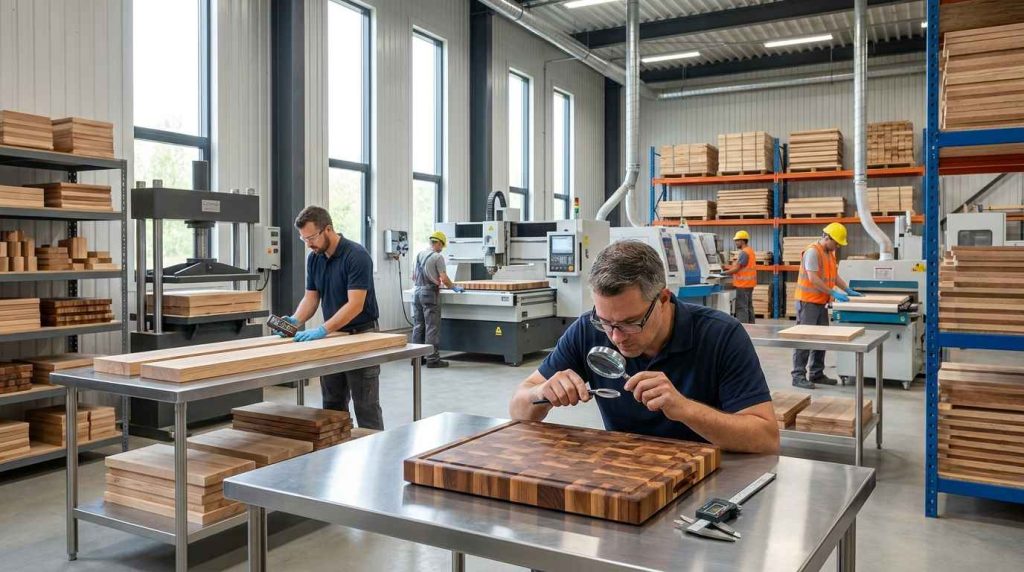
A manufacturer can use good wood and still produce an inconsistent product if production controls are weak. Quality control should therefore be considered throughout the manufacturing process rather than only during final inspection.
The process should begin with incoming material inspection. Lumber needs to be checked for dimensions, moisture content, visible defects, and suitability for the intended product. Once selected, the material can be processed into required components before assembly.
Precision is particularly important during end-grain production. Individual blocks need to be cut accurately so they can form a stable pattern. Uneven dimensions can create irregular joints or affect the finished surface. Modern machinery can improve cutting accuracy, but skilled workers and proper inspection remain essential.
Glue application and pressing also deserve attention. Adhesive should be applied consistently, while pressure and pressing time should be controlled according to the manufacturing process. After assembly, boards may require machining, sanding, edge profiling, and finishing.
Quality control should continue through each stage. A manufacturer should have a system for identifying products that do not meet agreed specifications before packing and shipment. Dimensions, surface smoothness, joint quality, appearance, and finishing should all be checked.
Packaging is another detail businesses sometimes overlook. Even a well-made board can arrive with damaged edges or surfaces if it is poorly protected during transportation. Manufacturers experienced in export or wholesale orders should understand the importance of packaging suitable for long-distance shipment.
These principles are also relevant when evaluating suppliers in other wood-product categories. Businesses exploring Engineered Hardwood Floor Manufacturers will find similar considerations, including material inspection, production consistency, modern equipment, quality control, and communication between manufacturer and buyer.
OEM, Wholesale, and Custom End Grain Cutting Board Options
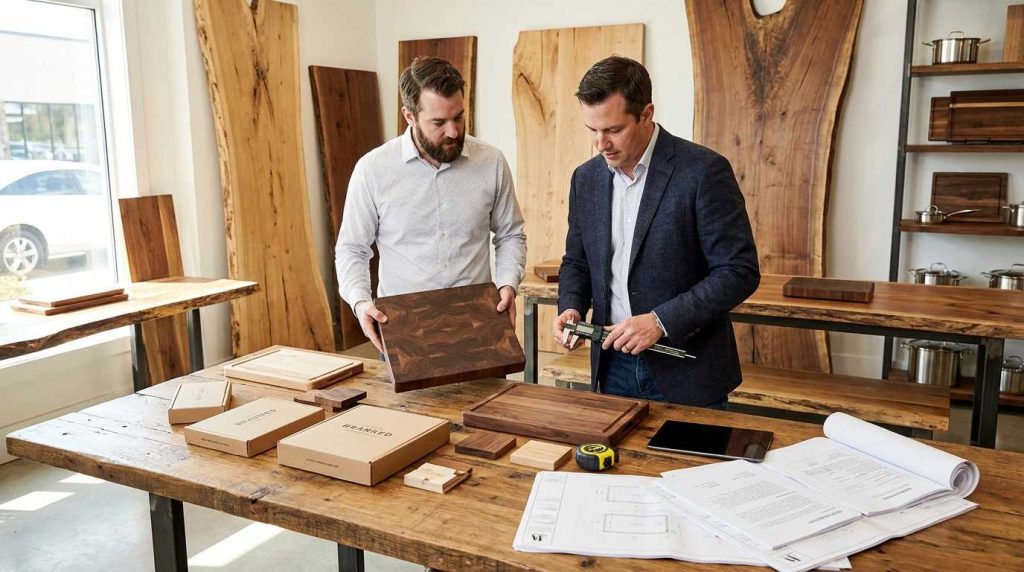
Not every buyer needs the same product. Retailers may need standard-sized boards for repeat orders, while restaurants may require larger professional-grade boards. Private-label brands may also need custom sizes, packaging, logos, or specifications.
OEM and customization capabilities can make these requirements easier to manage. Buyers should check whether a manufacturer can accommodate different wood species, dimensions, thicknesses, edge profiles, finishes, packaging, and branding.
Minimum order quantity is another important consideration. Large factories may require volumes beyond a smaller business’s needs, while smaller suppliers may lack the capacity to support growing brands. Finding a suitable balance can make long-term cooperation easier.
Sample approval is also valuable. A physical sample allows buyers to check the grain, weight, construction, surface, finishing, and overall appearance before ordering larger quantities. Clear communication about specifications, packaging, delivery schedules, and quality expectations can further reduce misunderstandings.
Jati Luhur Agung, established in Indonesia since 1974, has experience in wood flooring, components, and cutting boards. Its product range includes engineered three-ply products using species such as Hevea, Acacia, Teak, Sungkai, and Mahogany, offering broader sourcing possibilities for businesses looking for multiple wood products from one supplier.
How to Choose the Right End Grain Cutting Board Manufacturer

Choosing a manufacturer requires more than comparing products or prices. Start by checking its experience with wooden kitchen products and whether its production capabilities match your requirements. It is also useful to understand how well the manufacturer communicates during the sourcing process, especially when discussing specifications, samples, lead times, packaging, and delivery requirements.
Request samples and examine the joints, surface, edge finishing, dimensions, weight, grain, and overall workmanship. If you are sourcing mahogany products, experience as Mahogany Wood Cutting Board Manufacturers can also be an important consideration. Ask about timber selection, drying, processing, assembly, finishing, inspection, and packaging. A reliable supplier should have clear quality controls and procedures for handling products that do not meet agreed specifications.
Production capacity is important for long-term partnerships. Your supplier should be able to maintain consistent quality while supporting larger orders as your business grows. Sustainability can also be considered by asking about wood sourcing, production practices, and waste management. Jati Luhur Agung combines technology with environmental responsibility and processes Indonesian species including rubberwood, acacia, mahogany, Sungkai, and Merbau.
The same approach applies when evaluating Hevea Engineered Hardwood Floor Manufacturers, including material selection, construction, production technology, and quality consistency. JLA’s engineered three-ply range includes Hevea and other wood species. Reviewing these capabilities can help buyers understand whether a manufacturer has the technical resources and production experience needed to handle different wood products while maintaining consistent standards across orders.
With more than five decades of experience in wood flooring and components, Jati Luhur Agung operates in Semarang, Indonesia, and offers cutting boards alongside other wood products. This allows businesses to discuss different sourcing needs with one established manufacturer. Its experience across several wood species can also provide flexibility when buyers require specific materials, dimensions, finishes, or product configurations for different markets.
Ultimately, a suitable supplier should offer appropriate timber, consistent production, reliable quality control, customization, clear communication, and dependable capacity. Explore solutions and contact our team to discuss specifications, OEM requirements, wholesale orders, and long-term cooperation.
-

What to Look for in an End Grain Cutting Board Manufacturer
Choosing the right cutting board manufacturer can be more important than it first appears. For retailers, distributors, restaurant suppliers, and kitchenware brands, the manufacturer behind a product directly influences its consistency, appearance, durability, and overall customer experience. A cutting board may look simple, but producing one that performs well requires careful material selection, precise processing,…
-
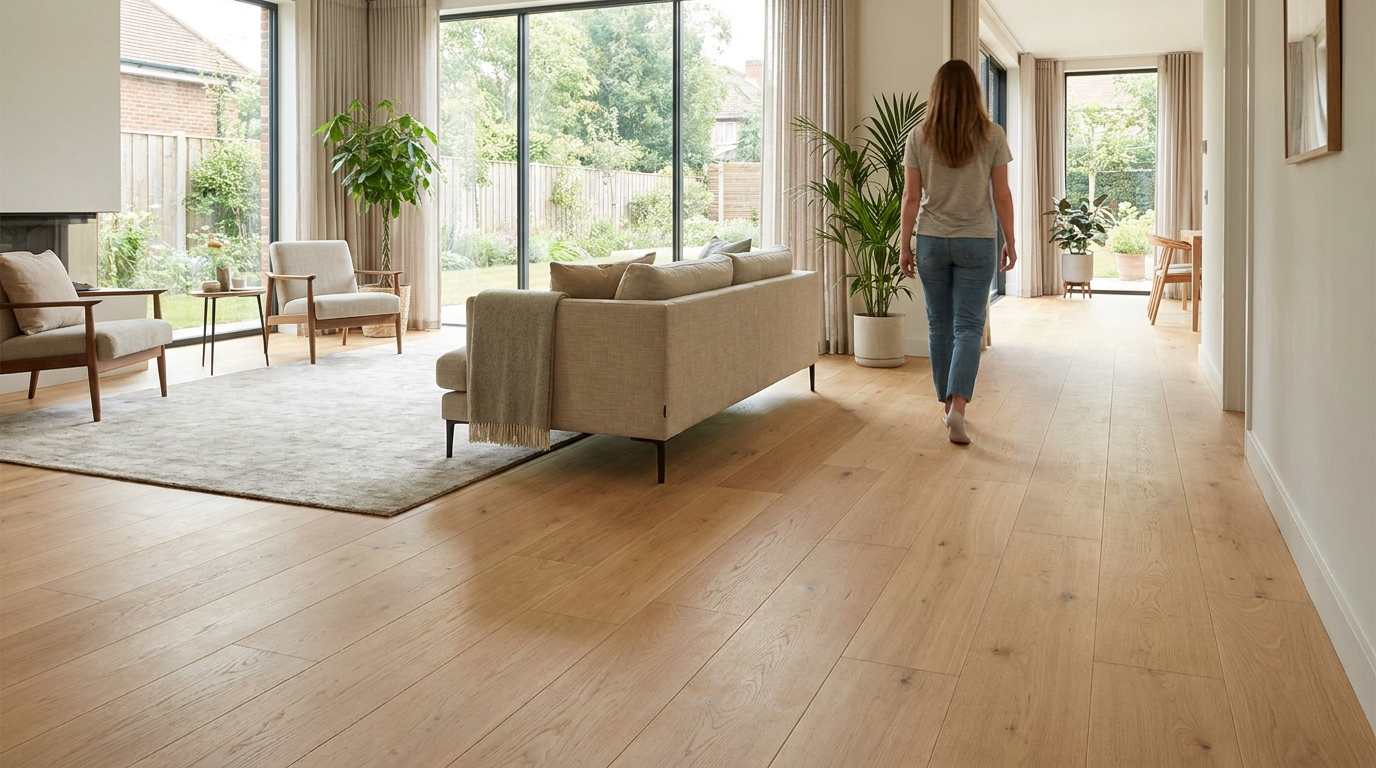
Hevea Engineered Flooring Tips for Better Performance and Longevity
Hevea engineered flooring can bring a warm, natural character to an interior while offering the practical structure needed for everyday use. Made with a real wood surface and engineered construction, this flooring can be a suitable choice for homes, offices, hospitality spaces, and other interiors where appearance and stability both matter. However, good performance does…
-

Amsterdam Engineered Wood Flooring for Commercial Projects
Amsterdam combines historic architecture with modern offices, hotels, restaurants, and retail spaces. Each setting has a different atmosphere, but flooring has to serve a common purpose: it should look good, cope with daily use, and remain practical to maintain. For designers exploring natural timber, Amsterdam engineered wood can offer a balance between visual character and…
- By:PT. Jati Luhur Agung
- Tags: board manufaturer, end grain cutting board, wood cutting board
- Category: Cutting Board
- 0 comment