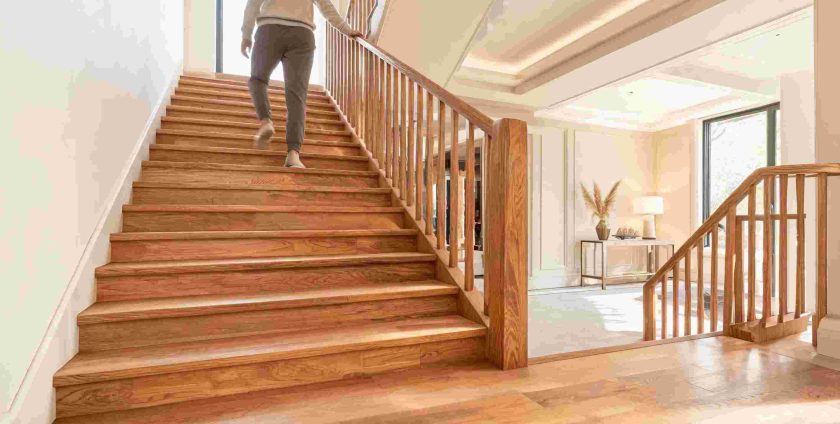
Stairs are more than a way to move between floors. They are a visible part of an interior and become architectural details people notice. Because they are used every day, the material chosen for a staircase needs to balance appearance, durability, safety, and maintenance. Natural wood remains a popular option because it brings warmth and character, but is engineered wood flooring on stairs a practical choice?
In many projects, it can be, provided the product is suitable for stair applications and installed according to the manufacturer’s recommendations. Engineered wood combines a timber surface with a layered construction. This gives designers the visual character of real wood while providing a stable flooring format for planned interiors.
Stairs have different requirements from flat floors. Each tread must handle repeated foot traffic, while the front edge or nosing receives concentrated wear. Risers also need careful detailing so the staircase looks consistent from top to bottom. For that reason, product selection, installation, and finishing should be considered together.
What Are the Best Options for Stair Flooring?
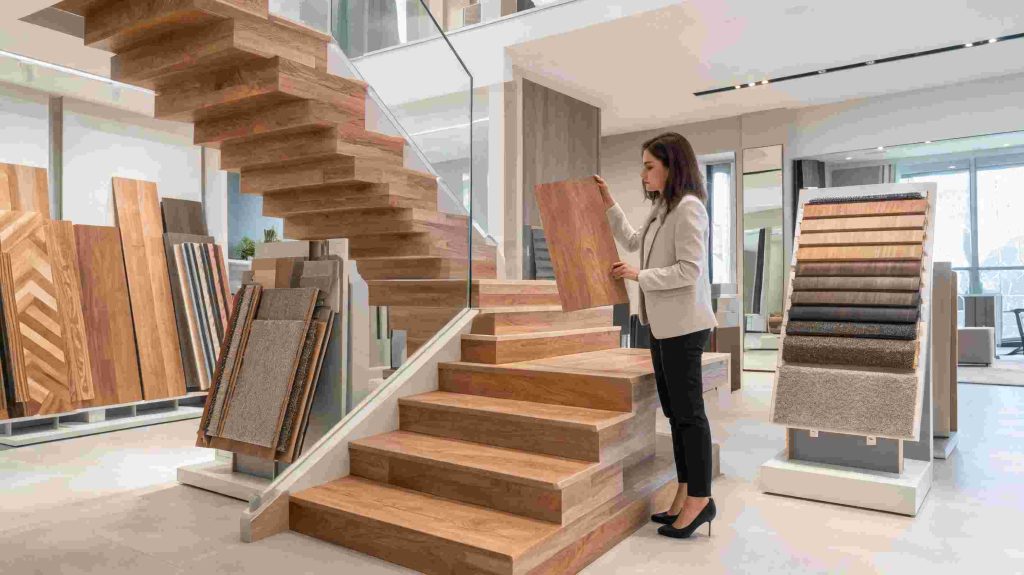
Several materials can be used for stairs, including solid hardwood, engineered wood, laminate, vinyl, and carpet. The appropriate choice depends on the property’s design, expected traffic, maintenance preferences, and the condition of the existing staircase.
Solid hardwood is valued for its natural appearance and substantial feel. Species such as teak, oak, mahogany, and other hardwoods can create a distinctive staircase with long-lasting visual appeal.
Depending on the product thickness, some solid timber can also be refinished when the surface becomes worn. However, solid wood can respond to changes in temperature and humidity, so proper installation and environmental conditions are important.
Engineered wood provides another way to introduce genuine timber into a staircase. Its construction generally combines a natural wood wear layer with supporting layers beneath it. When considering engineered wood flooring on stairs, homeowners should look beyond the colour and grain. Board thickness, wear-layer thickness, core construction, edge profile, compatible nosing, and installation method all matter. A product designed for a flat floor may not have the details required for stair treads and exposed edges.
Laminate is another alternative and can reproduce the appearance of wood at a different price point. It offers a wide range of patterns, but its surface is decorative rather than natural timber. Vinyl may be attractive where easy cleaning and moisture resistance are priorities, although slip resistance and stair-specific installation requirements should be checked.
For interiors where natural material and visual continuity are important, engineered wood remains worth considering. It can connect the staircase visually with flooring in hallways, living rooms, and upper-level spaces.
Ultimately, the best stair flooring is not simply the material that looks attractive in a sample. It should also be appropriate for the application, compatible with the staircase structure, and supported by a suitable installation and maintenance plan.
How to Install Engineered Hardwood on Stairs
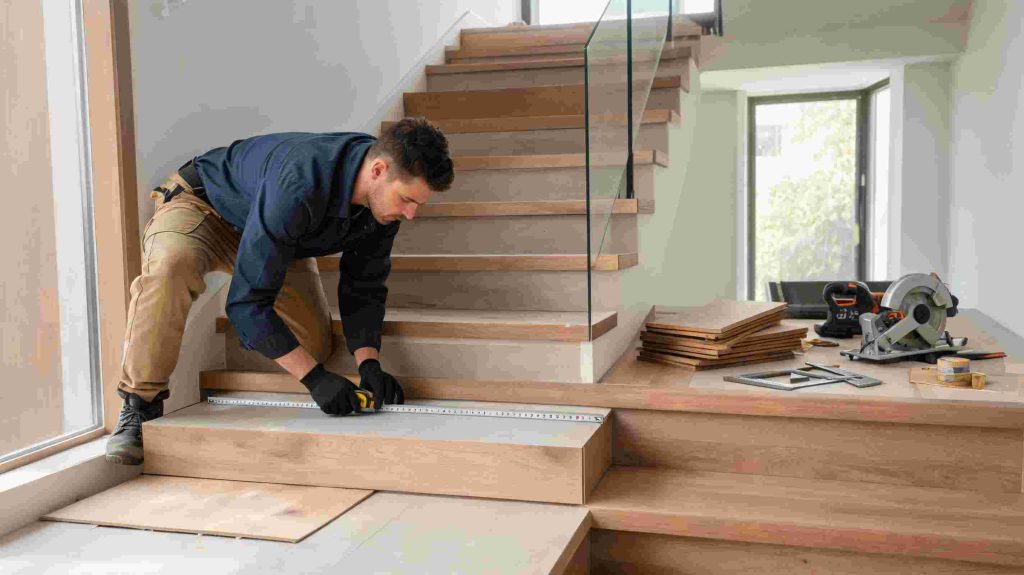
Installing engineered hardwood on stairs requires more precision than laying flooring across a level room. Every tread and riser needs to fit correctly, while the finished staircase must remain secure under repeated use. Professional installation is recommended, particularly when the existing staircase needs preparation or has an unusual shape.
The process begins by inspecting the structure. Treads and risers should be checked for movement, damage, unevenness, or loose components. Structural problems should be corrected before new flooring is installed. Covering an unstable staircase will not solve the underlying issue.
Each step should be measured individually because small variations can occur along the staircase. The installer must also account for flooring thickness, riser material, and the stair nosing. Consistent dimensions help maintain a clean appearance and comfortable movement.
After preparation, the flooring is cut to the required dimensions. Precise cuts are particularly important around walls, corners, and tread edges.
The fixing method should follow the manufacturer’s instructions. Depending on the product and staircase construction, an approved adhesive or specified fixing system may be required. A method commonly used for flat-floor installation should not automatically be transferred to stairs without checking compatibility.
The nosing deserves particular attention. It defines and protects the front edge of each tread, one of the areas most exposed to impact. Poorly fitted edges can affect the appearance and may create an unwanted change in the step profile.
Surface traction should also be considered. Wood can become slippery when excessively smooth, especially when dust or moisture is present. A finish suitable for the intended use should be selected, and an approved anti-slip solution may be considered where appropriate.
For anyone planning engineered wood flooring on stairs, communication between the manufacturer, designer, and installer is valuable. Before purchasing materials, confirm that the specific product is suitable for stair treads and risers, and clarify the available nosing, fixing method, finish, and maintenance requirements.
Good workmanship brings the entire system together. Even a high-quality product can produce a disappointing result when measurements are inaccurate or installation ignores the characteristics of the staircase.
Choosing the Right Finish for Your Staircase
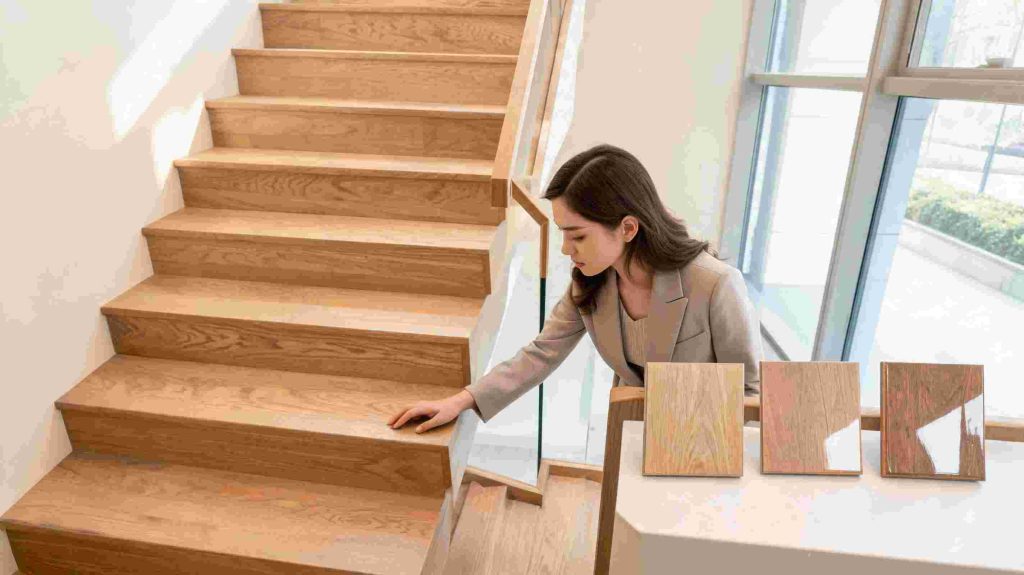
The finish can change the character of a wooden staircase. It affects colour, sheen, texture, and visual depth while also contributing to the way the surface handles everyday use. The decision should therefore consider both design and practical requirements.
A matte finish can emphasise the natural appearance of timber and suit understated contemporary interiors. Satin finishes provide moderate sheen and work well across many styles. Gloss finishes create a more reflective appearance, although they may make dust, scratches, and surface imperfections easier to notice.
Colour should be considered alongside the rest of the interior. Light timber can make a narrow staircase feel more open, while medium or darker tones can introduce contrast. The staircase does not have to match the adjacent floor exactly; a coordinated relationship can look more natural than trying to achieve identical colour.
Wood species also influence the final effect. Teak Engineered Wood Flooring can bring warm tones and distinctive grain to staircase surfaces, creating a refined appearance while retaining the dimensional stability associated with engineered construction. Acacia, mahogany, hevea, and sungkai provide different colour and texture, giving designers flexibility when developing a particular atmosphere.
Durability remains important. Stair treads experience frequent friction from footwear, while front edges can receive concentrated impact. A suitable protective finish can help the surface handle everyday wear, although no coating makes timber completely immune to scratches.
Some engineered products are supplied with factory-applied UV or polyurethane finishes. Performance depends on the specific product and manufacturing process, so the supplied finish should be confirmed as suitable for the intended application.
Maintenance should be considered before installation. Regular sweeping or vacuuming removes grit that can scratch the surface. Spills should be cleaned promptly with products approved for the selected finish, while excessive water, abrasive tools, and unsuitable chemicals should be avoided.
When evaluating engineered wood flooring on stairs, samples are useful. View them under the lighting conditions of the actual project and compare them with walls, doors, furniture, and adjacent flooring. This can reveal how the wood tone and finish will look outside a showroom.
A good finish should therefore support the interior design while remaining appropriate for traffic, cleaning, and maintenance requirements. This is another reason to evaluate engineered wood flooring on stairs as a complete system rather than as a decorative surface alone.
Why Choose Jati Luhur Agung for Your Flooring Project?
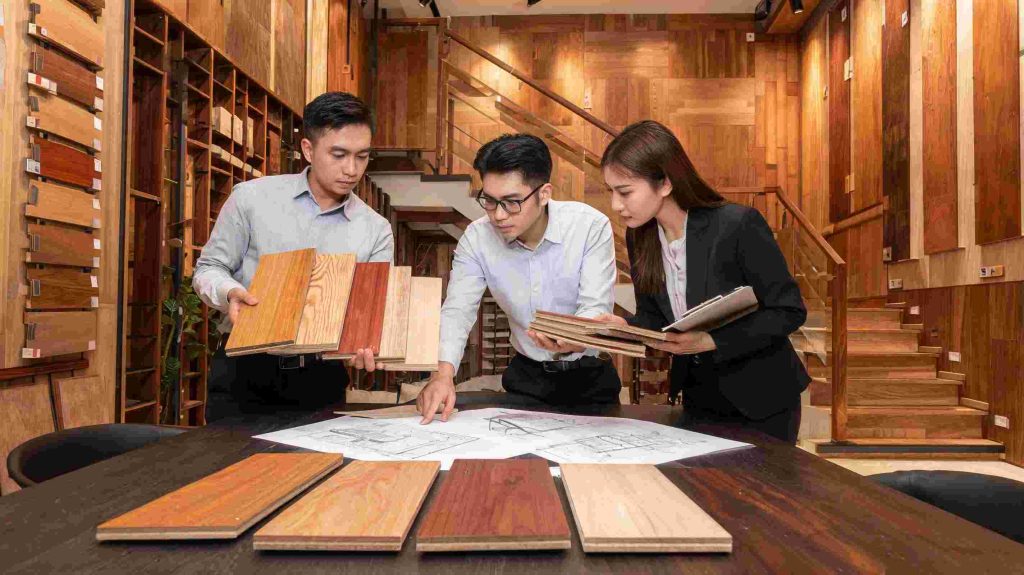
Choosing a flooring manufacturer is an important part of a wood flooring project. Product consistency, manufacturing experience, material selection, finishing capabilities, and technical information can influence the result. These factors become particularly relevant for stairs, where flooring must work with specific dimensions and exposed edges.
Jati Luhur Agung has been involved in the wood flooring and wood component industry for many years. The company offers flooring solutions using a range of Indonesian wood species and engineered constructions, giving architects, designers, developers, and homeowners several options for different interiors.
Its product range includes solid and engineered flooring in species such as teak, acacia, mahogany, hevea, and sungkai. Each species brings its own grain, colour, and character, allowing material selection to follow the project’s desired atmosphere. Jati Luhur Agung’s engineered flooring range includes three-ply construction options, including teak. Available specifications and finishing choices can help project teams consider the right balance between appearance and surface performance.
For a stair project, technical suitability should always be confirmed before materials are specified. Not every engineered board is designed for stair treads, risers, or exposed nosing. Details such as dimensions, thickness, nosing solutions, fixing systems, finish, and maintenance should be discussed with the manufacturer and installer before work begins.
For projects requiring engineered wood flooring on stairs, Jati Luhur Agung provides a starting point for discussing material and project requirements. Its experience in wood processing and flooring production gives customers access to different species, constructions, and finish possibilities.
To explore available flooring solutions, visit our official website and review the company’s engineered flooring collection. If you are planning a staircase, residential interior, commercial property, or architectural project, contact the team to discuss the wood species, construction, finish, dimensions, and application requirements that suit your project.
With carefully selected timber, the right finish, and precise installation, a staircase can connect the architecture visually as well as physically. Bring the warmth of authentic wood into every step and let your staircase become one of the details people remember.
-
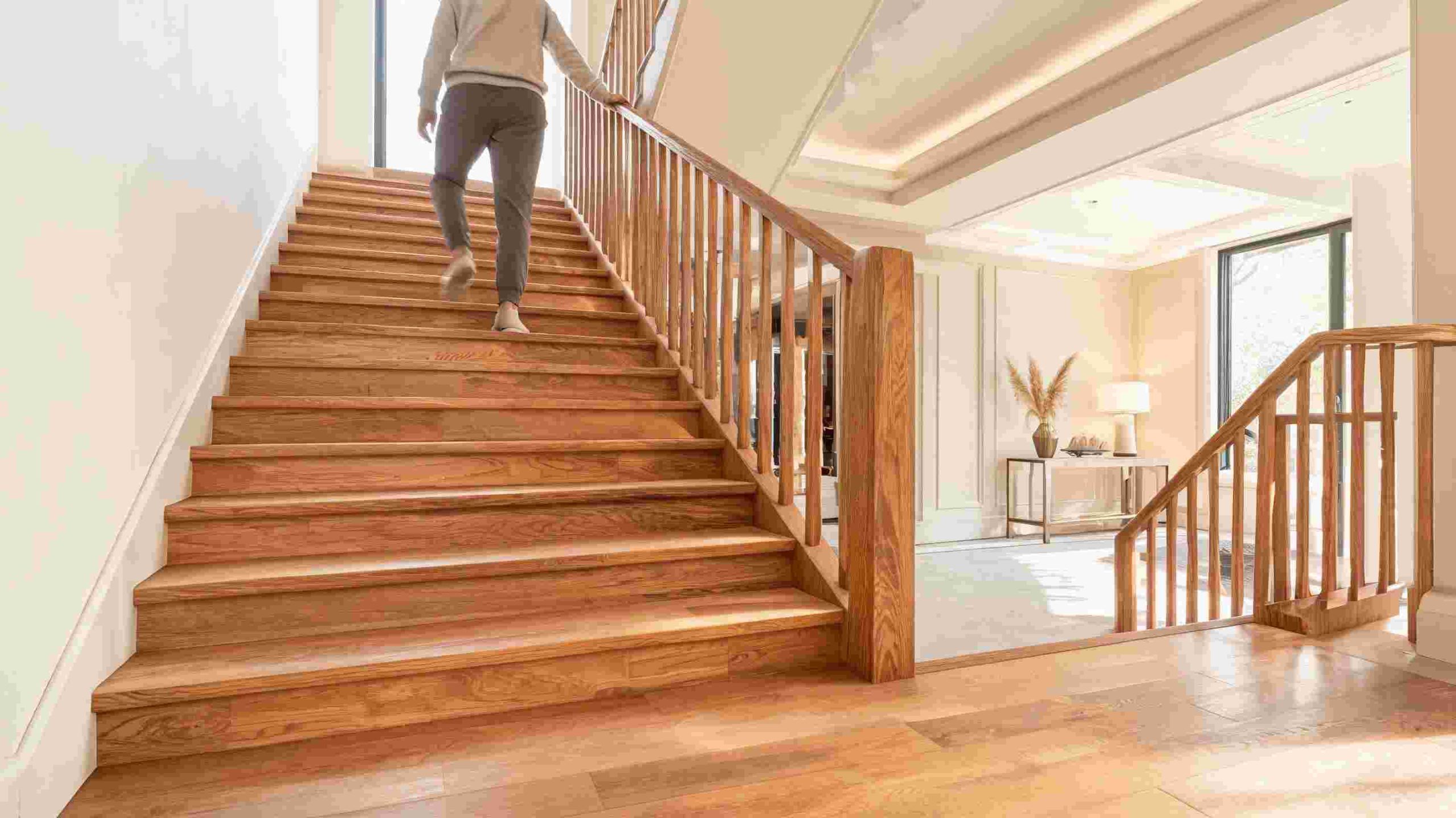
Is Engineered Wood Flooring Suitable for Stairs?
Stairs are more than a way to move between floors. They are a visible part of an interior and become architectural details people notice. Because they are used every day, the material chosen for a staircase needs to balance appearance, durability, safety, and maintenance. Natural wood remains a popular option because it brings warmth and…
-

Basketball Court Indoor Flooring for Commercial Sports Projects
When you walk into a premier athletic facility, the very first element that commands your attention is the floor beneath your feet. Beneath the squeak of high-traction sneakers and the rhythmic bounce of the basketball lies a complex engineering marvel specifically designed for safety, elite performance, and long-lasting durability. A basketball court is more than…
-
Extra Large Wooden Cutting Board for Everyday Prep and Entertaining
A good cutting board is more than just a surface for chopping ingredients. In a busy kitchen, the right board can make food preparation easier, more organized, and more enjoyable. Whether you are preparing vegetables for a family dinner, carving roasted meat for guests, or arranging ingredients before cooking, having enough workspace can make a…
- By:PT. Jati Luhur Agung
- Tags: engineered wood, stairs wood
- Category: Engineered Wood
- 0 comment