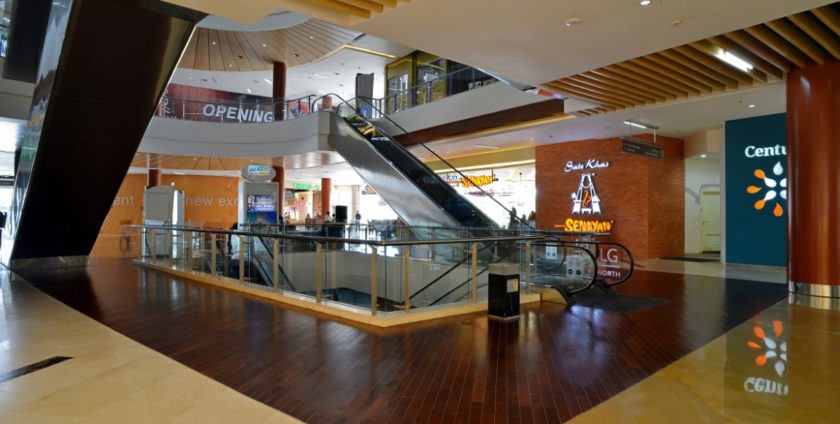
After receiving a significant amount of information, it’s now your opportunity to benefit from our services. When it is hardwood flooring that is in question, you have only Wood Parquet Flooring Industry, whom you can trust. Are you prepared for flooring that combines contemporary and traditional design elements? Then, read along to enjoy the beauty of artistic flooring.
There are several types of wood flooring based on its material, including solid wood flooring, engineered wood flooring, and laminated wood flooring. Now of the three types of wood floors, each has its uniqueness.
Beforehand, it is good to know the type of wood or product before placing it in your home. We have a list of products that you can pick from. With a list of every detail you need, take a look at our one of a kind product. We guarantee that our products will provide benefits and deliver excellent results.
Choosing wooden floors as part of the interior of a house or commercial building is indeed an attractive choice. Several patterns and colors can make the room look luxurious and elegant. The color of wood floors is not the only thing to consider when choosing them, the material is also important.
Whether you’re renovating a Victorian terrace in Birmingham, upgrading a kitchen-diner in Manchester, or installing underfloor heating in a London flat, engineered wood flooring sounds like the perfect answer. Real wood look. Better stability. Lower price than solid hardwood.
But the internet is full of horror stories: floors that gap, creak, warp, or fade within a year. Homeowners who spent £4,000 only to regret it six months later.
This guide is not here to sell you anything. It’s here to help you understand what engineered wood flooring actually is, what problems UK homeowners commonly run into and how to avoid them. By the end, you’ll know exactly whether it’s the right choice for your home.
What Is Engineered Wood Flooring? (And Why It’s Not the Same as Laminate)
Engineered wood flooring is made from real wood, but not entirely solid. Each plank has a top layer (called the wear layer or veneer) of genuine hardwood, typically oak, teak, or acacia, bonded over multiple cross-stacked layers of plywood or HDF (high-density fibreboard). This cross-grain construction is what gives it stability that solid wood simply can’t match, especially in the UK’s climate where central heating, damp winters, and varying humidity can wreak havoc on wood floors.
The Real Reason UK Homeowners Choose It and Problems They Don’t Expect
Engineered wood has grown rapidly in popularity across the UK, and the reasons are straightforward:
- More affordable than solid hardwood (typically £30–£80/m² vs £50–£120+)
- Dimensionally more stable, less likely to expand and contract with temperature changes
- Compatible with underfloor heating (UFH), which has become standard in UK renovations
- Works on concrete subfloors, which is common in UK homes
- Considered more eco-friendly, uses less premium timber per plank
But here’s where people go wrong. Most of those benefits come with conditions, and when the conditions aren’t met, the problems start.
The 5 Most Common Problems UK Homeowners Report
Problem 1: Gapping and creaking after installation. Usually caused by skipping the acclimation period. The boards need to sit in the room for 48–72 hours before fitting so they adjust to the humidity. Install them straight from a cold delivery van, and they’ll move after the fact.
Problem 2: Warping or lifting over underfloor heating. This happens when floor temperature exceeds 27°C, or when the system isn’t gradually commissioned after installation. Most manufacturers are clear on this limit, but not all fitters follow it.
Problem 3: Surface scratches that can’t be repaired. Cheaper engineered boards have a very thin wear layer (1–2mm). Once scratched or dented, there’s nothing to sand down. Always check the wear layer thickness before buying.
Problem 4: Fading in south-facing rooms. Direct sunlight causes UV fading in as little as six months. Many UK homes have bay windows or conservatory extensions, this is a real risk that needs to be planned for.
Problem 5: Water damage in kitchens. Engineered wood is more moisture-resistant than solid wood, but it is not waterproof. Spills around dishwashers, sinks, or washing machines that aren’t wiped up promptly can seep into the core and cause irreversible damage.
Will Engineered Wood Flooring Work With Your Underfloor Heating?
This is the number one question UK homeowners ask and it deserves a straight answer: yes, it can work. But not automatically, and not with every product.
Engineered wood is the most compatible wood flooring type for UFH systems because its cross-layered construction handles thermal expansion far better than solid wood. However, there are specific rules that must be followed:
Key Rules for UFH Compatibility
- Floor surface temperature must never exceed 27°C, because this applies even under rugs
- Board thickness should be between 14–18mm for optimal heat transfer
- After installation, wait 48 hours before commissioning the heating system
- When turning on UFH for the first time (or after summer), raise the temperature gradually, no more than 1°C per day
- Use a humidity range of 45–65% RH to prevent seasonal movement
- Avoid thick rugs, they trap heat beneath and can raise floor temperature beyond the safe limit
Engineered Wood vs Laminate: An Honest Comparison for UK Homes
At first glance, engineered wood and laminate can look almost identical once fitted. The price difference can be significant. So is the premium worth it?
Where Engineered Wood Wins
- Genuine hardwood surface: unique grain, natural variation, authentic feel underfoot
- Can be lightly sanded and refinished 1–3 times, extending its lifespan significantly
- Better long-term value if you plan to stay in the property
- Adds more to property resale value, estate agents and buyers know the difference
Where Laminate Has the Edge
- Lower upfront cost (£10–£30/m² vs £30–£80/m² for engineered)
- Some modern laminates have tougher surface scratch resistance (AC4/AC5 rated)
- Easier to replace individual damaged boards in some systems
The Bottom Line for UK Buyers
If you’re renovating a property you plan to sell within 5 years, or fitting out a rental, laminate may be a pragmatic choice. If you’re putting down a floor you expect to live with for 15–25 years, especially in a living room or open-plan kitchen-diner, and engineered wood is the better investment.
Solid Wood Flooring

As the name implies, solid wood floors are made of solid wood that have an expensive price. Solid wood is not ideal for tropical regions like Indonesia due to high humidity. It can expand and shrink with changing air temperatures, making it unsuitable for interiors.
This kind of floor covering typically comes in high density a thickness ranging from 15 mm to 18 mm and can be renovated after a certain period of use. But unfortunately, you cannot install solid wood floors just below the tank (below grade) and also cannot install them on concrete.
Besides many types of wood for wood flooring selection, solid wood flooring has various types of advantages. For example, when compared to wood density fiberboard, this wood made of wood chips is made to resemble plywood or heat so that it is not so durable with water spills.
Even though there is a positive side to medium density fiberboard wood or oriented strand board osb, it has a high density that is not easily bent or damaged and is too flexible. Fortunately, this wood is better known as a wood board that has good sound absorption so it is suitable for partitions in a music studio, not for the wooden floor of a building.
If you’re considering using solid wood flooring, one important thing to keep in mind is how durable it will be over time. Factors like foot traffic, humidity, and daily maintenance can affect its longevity. To make sure you choose the right one, you can learn more about how to test the durability of solid wood flooring so that your investment stays strong and beautiful for years to come.
Laminate Wood Flooring

Manufacturers create laminated wood flooring by pressing wood pulp together with glue and then laminating it with decorative patterned wood paper.
Same with solid wood, this type of floor is also not suitable in environments that have high air humidity. Especially when compared to the two types of wood above, this floor will sound hollow and look very inauthentic.
Laminated wood flooring is commonly made in bulk and when compared to other woods, it can be made with dimensional lumber.
Laminate flooring is a type of composite synthetic flooring. A core layer of plywood or fiberboard forms the base of the floor. In some cases, a backing layer or underlayment is added to the underside of this core layer for extra protection and insulation.
The laminate layer is glued on top of a layer of high-resolution images printed from real wood, stone, or other materials. Finally, a thin, transparent wear layer, made of plastic, is added to protect the bottom layer from damage.
Laminate flooring is a popular way to get the look of wood or stone flooring without having to pay the price of such flooring. While in the past it was known to look cheap and artificial, nowadays, it is considered durable, low-maintenance, and thanks to the increasing options for high-quality layers of incredible photorealistic images.
How to Maintenance Laminate Floor
Laminate floors are easy to maintain. Most floors will come with instructions from the manufacturers since the best method of care can vary depending on the materials used in construction. Otherwise, take the same precautions you would for any other floor: clean up spills and messes as soon as possible, put down rugs or mats in areas of high traffic, add pads to the bottom legs of furniture and try to avoid any activity or object that might scratch your floor.
Laminate floors are sensitive to water, so unless your floor has been waterproofed, try to avoid mopping regularly and stick to a once-a-month or every-other-month schedule. A damp mop is typically sufficient. In order to preserve and protect the wear layer, make sure any cleaning product you buy or DIY is safe for laminate flooring. Products that are oil-based, acidic or abrasive can damage the surface. Similarly, never polish or wax your floor.
Remember, laminate flooring cannot be refinished if it is damaged. Though minor scratches might be “fixed” by using a wax pencil or repair putty to fill in the scratch, anything more serious will typically require replacing the affected board entirely.
Engineered Wood Flooring

Create an awe-inspiring impression on your guests with the stunning elegance of your flooring by making this exceptional choice. It is perfect for industries, commercial and home purposes. This type of wood consists entirely of real wood, unlike the fiber wood used by some furniture manufacturers. The wood undergoes a multi-layer processing technique, typically consisting of 2-3 layers, resulting in a standard thickness of 14mm.
The advantages of this wood are relatively resistant to shrinkage and bending caused by the air temperature. This flooring is versatile enough to be directly installed on the ground or attached to concrete surfaces, as long as the underlying surface is level and smooth, without any bumps.
Indonesian Wood Flooring has various types of Engineered Hardwood commonly used for floors. Hardwood Engineering uses solid wood that has been processed with multi-layer technology. This types of engineered wood is commonly also known as Engineered Parquet.
And generally available with a thickness of 14 millimeters, and thinner than Solid Wood (Solid Timber). You can use Engineered Hardwood floors underground and stick directly to concrete. The only drawback is that manufacturers cannot finish most of these types of flooring anymore. These wood types include Hevea, Acacia, Mahogany, Teak, Sungkai and many more.
Engineered or composite wood products are available in different variety of sizes and measurements like laminated veneer lumber, glued laminated timber, finger jointed lumber, oriental strand board etc. It is utilized for rooftop and floor sheathing, solid structure, beams and the hull of boats.
This review objectively explores not only the environmental aspects of the use of different engineered laminate wood as a building material, but also their economic aspects, to understand their effect on sustainability.
Engineered wood, on the other hand, is a much more convincing replica of solid hardwood for the simple reason that the surface is genuine wood. Rather than being solid hardwood through-and-through, this laminated wood floors bond a relatively thin layer of true hardwood over a substrate of high-quality plywood. This gives the flooring good dimensional stability, and in certain applications it is an even better choice than solid hardwood flooring.
Along being more economical than solid wood flooring, engineered product is also a combination of various strong woods. The top layer is usually exposed for its beauty and the bottom layer will be supported by different woods that are more economical.
Engineered wood flooring is similar to laminated veneer lumber lvl. A plywood made from sheets of veneer called layers, joined together under pressure, and treated with an adhesive. Interestingly, this type of wood is always made in odd numbers and stacked with the grain direction strictly straight to each other.
What Makes Engineered Wood Floor One of The Best Wood?
- A quality engineered product is made from multiple layers that are cross stacked. This structure gives the the type of wood floor are so strength, durable, and moisture resistant.
- The top layer is instead usually made of layers wood solid wood flooring, so these two woods are a collaboration. If you want a lower price, you can choose quality wood but look more traditional. Jati Luhur Agung suggests consulting to the limit of the deal so that you get high quality wood.
- You will notice that wood has different wear layers between its ranges. The thicker the wear layer, the more often the wood will be sanded and the longer it will last.
- If you want wood with the best custom coating, we can provide that for you. Don’t be shy to chat further.
Best Rooms for Engineered Wood Flooring in a UK Home
Living Room (Excellent Choice)
Engineered wood thrives in living rooms: moderate foot traffic, controlled temperature, low moisture. This is where the aesthetic really pays off. For open-plan living areas, herringbone or chevron patterns in warm-tone oak are currently among the most popular choices in UK interiors.
Kitchen-Diner (With Precautions)
Engineered wood works well in kitchens as long as moisture is managed carefully. Use a fully glued-down installation method (rather than floating) for better stability, ensure good sealing around appliances, and wipe up spills immediately. Avoid fitting it right up to the edge of sink or dishwasher units without a proper seal.
Hallways (Choose Wisely)
High foot traffic and the UK habit of coming in from the rain means hallways need a board with a robust wear layer (4mm+) and a harder finish such as oiled or UV-lacquered. Wider planks in a durable species like oak or acacia work well here.
Bedrooms (Ideal)
Low foot traffic, stable humidity, and no moisture risk make bedrooms one of the best environments for engineered wood. Softer, warmer tones suit bedroom environments well.
Bathrooms (Not Recommended)
The persistent humidity and risk of standing water make bathrooms a poor choice for engineered wood. Wood-effect LVT (Luxury Vinyl Tile) is a far more practical option here.
Options of Choose Wood FLooring
Solid hardwood flooring is the epitome of originality, crafted entirely from real hardwood, such as white oak, maple, or other hardwood species. It boasts a thick wear layer, allowing for multiple sanding and refinishing cycles, making it a long-lasting investment. However, while solid hardwood is water-resistant to some extent, it may not be the best choice for extremely wet environments.
On the other hand, laminate flooring products offer a more affordable alternative, featuring a hardwood veneer on top of a plywood core. While they are resistant to water to a certain degree, excessive moisture can lead to damage. Solid hardwood floors can be sanded and refinished, which extends their lifespan, unlike laminate floors.
Thats great when engineered hardwood strikes a balance between solid hardwood and laminate. It consists of multiple layers, including a hardwood veneer on top, providing an authentic appearance. The plywood core adds stability and helps counteract the effects of moisture, making it more water-resistant than solid hardwood.
Although engineered floors can be sanded and refinished, the number of times is limited compared to solid hardwood. Ultimately, the choice between these options depends on factors like budget, desired aesthetics, and the environment in which the flooring will be installed.
There is also a wood flooring option that is quite appealing to some people, which is oriented strand board. This is an engineered hardwood panel made of wood chips arranged in a cross orientation and glued together with resin and glue.
Many claim that this type of wood is quite environmentally friendly when compared to natural wood. It uses 95% of a tree’s parts for raw materials and only 5% becomes waste.
The raw material for oriented strand board is sourced from timber under Forest Certification, making it safer and selective logging for trees that are no longer productive.
Than you can coat all of these wood options by using wood veneer made of wood with a thickness ranging from 0.24 mm to 3 mm. The purpose of using wood veneer is to make the surface of the material more flat and shiny. Therefore, whatever your choice of the three woods above, the selection of the right finishing and according to your needs will look perfect.
Please check out our photo gallery to see the images of our products. Our products stand apart from the rest in quality and texture. Finally, trust us if you want the best hardwoodflooring.
Can You Install Engineered Wood Flooring Yourself?
DIY Installation: What UK Standards Actually Require
British Standards (BS 8201) set out the baseline requirements for wood flooring installation in the UK. The two most commonly ignored rules are:
- Subfloor flatness tolerance of 3mm over a 1.8m span, if your subfloor has dips or bumps beyond this, the floor will creak, flex, and potentially fail
- Moisture content check, the subfloor must be within acceptable moisture limits before any wood flooring is laid
Skipping either of these steps is the most common cause of post-installation complaints. It’s not the floor that fails, it’s the preparation.
Three Installation Methods Explained
Floating floor: Boards are clicked together but not fixed to the subfloor. Easy to DIY, but less suitable for UFH as it reduces heat conductivity.
Glue-down: Full adhesive bond to subfloor. Better for kitchens and UFH, but much harder to DIY and difficult to reverse.
Nail/staple down: Used on timber subfloors. Provides a very stable, professional finish but requires specialist tools.
How Long Does Engineered Wood Flooring Last in a UK Home?
With proper installation and maintenance, engineered wood flooring in a UK home can last 25–50 years. But that range depends heavily on three factors:
- Wear layer thickness: 2mm = shorter lifespan; 5–6mm = significantly longer
- Installation quality: poorly prepared subfloors and missed acclimation shorten lifespan dramatically
- Ongoing care: correct cleaning products, avoiding steam mops, managing humidity seasonally
The refinishing potential of engineered wood is a key advantage. A board with a 4–6mm wear layer can be lightly sanded and re-oiled or re-lacquered, which effectively resets the clock on surface wear. Most UK homeowners find they can refinish once or twice over the floor’s lifetime, usually at the 10–15 year mark.
How to Extend the Lifespan of Your Engineered Floor
- Use felt pads under all furniture legs
- Place mats at all external doorways, especially important in the UK where mud and grit are a constant issue
- Keep indoor humidity between 45–65% year-round (a cheap hygrometer helps)
- Never use steam mops, the heat and moisture combination can delaminate the layers
- Use only manufacturer-approved cleaning products, oil-based or abrasive cleaners strip the finish
- Rotate large rugs periodically to ensure even UV exposure across the floor
Still have questions about underfloor heating, board thickness, or installation? Speak with our flooring specialists and get personalised recommendations based on your project.
-
Hevea Engineered Flooring Tips for Better Performance and Longevity
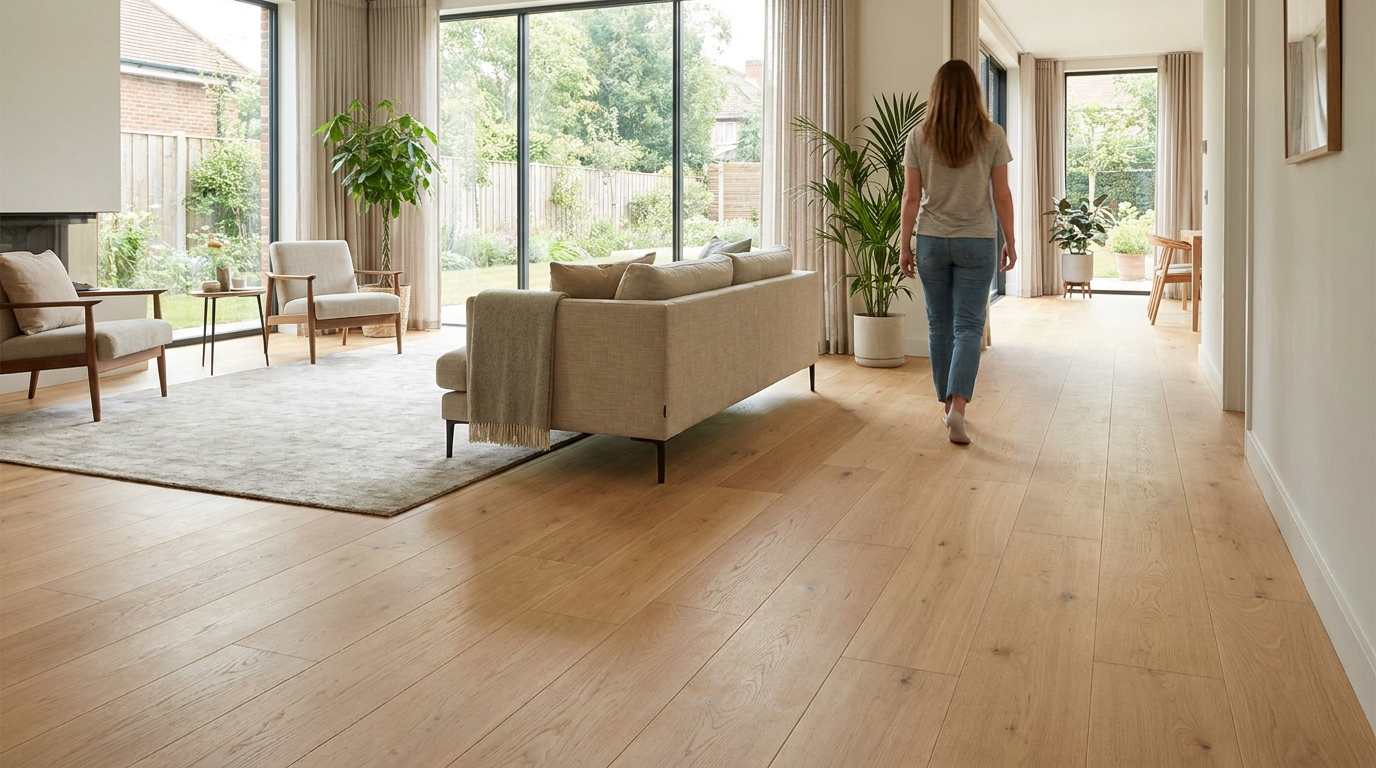
Hevea engineered flooring can bring a warm, natural character to an interior while offering the practical structure needed for everyday use. Made with a real wood surface and engineered construction, this flooring can be a suitable choice for homes, offices, hospitality spaces, and other interiors where appearance and stability both matter. However, good performance does…
-
Amsterdam Engineered Wood Flooring for Commercial Projects
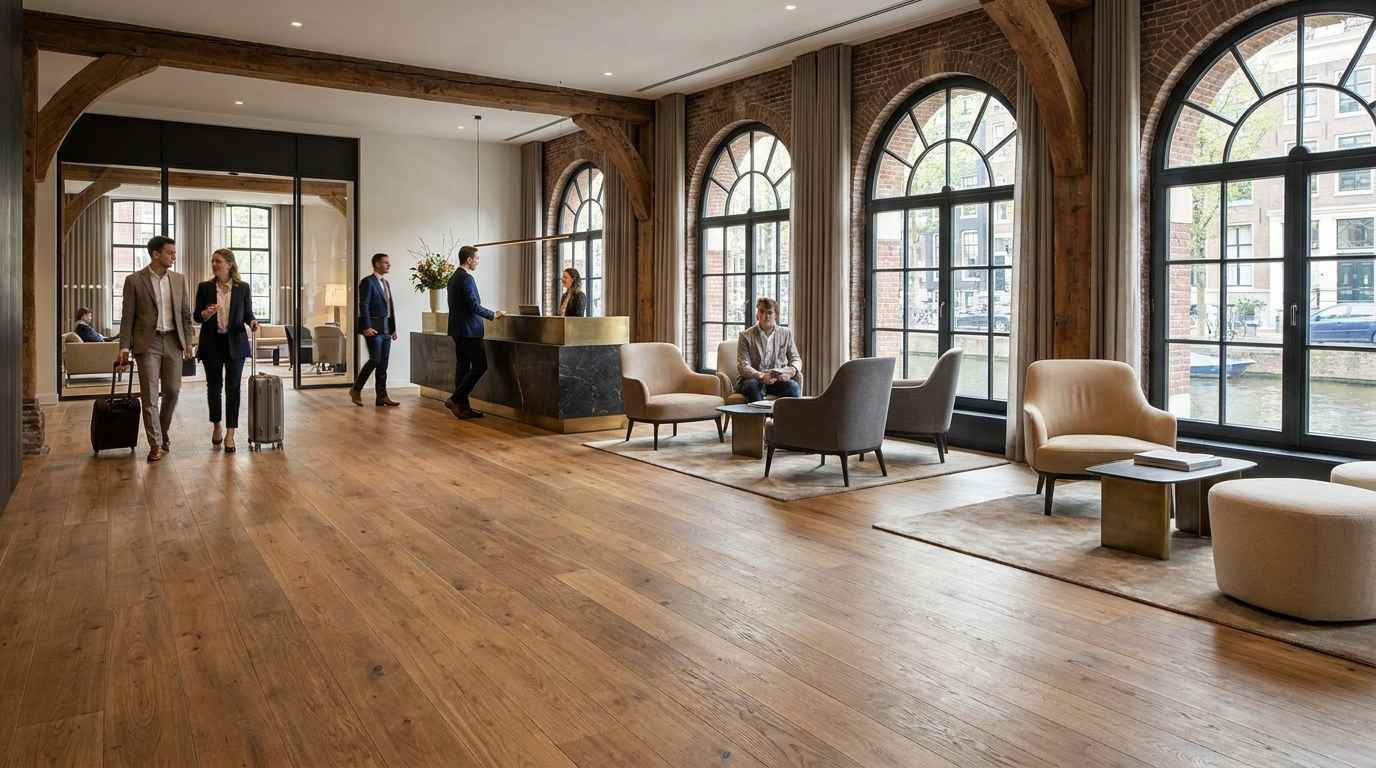
Amsterdam combines historic architecture with modern offices, hotels, restaurants, and retail spaces. Each setting has a different atmosphere, but flooring has to serve a common purpose: it should look good, cope with daily use, and remain practical to maintain. For designers exploring natural timber, Amsterdam engineered wood can offer a balance between visual character and…
-
Is Engineered Wood Flooring Suitable for Stairs?
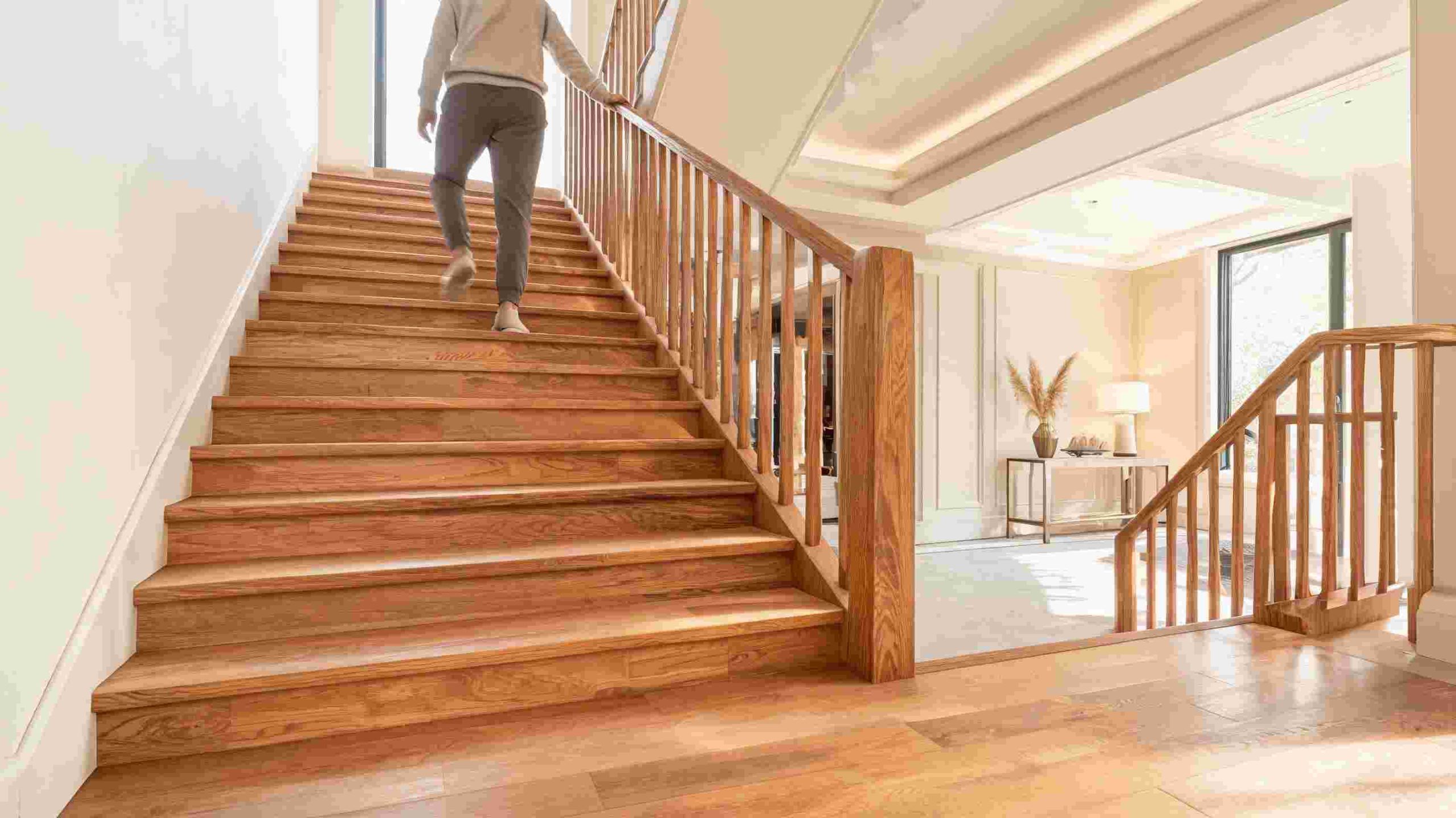
Stairs are more than a way to move between floors. They are a visible part of an interior and become architectural details people notice. Because they are used every day, the material chosen for a staircase needs to balance appearance, durability, safety, and maintenance. Natural wood remains a popular option because it brings warmth and…
- By:PT. Jati Luhur Agung
- Tags: engineered wood flooring, feature article
- Category: Wood Flooring
- 0 comment