
Wooden kitchen accessories remain popular with retailers and distributors seeking practical products with a natural appearance. Cutting boards are everyday essentials that can also complement a kitchen’s style. For wholesalers, thinner designs offer lightweight options that are easy to handle, store, and display. Sourcing these products in bulk requires more than comparing prices. Buyers need to assess wood species, thickness, dimensions, finishing, manufacturing consistency, and packaging. These factors affect product quality, customer satisfaction, and wholesale costs. Buyers sourcing thin wood cutting boards should compare specifications before ordering. Choosing a suitable manufacturing partner is equally important for repeat or customized orders. Understanding the considerations behind these products helps wholesale buyers define clear specifications, compare suppliers, and make purchasing decisions that support their target market.
Understanding Thin Wood Cutting Board Designs and Specifications
White oak is valued in interior design for its natural character and versatility. Its grain is often relatively straight, although cathedral patterns, mineral streaks, and other markings can occur. Depending on the cut and finish, the surface may look understated and modern or more expressive and traditional. This adaptability is useful in commercial interiors. A hotel may need a welcoming atmosphere, while an office may call for a clean, professional appearance. Retail spaces also benefit from materials that complement changing displays, furniture, and lighting.
Cutting boards come in different shapes, dimensions, thicknesses, and construction styles. Thinner boards are generally easier to handle and store, making them suitable for compact kitchens and practical retail collections. Before sourcing thin wood cutting boards, buyers should identify how the product will be used. Some are intended for food preparation, while others serve as breakfast, serving, or decorative boards. The intended use influences dimensions, material, and finish.
Thickness is a key consideration. A thinner board can use less raw material and weigh less, potentially helping with handling, shipping, and inventory management. However, reducing thickness too much may compromise stability. A board that is too thin can be more susceptible to bending, cracking, or warping, especially if exposed to changing moisture conditions. Dimensions should reflect the needs of the target market. Smaller boards are convenient for light preparation and compact kitchens, while larger designs provide more working space. Offering several sizes can help retailers serve customers with different preferences.
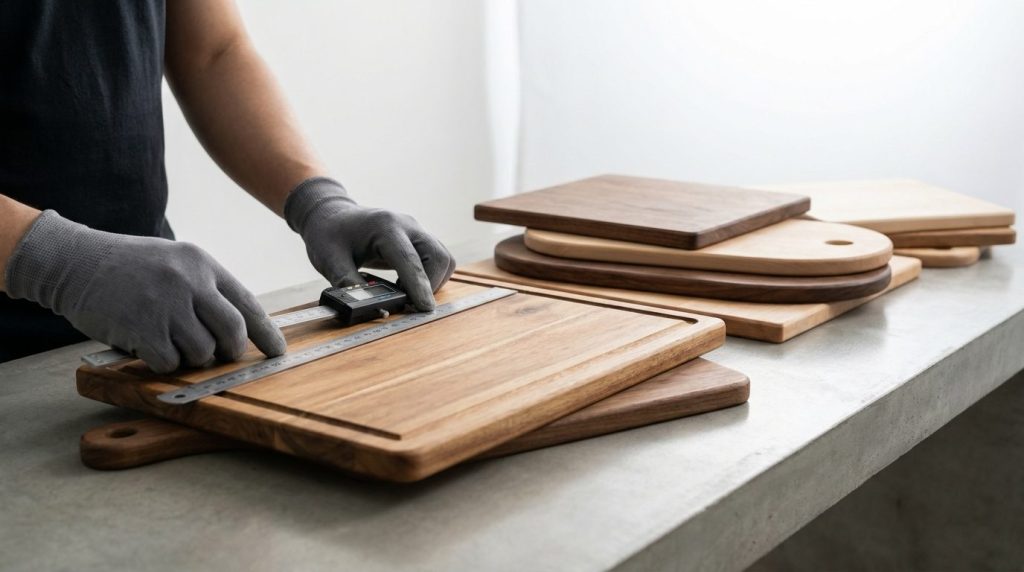
Shape and edge details affect appearance and usability. Rectangular, square, oval, and rounded designs offer different looks. Hanging holes and handles can add variation, but each feature should appear in the product specification. Surface quality matters as well. Buyers should look for smooth faces and edges, with no splinters, rough patches, or obvious defects. They should ask what finish is applied and confirm that it is suitable for the intended food-contact use. Before approving an order of thin wood cutting boards, document thickness, dimensions, tolerances, surface standards, and acceptable natural variations in grain and color.
Choosing the Right Wood for Thin Cutting Boards

Wood species influence a board’s appearance, hardness, density, grain pattern, and response to moisture. Selecting a material should therefore involve more than choosing a color that suits a product range. Buyers need to consider how the wood will perform in the intended application and whether the manufacturer can source it consistently.
Hardwood is often considered for kitchen accessories because of its strength and attractive grain. However, suitability for food preparation depends on the specific species, quality, construction, and finish. Acacia is one option worth exploring. Its varied grain and warm color can create a distinctive natural appearance. Acacia Wood Cutting Boards may appeal to retailers seeking visually distinctive kitchen products. Buyers should still assess the material’s moisture content, stability, surface quality, and suitability for the intended use. Mahogany is another category that may arise during sourcing. Businesses comparing Mahogany Wood Cutting Board Manufacturers should verify the exact species, origin, and product specifications. The term mahogany can refer to different species, so precise identification is important when comparing quotations and evaluating consistency.
Hardness also matters, softer woods may dent more easily, while very hard surfaces may affect knife edges. Grain orientation and construction influence appearance and dimensional behavior, so material selection and processing should remain consistent. Moisture content deserves particular attention. Wood naturally absorbs and releases moisture as its environment changes. If raw material is not properly dried and conditioned before production, the finished board may move after manufacturing. Wholesale buyers should request information about species identification, material preparation, moisture specifications, and inspection procedures before placing a large order.
Managing Warping Risks and Product Quality in Thin Wood Cutting Boards
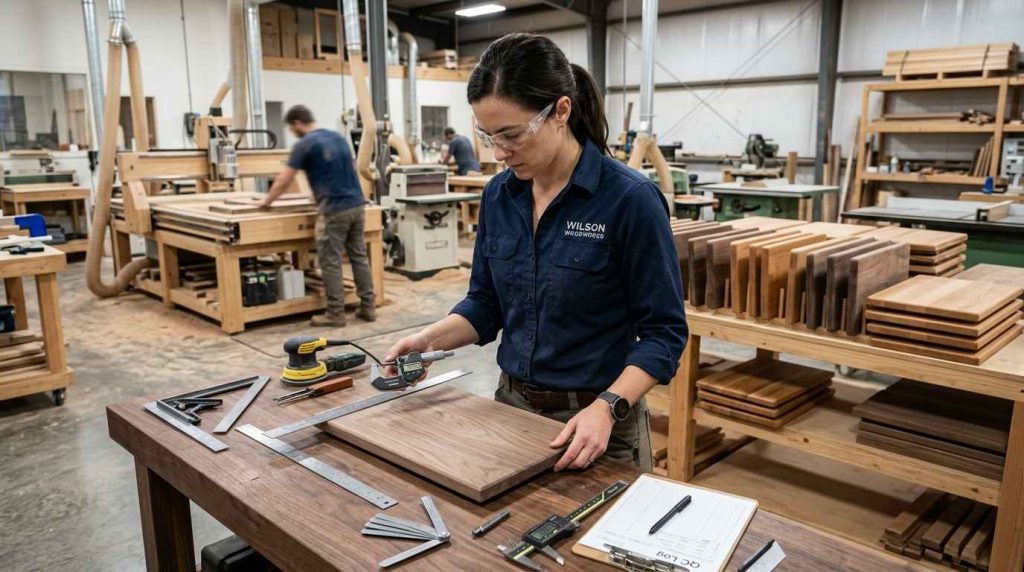
Warping is a concern with wooden products, and thinner boards can be more sensitive to uneven moisture exposure. Wood expands and contracts as its moisture content changes. If one side gains or loses moisture faster than the other, internal stress can cause a board to bend, twist, or lose its flat shape. For wholesalers, inconsistent quality can lead to complaints, returns, and extra costs. Agree on quality expectations before production begins.
Proper material preparation is an important first step. Wood should be dried and conditioned appropriately before cutting and shaping. Raw material inspection can also identify excessive defects, irregular grain, or unsuitable moisture conditions before they become problems in finished products.Consistency matters during cutting, sanding, shaping, and finishing. Ask how dimensions are maintained and batches inspected. Finishes must suit the intended food-contact application; buyers should confirm the materials used and follow their care instructions. Storage and packaging also affect product condition. Exposure to moisture or unsuitable warehouse conditions during transit and storage may affect wood before it reaches the retailer. Packaging should protect the boards while allowing the supplier and buyer to manage storage appropriately.
When evaluating thin wood cutting boards, establish inspection criteria for flatness, thickness, dimensions, smoothness, visible defects, and packaging. Requesting a physical sample before approving bulk production is a practical way to check whether the product matches the agreed specification.
Customization and Manufacturing Options for Wholesale Orders
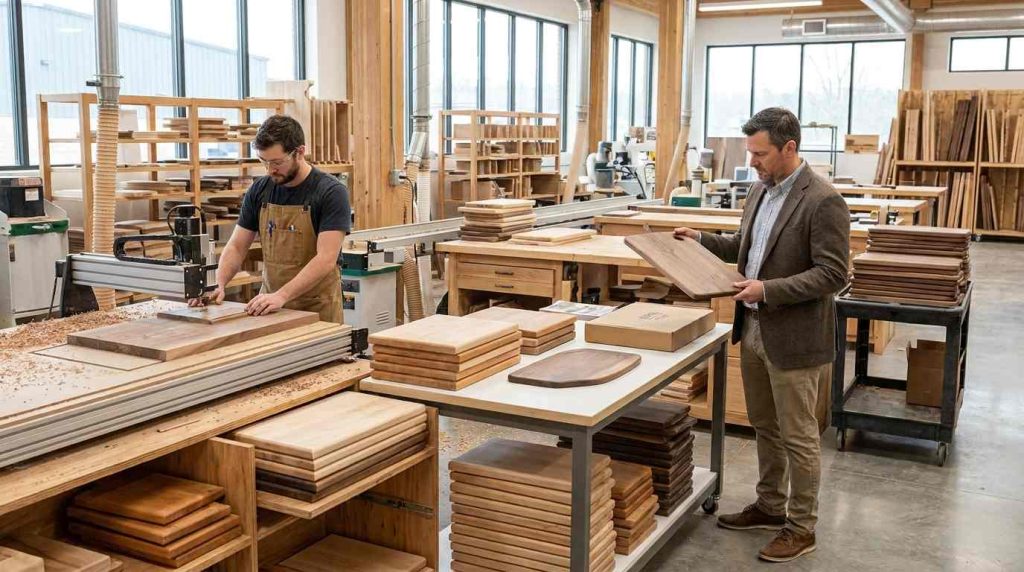
Customization helps wholesalers create products for their brand and customer base. Depending on the manufacturer’s capabilities, buyers can specify dimensions, shapes, finishes, and details.
Size and thickness are common starting points. Buyers can request dimensions that fit their intended market, packaging, and price positioning. A collection with several sizes may give retailers flexibility, provided each version is clearly specified and consistently produced. Rectangular, oval, and rounded designs create different visual styles.
Hanging holes, handles, and edge treatments are further options, provided they do not compromise function or quality For private-label orders, buyers may request engraved logos, labels, or customized packaging. Discuss artwork, placement, and costs before production. Material requirements should be documented as part of the customization brief. Specify the preferred wood species and agree on acceptable natural differences in grain and color. Since wood is not a uniform manufactured material, some variation is normal; written standards help both parties understand what is acceptable.
Buyers should also clarify minimum order quantities, sample costs, production lead times, payment terms, and the process for approving samples. Packaging needs, including protective wrapping, retail boxes, labels, and shipping cartons, should be discussed at the same time. For international orders, confirm that packaging is suitable for the planned transport and storage conditions. Drawings, reference images, and written specifications help reduce misunderstandings and give both parties a clear production reference.
How to Evaluate a Thin Wood Cutting Board Manufacturer

The right manufacturing partner can help a wholesale business maintain product consistency and manage repeat orders. Price matters, but it should be considered alongside material quality, production capability, quality control, and communication.
Start by reviewing the supplier’s experience with wood processing and similar products. Ask which species it can source, how materials are prepared, and what information it can provide about species identification and origin.
This is especially relevant when the same product must be reordered over time. Production capacity should match the expected order volume. Discuss available designs, customization capabilities, minimum quantities, estimated lead times, and how the supplier handles larger or repeat orders. Do not assume that a manufacturer can meet a particular schedule or specification until it has confirmed the details.
Ask about quality control. A supplier should be able to explain how it checks dimensions, thickness, flatness, surface finishing, and visible defects. Buyers should agree on inspection standards before production and clarify how nonconforming products will be handled. Samples are useful for assessing the actual material, finish, construction, and appearance of thin wood cutting boards. Where possible, request a sample made to the same specifications as the proposed bulk order. This gives both parties a reference point for production approval. Clear communication about specifications, costs, production, and delivery helps prevent misunderstandings. Keep approved product details documented for repeat orders.
Ultimately, evaluate suppliers as potential long-term partners rather than choosing solely on the lowest quotation. A clear specification, realistic production plan, and agreed quality standards create a stronger basis for wholesale purchasing.
Finding the right wooden product manufacturer is essential for maintaining product quality and consistency in wholesale businesses. From selecting suitable materials to ensuring reliable manufacturing processes, every detail contributes to the final product and customer satisfaction. For businesses sourcing thin wood cutting boards, choosing a manufacturing partner with a strong understanding of wood materials is equally important for long-term business growth.
With experience in Indonesia’s wood flooring industry since 1974, Jati Luhur Agung brings established expertise in hardwood flooring products and components. If you are looking for an experienced company in the wood industry, visit our website today to explore Jati Luhur Agung products and manufacturing expertise. Contact the Jati Luhur Agung team to discuss your wood product requirements and discover how its experience can support your next business project.
-

Sourcing Thin Wood Cutting Boards for Wholesale Buyers
Wooden kitchen accessories remain popular with retailers and distributors seeking practical products with a natural appearance. Cutting boards are everyday essentials that can also complement a kitchen’s style. For wholesalers, thinner designs offer lightweight options that are easy to handle, store, and display. Sourcing these products in bulk requires more than comparing prices. Buyers need…
-

Expert Hardwood Flooring Supplier: A B2B Buyer’s Guide
Choosing the right flooring partner is an important decision for distributors, importers, contractors, and commercial project developers. Beyond attractive wood patterns and competitive prices, businesses need consistent product quality, dependable production schedules, clear specifications, and reliable communication. These factors become even more important when purchasing large quantities or managing projects with strict deadlines. Working with…
-

Amsterdam White Oak Engineered Hardwood Flooring for Commercial Projects
Selecting flooring for a commercial property involves more than choosing an attractive color. Businesses must consider durability, maintenance, installation conditions, long-term appearance, and the demands of daily use. For hotels, offices, retail spaces, apartments, and hospitality developments, flooring also shapes the impression a property creates for visitors, tenants, and customers. Amsterdam white oak engineered hardwood…
- By:PT. Jati Luhur Agung
- Tags: thin wood cutting boards, wood cutting board
- Category: Cutting Board
- 0 comment