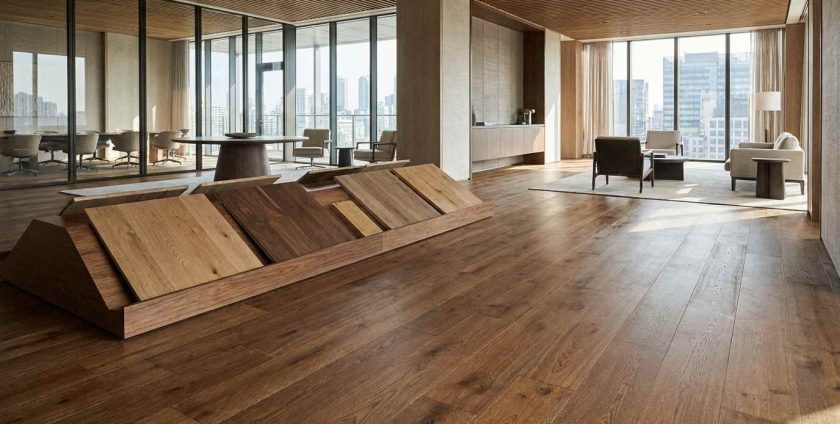
Selecting the right flooring manufacturer is an important decision for businesses involved in construction, property development, interior design, and wholesale distribution. For B2B buyers, flooring procurement involves more than finding an attractive product at a competitive price. Every order must meet agreed specifications, arrive within the required timeframe, and deliver consistent quality across the entire project. Working with the right engineered wood flooring supplier can help businesses maintain reliable inventory, manage project budgets, and build customer confidence. Conversely, inconsistent manufacturing standards, unclear communication, or unexpected delivery delays can disrupt installation schedules and increase operational costs.
These challenges become even more significant when sourcing flooring for multiple properties or coordinating large commercial projects. Buyers must consider not only the initial purchase but also product availability, replacement requirements, and the manufacturer’s ability to maintain consistent specifications across repeat orders. A dependable supplier can help simplify procurement, minimize uncertainty, and support smoother project execution.
Before committing to a long-term purchasing arrangement, buyers should evaluate several factors, including product construction, customization capabilities, manufacturing capacity, export readiness, and after-sales support. Understanding these considerations makes it easier to identify a supplier that can meet immediate purchasing requirements while supporting future business expansion.
Evaluating Engineered Wood Flooring Quality and Manufacturing Standards
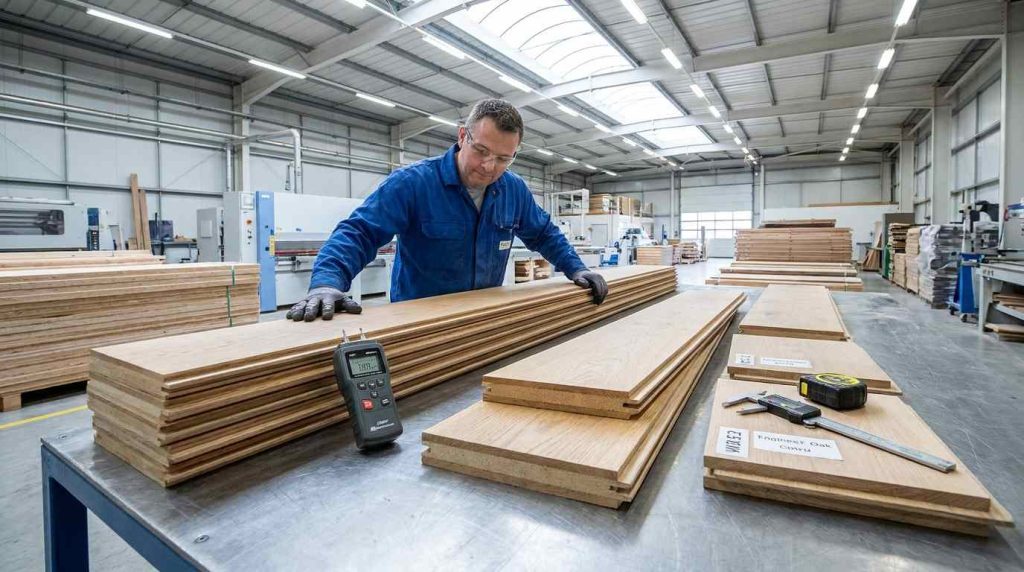
Product quality should be the starting point when assessing a manufacturing partner. Engineered flooring typically consists of a real wood veneer or wear layer bonded to a supporting core. Its performance depends on raw materials, construction methods, adhesives, moisture control, and finishing processes. Before comparing quotations, request technical specifications covering board thickness, wear-layer thickness, core composition, dimensions, surface finish, and installation profile. These details influence appearance, installation compatibility, maintenance, and expected service life.
A professional engineered wood flooring supplier should explain its manufacturing processes and quality controls. Ask how timber is inspected, moisture content is monitored, and finished boards are checked for dimensional accuracy and surface defects. Consistency is essential for commercial developments. Flooring across multiple rooms or buildings should maintain acceptable uniformity in dimensions, grading, and finish. Even minor variations can complicate installation and affect the overall appearance. Consider the intended environment, too. Flooring for residential interiors may have different requirements from products used in hotels, offices, or retail spaces. Confirm suitability for expected humidity, temperature, traffic, and maintenance conditions.
Depending on the destination market, buyers may need documentation covering formaldehyde emissions, adhesive safety, environmental requirements, or applicable testing standards. Request relevant reports rather than relying on marketing claims. Always examine samples before approving production. Check the grain, color, texture, finish, and construction. For large orders, establish an approved reference sample and written acceptance criteria.
Wood species should also match the project’s design objectives. Engineered Wood Flooring combines natural timber aesthetics with layered construction. Teak Engineered Wood Flooring offers distinctive grain and warm brown tones, while Mahogany Engineered Wood Flooring suits designs featuring rich reddish-brown colors. Confirm availability, sourcing documentation, and application suitability with the manufacturer.
Bulk Orders, Custom Specifications, and Private Label Options
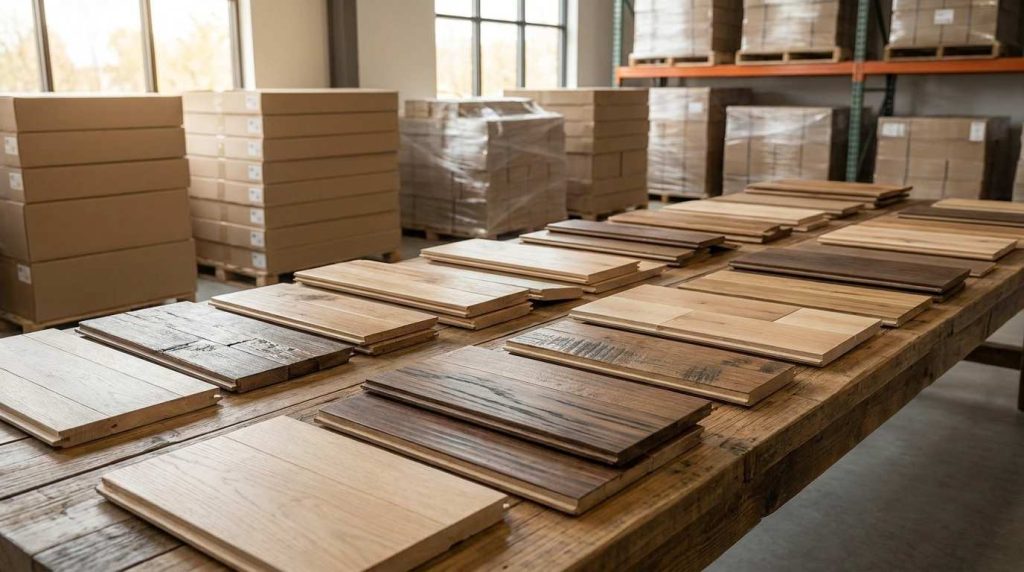
Commercial buyers often need products beyond standard retail collections. Developers may require consistent flooring across multiple properties, while distributors may seek exclusive finishes or branded packaging. Customization capabilities should therefore be assessed before placing large orders. Discuss available board dimensions, grades, bevel profiles, colors, surface treatments, and finishes. Standard options are generally easier to source, while customized specifications may require additional development time.
A capable engineered wood flooring supplier should clarify which options are standard and which affect pricing, minimum order quantities, material availability, or production schedules. Private labeling can help wholesalers build their brands through customized cartons, product labels, installation instructions, or packaging. Confirm artwork requirements, approval procedures, and additional costs before production. Minimum order quantities also matter. Custom finishes and dimensions may require larger commitments. Ask whether different designs can be combined in one order and whether repeat purchases can follow the same specifications.
Evaluate the complete commercial offer rather than unit prices alone. Packaging, inspections, freight, and customization can increase overall costs. Request quotations detailing product specifications, packaging, payment terms, delivery conditions, and additional charges. Before confirming a bulk order, document acceptable color variations, dimensional tolerances, surface quality, packaging requirements, and procedures for handling defective goods. Clear specifications help buyers assess deliveries consistently while reducing misunderstandings during production.
Production Capacity, Lead Times, and International Supply Requirements
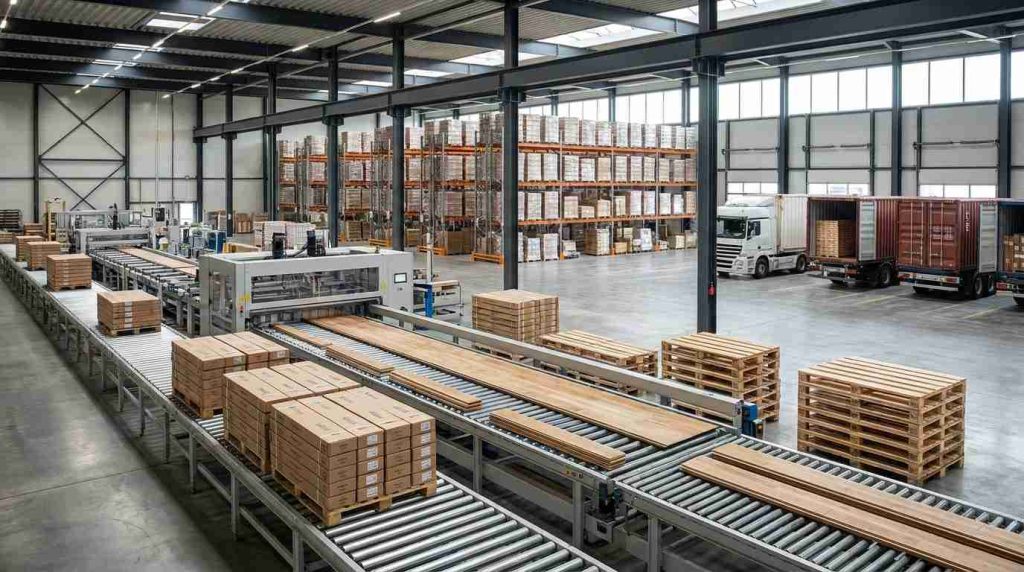
A manufacturer may offer excellent products but remain unsuitable if it cannot meet delivery deadlines. Production capacity and scheduling reliability are essential for commercial procurement. When evaluating an engineered wood flooring supplier, ask about production capacity, existing commitments, material availability, and flexibility during demand fluctuations. This helps determine whether the manufacturer can support individual projects or ongoing distribution.
Lead times should cover raw-material preparation, manufacturing, finishing, inspection, packaging, and dispatch. Custom orders may require additional time for sample approval.
International procurement also involves export documentation, freight, insurance, customs clearance, and inland transportation. Agreed Incoterms should clarify each party’s responsibilities, transportation costs, and when delivery risks transfer. Packaging must protect flooring during shipping and storage. Confirm that materials suit the shipping method and provide adequate moisture protection.
For large orders, request pre-shipment photographs, inspection reports, or independent inspections. Establish acceptance criteria beforehand to ensure objective assessments. Reliable communication matters equally. Manufacturers should provide realistic schedules and promptly report delays, allowing buyers to adjust installation plans and inventory. Sharing demand forecasts helps manufacturers plan production, while scheduled deliveries improve warehouse management. Finally, discuss contingency arrangements for material shortages, equipment failures, and shipping disruptions to minimize costly delays.
Assessing Supplier Reliability for Long-Term Business Needs
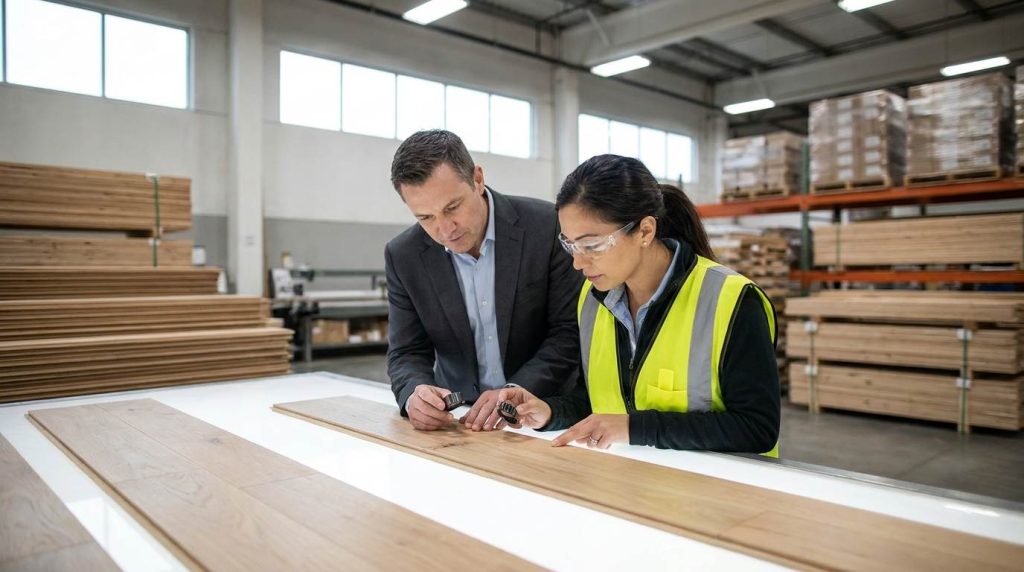
Reliability involves more than fulfilling an initial purchase. Businesses need partners that maintain standards, communicate honestly, and respond constructively when problems occur. Review the manufacturer’s background, production facilities, export experience, and quality assurance procedures. Request commercial references and verify its track record with other buyers. A factory visit or virtual production review can also clarify manufacturing operations. An experienced engineered wood flooring supplier should communicate its capabilities and limitations transparently. Clear answers about material availability, production capacity, and delivery commitments are more valuable than unsupported promises.
Buyers should examine how quality problems are managed. Ask how defects are documented, complaints investigated, and corrective actions tracked. Effective procedures identify root causes and prevent recurrence rather than simply replacing individual boards.
Contractual terms deserve equal attention. Review quotation validity, payment schedules, cancellation conditions, warranty coverage, and dispute resolution procedures. For international transactions, ensure responsibilities and governing terms are documented clearly.
Product continuity is another important consideration. Distributors and developers may need to reorder the same collection years later. Changes in construction, dimensions, or finishes can create inventory problems and make replacement boards difficult to match. Discuss how product changes will be communicated and whether approved specifications can be maintained for repeat orders. If exact continuity cannot be guaranteed, establish a process for approving updated samples before purchasing additional stock. Communication during difficult situations reveals a supplier’s working standards. Partners who acknowledge issues, provide timely updates, and propose practical solutions are better positioned to support long-term commercial relationships.
How to Build a Long-Term Partnership With an Engineered Wood Flooring Supplier

Strong supplier relationships develop through clear expectations, consistent communication, and measurable performance. Rather than treating every purchase as an isolated transaction, buyers should establish a framework that supports repeat orders and continuous improvement.
Begin by sharing realistic forecasts, target specifications, project schedules, and destination-market requirements. This information helps manufacturers plan raw materials, allocate production capacity, and prepare for upcoming demand. Buyers should also communicate changes promptly to avoid unnecessary production adjustments. Performance reviews provide a practical way to evaluate the relationship. Useful indicators include on-time delivery, order accuracy, defect rates, response times, and complaint resolution. Reviewing these measures periodically helps both parties identify recurring issues and agree on improvements. Commercial transparency matters, too. Buyers should communicate purchasing plans and meet agreed payment terms, while suppliers should provide accurate quotations and realistic production updates. Mutual accountability creates a more predictable environment for future transactions.
Before expanding order volumes or launching a private-label collection, consider placing a trial order. Evaluate the finished flooring, packaging, documentation, delivery performance, and communication throughout the process. Once the results meet expectations, larger commitments can be considered with greater confidence.
When evaluating manufacturers, consider available wood species, specifications, finishes, production capacity, and quality control. Discussing these details early helps clarify expectations and reduce sourcing challenges. Visit our official website to explore its hardwood flooring products and discuss your project requirements. As an Indonesian wood flooring manufacturer with longstanding industry experience, Jati Luhur Agung may be worth considering for businesses seeking manufacturing expertise and solutions for commercial flooring projects. Share your preferred specifications, order quantities, target market, and customization needs to assess whether its solutions suit your business objectives and future orders.
Ultimately, choosing the right manufacturing partner requires product quality, commercial flexibility, reliable delivery, and responsive communication. By verifying capabilities, establishing clear specifications, and reviewing performance, B2B buyers can strengthen procurement and support sustainable growth. The right partnership should deliver more than flooring; it should provide the consistency and confidence your business needs to serve customers and complete projects successfully.
-

Amsterdam White Oak Engineered Hardwood Flooring for Commercial Projects
Selecting flooring for a commercial property involves more than choosing an attractive color. Businesses must consider durability, maintenance, installation conditions, long-term appearance, and the demands of daily use. For hotels, offices, retail spaces, apartments, and hospitality developments, flooring also shapes the impression a property creates for visitors, tenants, and customers. Amsterdam white oak engineered hardwood…
-
What B2B Buyers Should Look for in an Engineered Wood Flooring Supplier
Selecting the right flooring manufacturer is an important decision for businesses involved in construction, property development, interior design, and wholesale distribution. For B2B buyers, flooring procurement involves more than finding an attractive product at a competitive price. Every order must meet agreed specifications, arrive within the required timeframe, and deliver consistent quality across the entire…
-
What Is a Wood Gym Floor? Expert Guide for Sports Facilities
The floor is one of the most important elements in an indoor sports facility. It affects how athletes move, stop, jump, land, and change direction. It also influences comfort, maintenance, and the appearance of the venue. For basketball courts, school gyms, training centers, and multipurpose halls, choosing suitable flooring is an important part of the…
- By:PT. Jati Luhur Agung
- Tags: engineered wood flooring, engineered wood flooring supplier
- Category: Engineered Wood
- 0 comment