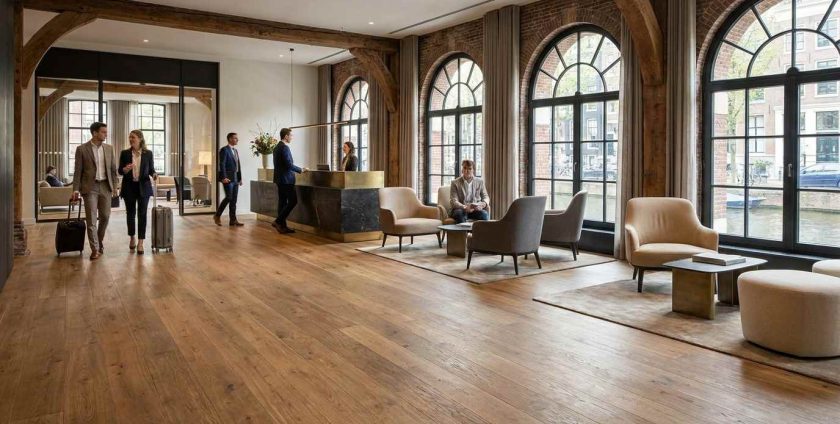
Amsterdam combines historic architecture with modern offices, hotels, restaurants, and retail spaces. Each setting has a different atmosphere, but flooring has to serve a common purpose: it should look good, cope with daily use, and remain practical to maintain. For designers exploring natural timber, Amsterdam engineered wood can offer a balance between visual character and a stable flooring construction.
Engineered wood combines a real timber surface with supporting layers beneath it. The layered format is designed to improve dimensional stability compared with a solid board of similar size. It is still a natural wood product, so suitable site conditions, installation, and maintenance remain important.
For a commercial project, the flooring decision should begin with the way the space will be used. A private office, hotel lobby, restaurant, and retail store can have completely different traffic patterns. The floor also needs to work visually with furniture, lighting, walls, ceilings, and architectural details. When these elements are considered together, natural timber can become part of the design rather than simply another finishing material.
Why Engineered Wood Flooring Works for Amsterdam Projects
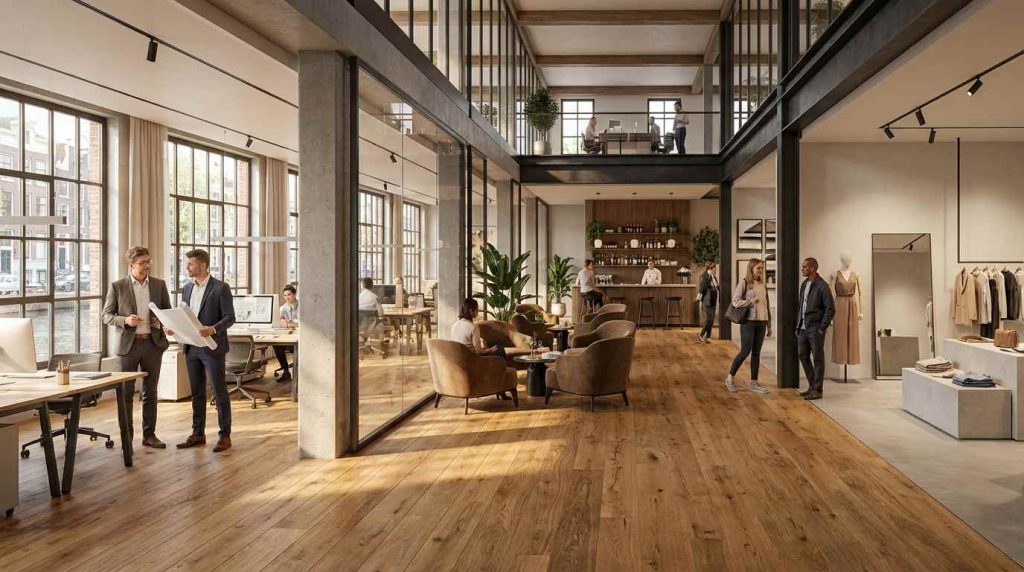
Amsterdam does not have one commercial design style. A restored canal property may need a different visual treatment from a newly built office. Engineered wood can adapt because designers can choose from different species, colours, plank dimensions, and surface treatments.
In a modern office, lighter timber can work alongside glass, concrete, and metal. In hospitality spaces, warmer tones can create a more relaxed atmosphere. Retail interiors can use natural grain as a visual foundation without making the flooring compete with displays.
Dimensional stability is another reason to consider engineered construction. Timber naturally reacts to changes in temperature and humidity. A multi-layer board is designed to reduce movement, although it does not make wood waterproof or maintenance-free. The building environment and installation conditions still matter.
The intended use should guide the specification. A quiet office and a busy restaurant entrance do not place the same demands on a floor. Traffic, moisture exposure, cleaning routines, and the subfloor should all be considered before a product is selected.
Engineered wood can also create continuity between connected spaces. The same timber family can run through reception areas, corridors, meeting rooms, or other zones, helping the interior feel cohesive. Designers can explore Engineered Hardwood Flooring when developing this type of specification.
For Amsterdam engineered wood projects, the floor works best when it is treated as part of the complete interior rather than as an isolated decorative surface. Species, finish, installation, and maintenance should be considered together.
Key Specifications for Commercial Engineered Wood Flooring
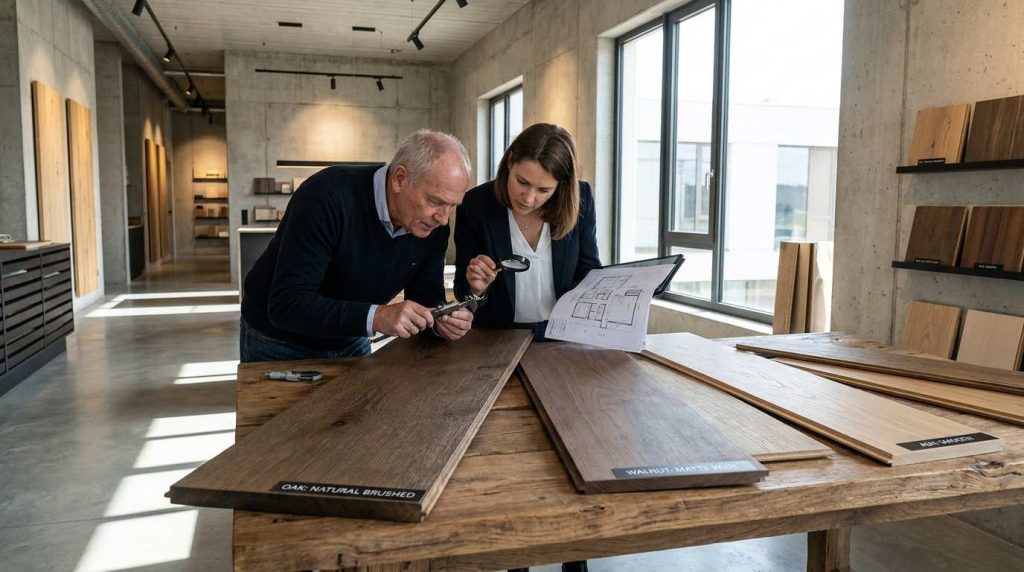
Construction, dimensions, wear layer, finish, and installation requirements all deserve attention when specifying flooring for a commercial project. The wear layer is the natural timber surface exposed to everyday use. Its thickness can influence maintenance and potential refinishing, although this depends on the individual product. Project teams should confirm the manufacturer’s guidance rather than assume every engineered floor can be refinished in the same way.
Board dimensions affect the visual rhythm of a room. Wide planks can create a spacious, contemporary feel, while narrower boards may look more traditional. Longer boards can reduce visible joints, but room dimensions, availability, and installation requirements should also influence the decision.
Surface finish changes both appearance and character. Smooth flooring offers a refined look, while brushed surfaces bring out grain and texture. Matte finishes tend to appear understated, whereas higher-sheen surfaces reflect more light. In busy spaces, the selected finish should also suit expected wear and cleaning.
Moisture conditions are especially important. Engineered construction can improve stability, but timber remains sensitive to unsuitable environmental conditions. The subfloor should be assessed and moisture levels checked before installation.
Acoustics can also influence a commercial specification. Offices, hotels, and multi-level buildings may have requirements related to impact sound, so flooring should be considered together with the subfloor and suitable underlay.
Popular Wood Species and Flooring Styles in Amsterdam
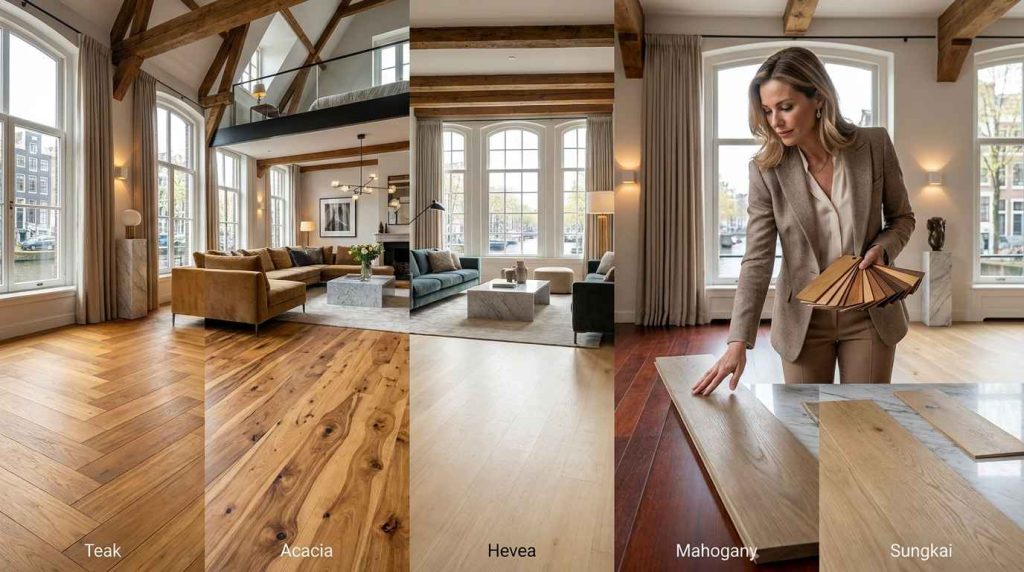
Teak, acacia, hevea, mahogany, and sungkai offer different colours and grain patterns, allowing designers to create distinct atmospheres within commercial interiors.
Teak is recognised for its warm appearance and distinctive grain. It can complement natural stone, neutral walls, leather, metal, and contemporary furniture. Acacia tends to show stronger natural variation, making it suitable when the design calls for a more expressive timber surface.
Hevea provides a lighter appearance that can work with minimalist interiors and neutral palettes. Mahogany offers deeper tones for projects seeking stronger contrast, while sungkai provides another natural option for designers looking beyond familiar species.
Jati Luhur Agung’s engineered three-ply range includes Hevea, Acacia, Teak, Sungkai, and Mahogany. For lighter timber, Hevea Engineered Wood Flooring can be explored, while Acacia Engineered Wood Flooring provides another option with visible grain variation.
The same wood species can also look different depending on its surface treatment. Smooth boards create a clean appearance, wire brushing reveals more grain, and hand-scraped treatments can provide a more crafted feel. These choices are useful in hospitality and retail projects where flooring contributes strongly to the atmosphere.
There is no single timber style that suits every Amsterdam project. Historic surroundings may work with richer tones and stronger grain, while a modern office may benefit from lighter, quieter flooring. Samples should be compared with furniture, wall colours, lighting, and adjacent materials before final approval.
For Amsterdam engineered wood selections, natural variation should be viewed as part of the material’s character rather than a flaw.
Installation and Performance for Commercial Spaces
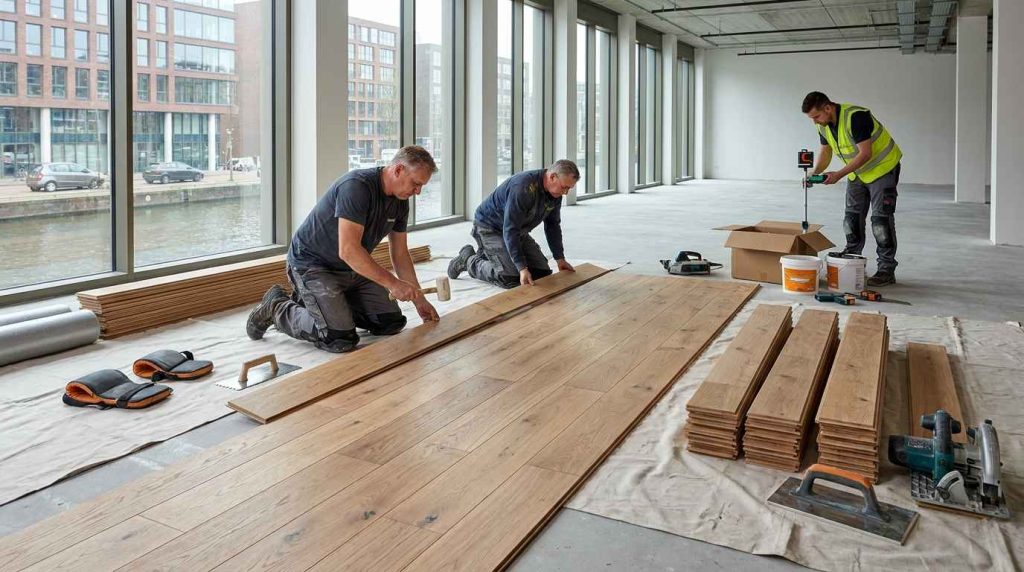
Installation starts with the subfloor. It should be clean, stable, sufficiently level, and suitable for the selected flooring system. Moisture conditions should be assessed before installation.
Engineered flooring can be installed using different methods depending on the product and site. Glue-down, floating, or mechanical installation may be suitable in particular circumstances, but the manufacturer’s instructions should determine the method.
Correct site conditions matter during installation. Flooring should be handled according to product requirements, while temperature and humidity should be appropriate before and during installation. Board alignment, joints, expansion requirements, adhesive application, transitions, and finishing details all affect the finished result.
Maintenance becomes part of performance once the commercial space opens. Dirt and grit brought in from outside can act as abrasives. Entrance mats can help reduce this, while routine cleaning removes particles before they cause unnecessary wear. Spills should be cleaned promptly with products suitable for the selected finish.
In busy commercial interiors, the floor will naturally show signs of use over time. The aim is not to prevent every mark but to select a construction and finish that suit the expected environment and can be maintained appropriately.
For Amsterdam engineered wood installations, early coordination between the supplier, contractor, designer, and building team can reduce avoidable problems. Confirming technical requirements before ordering is much easier than adapting an unsuitable product after installation has started.
Choosing a Reliable Engineered Wood Flooring Supplier
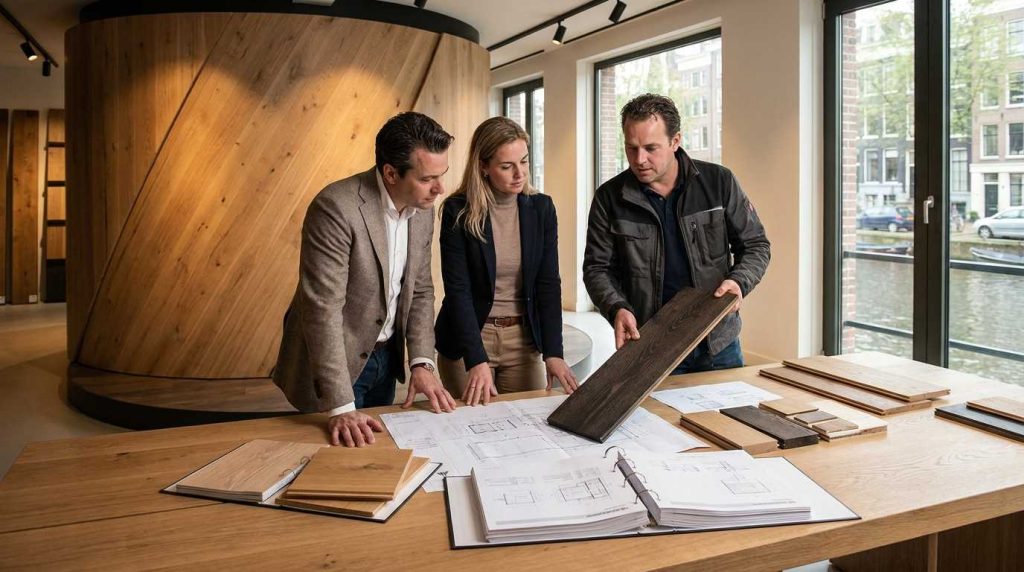
A commercial flooring supplier needs to provide more than attractive samples. Project teams may need consistent products, technical information, clear specifications, production planning, and communication from selection through delivery.
Based in Indonesia, Jati Luhur Agung manufactures solid and engineered wood flooring using several wood species. Its engineered three-ply collection includes Hevea, Acacia, Teak, Sungkai, and Mahogany.
Manufacturing experience can be useful for commercial projects where consistency matters. Larger developments may require the same species, dimensions, and finish across multiple rooms. Discussing quantities and specifications with the manufacturer before ordering can help properly align flooring supply with the construction schedule.
Jati Luhur Agung also offers different surface and finishing possibilities for its engineered flooring products. These choices allow project teams to consider the final visual character alongside the timber species.
For Amsterdam engineered wood projects, the product should still be checked against the specific application. Ask the supplier to confirm construction, dimensions, finish, installation requirements, maintenance guidance, and suitability for the expected commercial environment.
If you are planning a hotel, office, restaurant, retail space, or other commercial interior, explore the flooring collections from our official website Jati Luhur Agung and discuss your requirements with its team. Choosing the right timber and specifying it clearly at the beginning can make the installation process much smoother.
FAQ
- Is Engineered Wood Flooring Suitable for Commercial Projects in Amsterdam?
Yes, engineered wood flooring can be suitable for commercial projects when the product is selected for the application and installed correctly. Traffic, moisture, subfloor quality, finish, cleaning routines, and installation methods should all be considered. Different commercial environments may require different specifications.
- What Type of Engineered Wood Flooring Is Best for Commercial Spaces?
There is no universal choice for every commercial property. The appropriate product depends on traffic, design, maintenance expectations, site conditions, and technical requirements. Species, construction, wear layer, dimensions, finish, and installation method should be assessed together.
- How Should Commercial Engineered Wood Flooring Be Installed?
It should be installed according to the manufacturer’s instructions by an experienced flooring professional. The subfloor should be checked for stability, levelness, and moisture. Depending on the product and site conditions, glue-down, floating, or mechanical installation may be appropriate.
Amsterdam’s commercial interiors can take many forms, but natural timber can bring warmth and texture without overwhelming the architecture. Choose the right species, specify every detail carefully, and let the floor become the quiet element that ties the whole interior together.
-
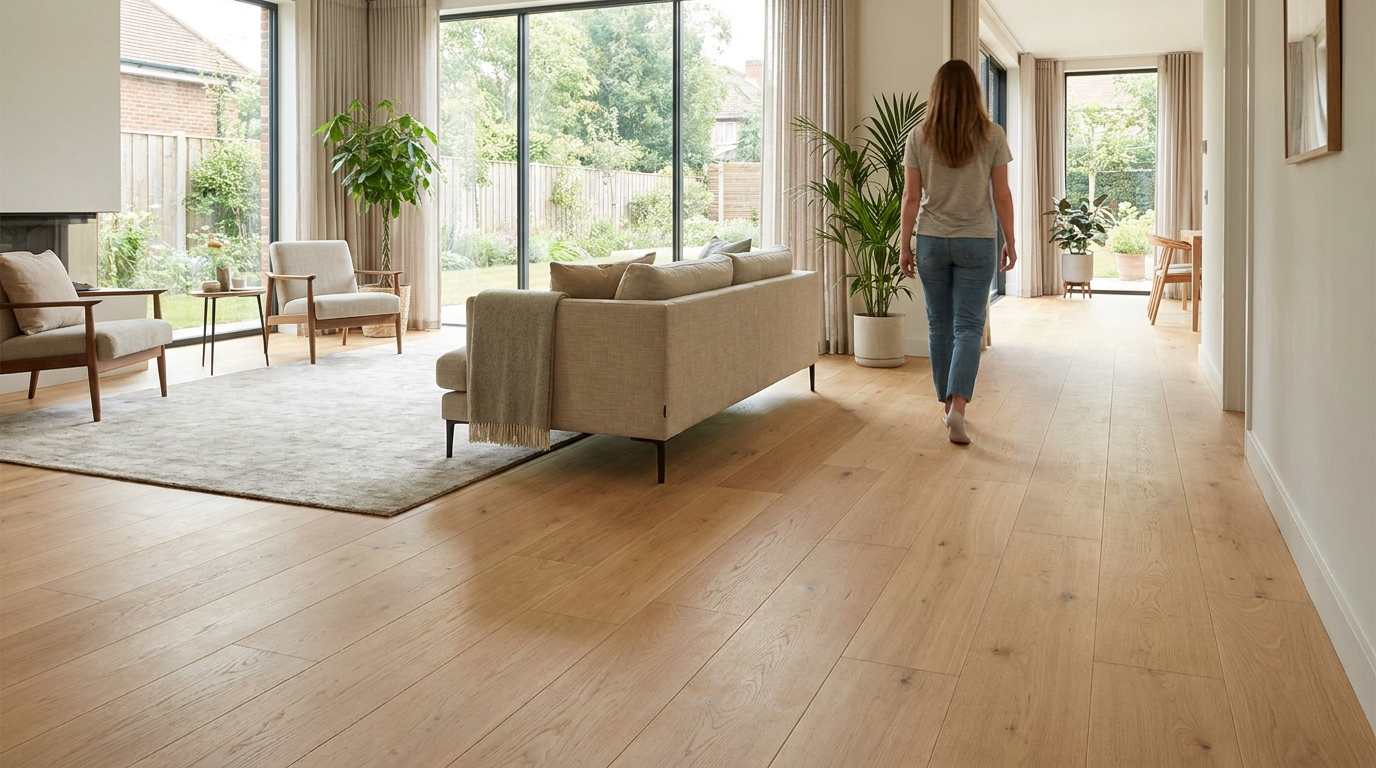
Hevea Engineered Flooring Tips for Better Performance and Longevity
Hevea engineered flooring can bring a warm, natural character to an interior while offering the practical structure needed for everyday use. Made with a real wood surface and engineered construction, this flooring can be a suitable choice for homes, offices, hospitality spaces, and other interiors where appearance and stability both matter. However, good performance does…
-
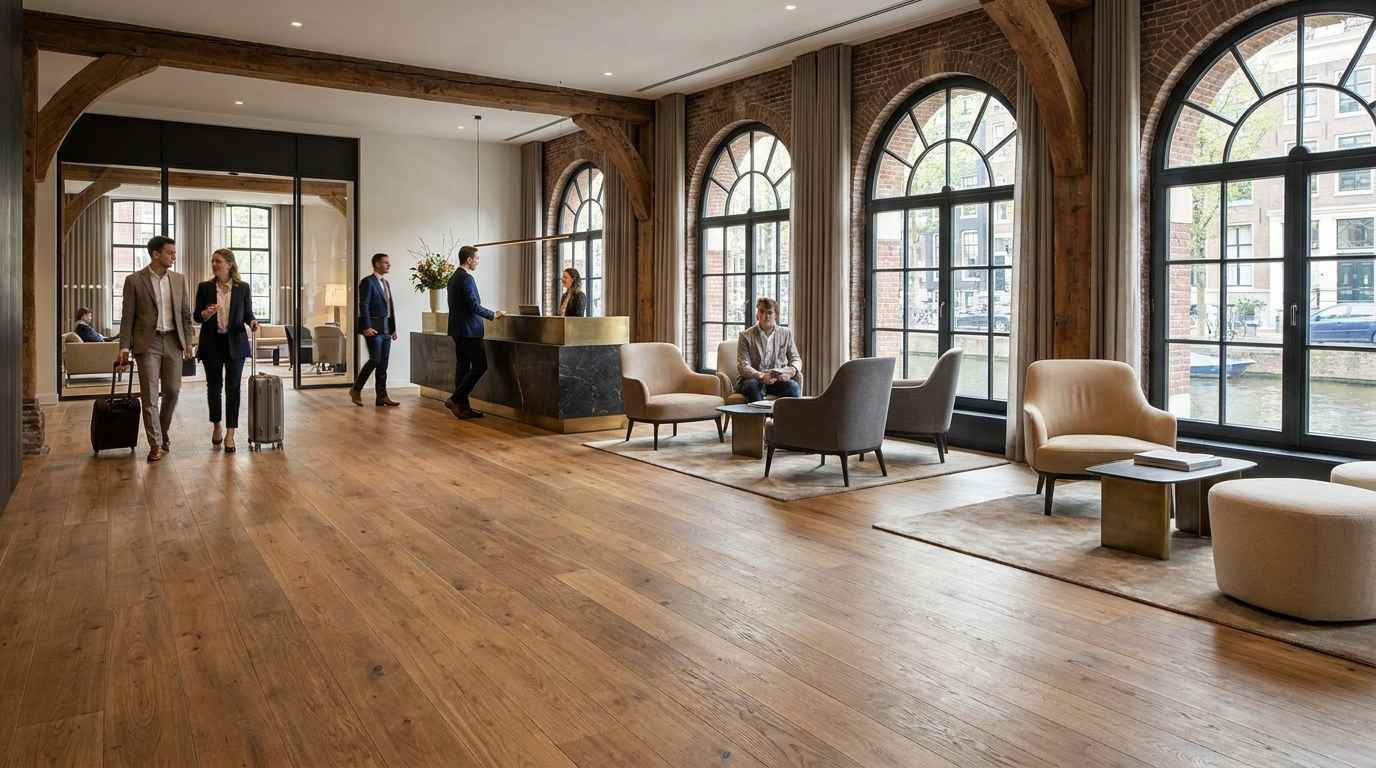
Amsterdam Engineered Wood Flooring for Commercial Projects
Amsterdam combines historic architecture with modern offices, hotels, restaurants, and retail spaces. Each setting has a different atmosphere, but flooring has to serve a common purpose: it should look good, cope with daily use, and remain practical to maintain. For designers exploring natural timber, Amsterdam engineered wood can offer a balance between visual character and…
-
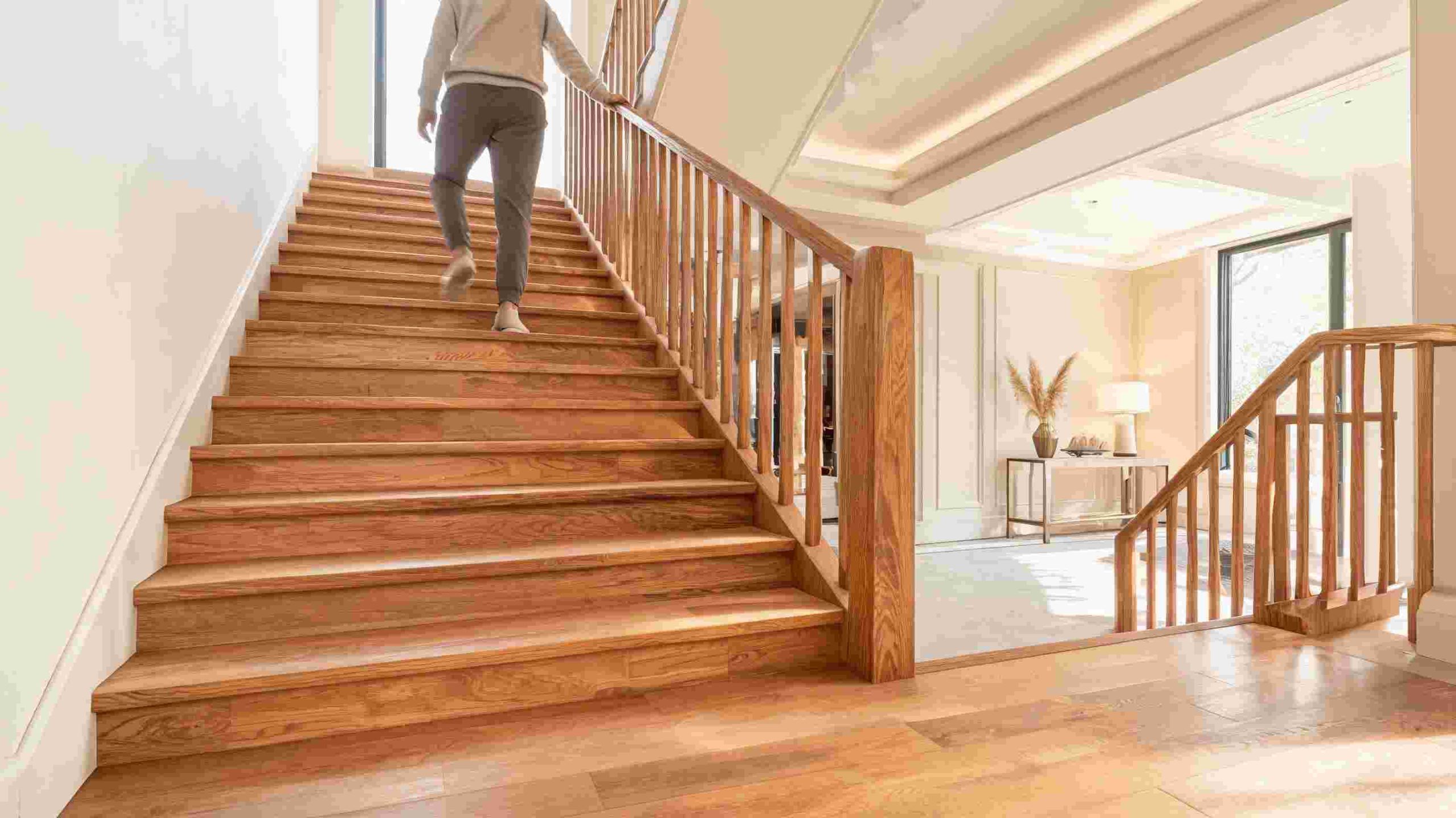
Is Engineered Wood Flooring Suitable for Stairs?
Stairs are more than a way to move between floors. They are a visible part of an interior and become architectural details people notice. Because they are used every day, the material chosen for a staircase needs to balance appearance, durability, safety, and maintenance. Natural wood remains a popular option because it brings warmth and…
- By:PT. Jati Luhur Agung
- Tags: amsterdam wood, amsterdam wood floor, engineered wood
- Category: Engineered Wood
- 0 comment