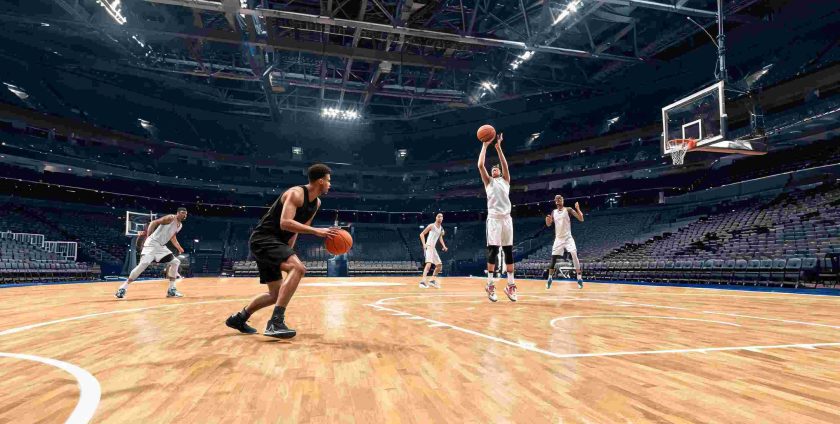
When you walk into a premier athletic facility, the very first element that commands your attention is the floor beneath your feet. Beneath the squeak of high-traction sneakers and the rhythmic bounce of the basketball lies a complex engineering marvel specifically designed for safety, elite performance, and long-lasting durability.
A basketball court is more than just a playing surface, it is where speed, agility, balance, and split-second decisions come together. Every jump, sprint, pivot, and sudden stop places significant pressure on the flooring system, making its quality a crucial part of the overall sporting experience. For commercial developers, architects, and facility managers, investing in the right basketball court indoor flooring is the single most critical decision in any sports construction project.
Whether you are building a multi-purpose community center, a high school gymnasium, or a professional training arena, your choice of surface dictates how athletes move, compete, and protect their joints from wear and tear. The right flooring can also influence maintenance costs, playing consistency, visual appeal, and the facility’s long-term value. That is why selecting a surface should never be treated as a simple finishing decision, it is a strategic investment in performance, safety, and the future of the facility.
What Is Indoor Basketball Court Flooring
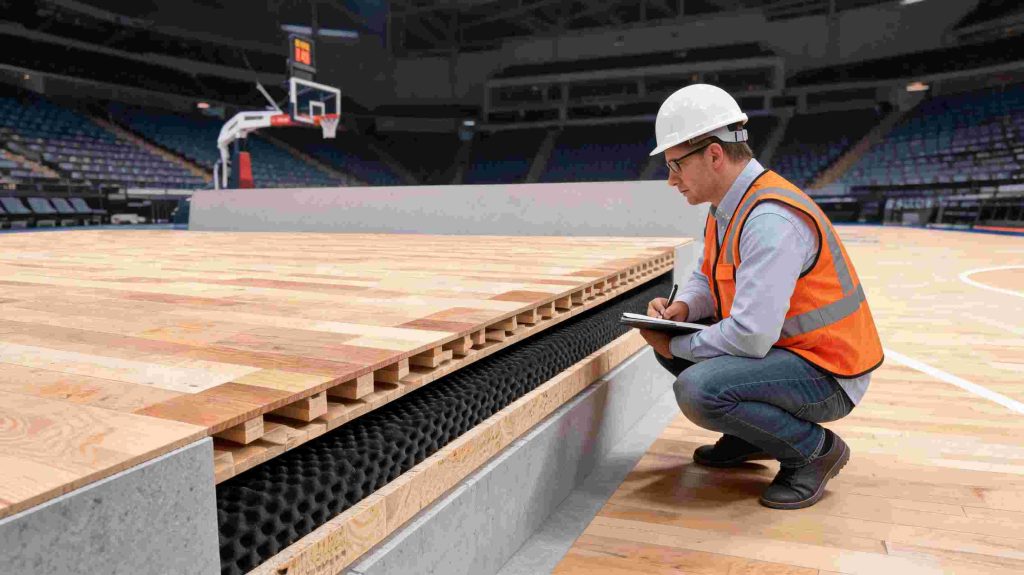
At its core, basketball court indoor flooring refers to specialized athletic surfacing systems engineered precisely to handle the high-impact, fast-paced demands of basketball. Unlike standard commercial or residential flooring options, these professional systems are carefully designed to absorb heavy shock, provide a perfectly consistent ball bounce, and offer optimal surface traction to prevent dangerous slips and slides during intense gameplay.
Historically, sports facilities relied heavily on basic concrete or primitive wood planks, but modern engineering has completely revolutionized the athletic flooring industry. Today, a professional-grade setup is typically composed of a sophisticated multi-layered system. This engineering masterpiece includes a structural subfloor, advanced shock-absorption pads, premium hardwood slats, and a specialized high-friction, low-gloss finish that minimizes glare under bright arena lights.
When planning a commercial venue, understanding what constitutes quality basketball court indoor flooring helps project managers avoid costly mistakes and structural failures. A subpar surface can easily warp under changing humidity levels, cause premature joint fatigue in athletes, or fail to meet official athletic federation standards. Investing in premium materials ensures that your facility stands the test of time, heavy foot traffic, and intense athletic competition year after year without compromising on player safety. Furthermore, incorporating resilient underlayment layers dampens acoustic reverberation, creating a controlled, professional soundscape during high-energy tournaments.
Why Wood Flooring Works for Indoor Basketball Courts
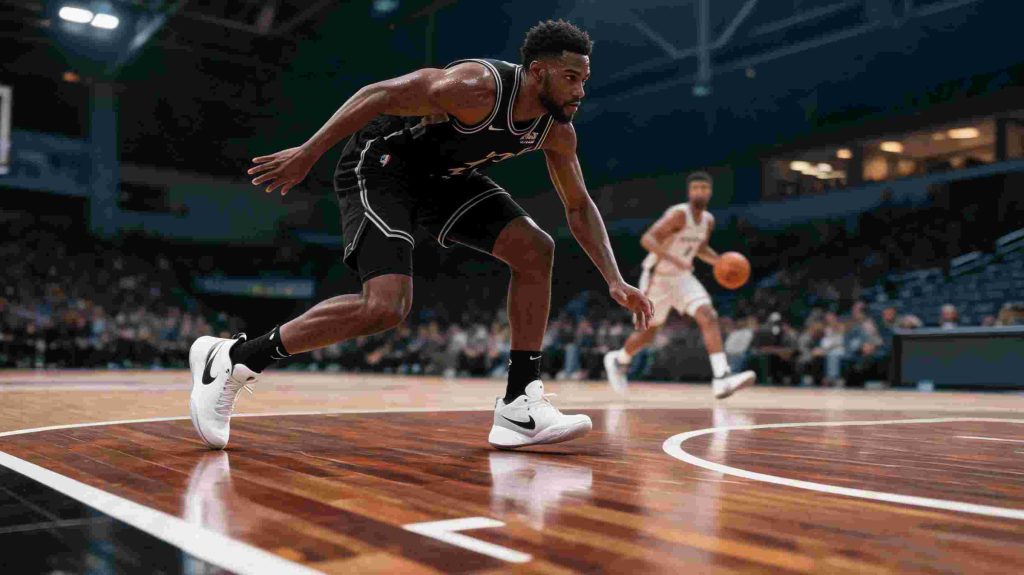
There is a timeless, scientifically proven reason why hardwood remains the undisputed gold standard for athletic venues across the globe. When facility designers and structural engineers search for the ultimate basketball court indoor flooring, they almost always circle back to natural timber because of its unmatched biomechanical properties.
You might be interest: Fact About Basketball Floor: The Proccess Behind Selection
Hardwood possesses a unique, natural elasticity that synthetic materials struggle to replicate. When a 200-pound athlete leaps into the air and lands forcefully, the wood fibers compress slightly and flex, absorbing a massive percentage of the impact shock. This natural shock absorption protects ankles, knees, and lower backs from chronic stress injuries associated with rigid, unforgiving surfaces. Furthermore, natural wood provides a uniform surface resistance, ensuring that the ball bounce is entirely predictable anywhere on the court, which is essential for fair and competitive play.
Beyond pure biomechanics, wood brings an unmatched aesthetic elegance to any sports arena. The warm, golden hues of maple or high-grade timber create a professional atmosphere that instantly elevates the prestige of the venue. For commercial projects looking to host major tournaments, school events, or community leagues, a pristine hardwood surface communicates quality, safety, and uncompromising professional standards to every visitor who walks through the doors. The longevity of timber also means that facilities can periodically sand and refinish the surface rather than replacing the entire floor, offering long-term financial value for commercial investments.
Key Features of a High-Performance Basketball Floor
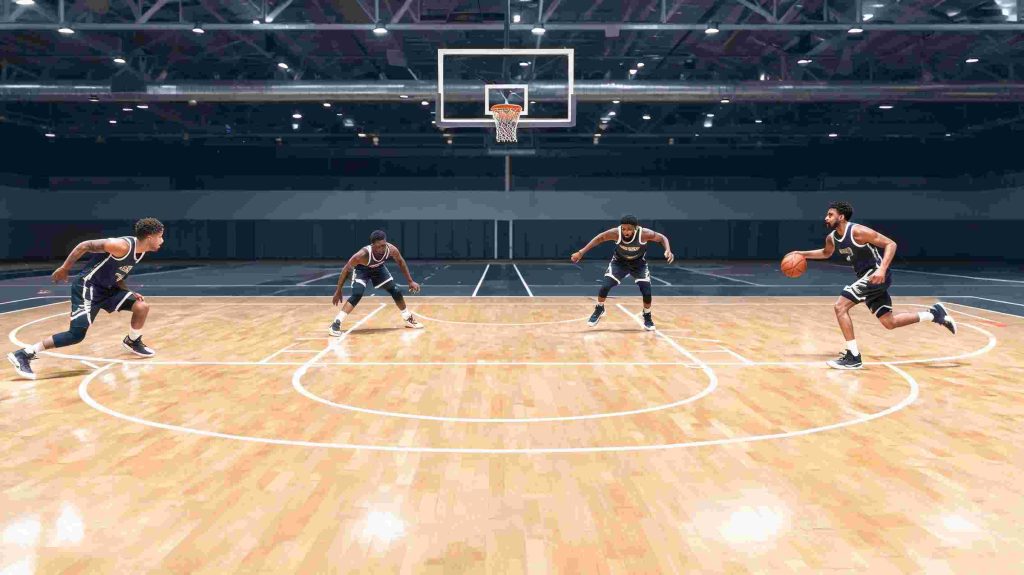
Creating a championship-level venue requires meticulous attention to the technical specifications of your basketball court indoor flooring. Not all athletic surfaces are created equal, and high-performance floors share several non-negotiable characteristics that separate amateur setups from professional arenas:
- Shock Absorption: Superior subfloor systems cushion high-impact landings, significantly reducing athlete fatigue and minimizing the risk of severe joint injuries.
- Surface Friction and Traction: The finish must offer a delicate balance—providing enough grip to let players cut quickly without causing dangerous ankle locks or knee strains.
- Ball Bounce Uniformity: The surface must guarantee a consistent rebound rate across the entire court layout, meeting strict regulatory benchmarks for professional play.
- Durability and Load Bearing: Commercial facilities frequently host non-sporting events like graduations or trade shows, meaning the floor must withstand heavy rolling loads and temporary seating setups without indenting.
- Moisture Resistance: High-quality sealing prevents sweat, humidity, and ambient moisture from warping, buckling, or rotting the underlying structural components.
- Thermal Adaptability: High-grade sports flooring systems adjust gracefully to indoor temperature shifts, ensuring the wood expansion and contraction remain within safe, manageable thresholds.
Choosing the Right Flooring for Your Sports Facility
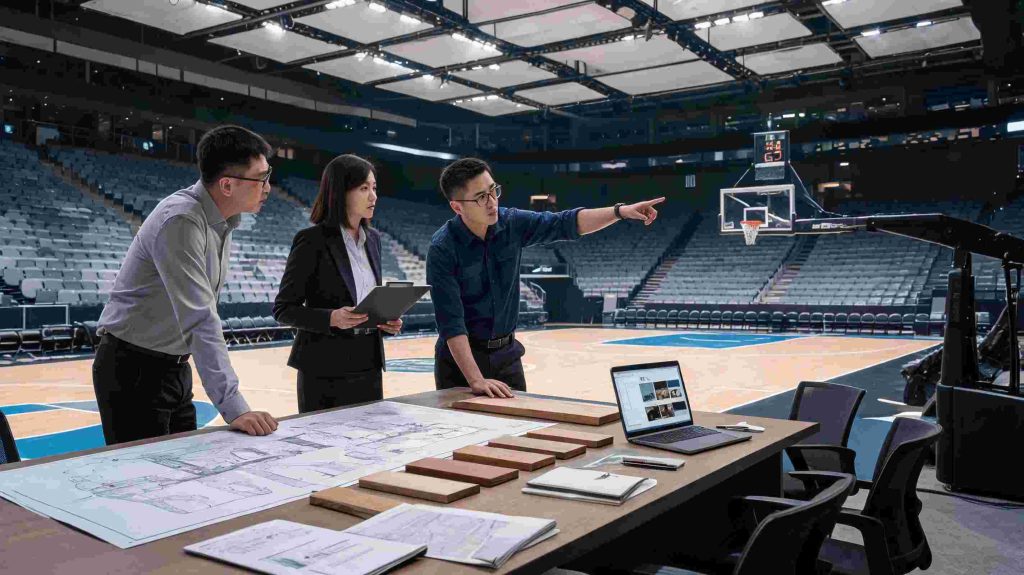
Hardwood remains a popular choice for indoor basketball courts because of its natural elasticity, consistent ball response, and long-term durability. As sports facilities increasingly explore alternative wood species, Hevea sport wood has also emerged as an option worth considering for modern sports flooring applications. The right flooring system can help create a safer and more reliable environment for athletes. Start by evaluating the primary audience and daily activities of your facility. Will it host elite professional games, high school sports leagues, or multi-use community recreation programs?
If your venue is dedicated purely to high-level basketball, a traditional tongue-and-groove hardwood installation is completely unmatched in terms of playability. However, if your facility needs to seamlessly transition between basketball, volleyball, badminton, and community gatherings, you might consider engineered wood options or specialized hybrid systems that offer greater versatility.
It is also crucial to evaluate the subfloor engineering during the planning phase. The subfloor is the hidden engine of your athletic surface, responsible for a large percentage of the floor’s overall shock-absorbing performance. Working with experienced suppliers ensures that your chosen basketball court indoor flooring aligns seamlessly with your architectural blueprints, local climate conditions, and long-term operational goals. Evaluating environmental controls such as HVAC systems will further protect your investment from moisture damage, ensuring structural stability throughout every seasonal change.
FAQ
- What Is the Best Flooring for an Indoor Basketball Court?
The undisputed industry standard for professional play is Northern Hard Maple or high-grade tropical timber such as Solid Sport Floor configurations. These specialized materials provide the ideal combination of slip resistance, shock absorption, and aesthetic appeal required for competitive athletics. When evaluating surface options for large-scale sports complexes, procurement teams must carefully analyze regional climate factors, expected daily foot traffic, and structural subfloor compatibility. Premium timber options offer superior resilience, ensuring that every bounce remains uniform and predictable even under rigorous tournament schedules.
- Is Hardwood Flooring Good for Basketball Courts?
Yes, hardwood is exceptionally well-suited for basketball because its natural give minimizes joint impact for players, while its smooth, uniform texture guarantees a true and predictable ball bounce during fast-paced gameplay. Beyond fundamental performance metrics, natural wood surfaces deliver unmatched aesthetic prestige that elevates the visual appeal of modern gymnasiums. The cellular composition of quality timber allows it to flex microscopically under sudden directional cuts and high-impact landings, distributing kinetic energy away from vulnerable human joints. This vital biomechanical advantage helps prevent chronic injuries among competitive athletes, establishing timber as an indispensable asset for institutional and commercial athletic facilities worldwide.
- How Long Does Indoor Basketball Flooring Last?
With proper routine maintenance, professional sports flooring can easily last anywhere from 30 to 50 years. Periodic screening, recoating, and proper climate control inside the facility will help preserve the structural integrity of your solid sport floor for decades of heavy use. Unlike synthetic alternatives that degrade uniformly and require complete replacement, high-end wood systems can undergo multiple cycles of professional sanding and refinishing over their lifespan.
- How Do You Maintain an Indoor Basketball Floor?
Routine maintenance involves daily dust-mopping to remove abrasive dirt and grit, cleaning with manufacturer-approved neutral cleaners, and avoiding harsh chemicals or excessive water. Periodic professional sanding and refinishing every few years will restore its original luster and slip resistance. Facility managers must also strictly monitor indoor relative humidity and ambient temperatures to prevent excessive wood expansion or contraction.
Bringing your commercial sports facility to life requires a trusted partner who understands the demands of modern athletic architecture. When sourcing premium, tournament-grade materials for your next project, Jati Luhur Agung offers expert craftsmanship and reliable commercial flooring solutions designed to support high-performance sports environments. With a strong focus on quality, precision, and professional standards, Jati Luhur Agung helps architects, developers, contractors, and facility managers find flooring solutions suited to demanding indoor courts.
From material selection and technical specifications to finishing requirements, working with an experienced flooring partner can make every stage of the project more efficient and dependable. Whether you are developing a multi-purpose sports center, a professional training facility, or upgrading an existing gymnasium, Jati Luhur Agung can be a valuable partner for creating a durable, safe, and visually refined playing surface. Choosing the right flooring supplier is not simply about completing a construction project, it is about creating a foundation that supports athlete performance, long-term durability, and the lasting value of the entire facility.
-
Basketball Court Indoor Flooring for Commercial Sports Projects
When you walk into a premier athletic facility, the very first element that commands your attention is the floor beneath your feet. Beneath the squeak of high-traction sneakers and the rhythmic bounce of the basketball lies a complex engineering marvel specifically designed for safety, elite performance, and long-lasting durability. A basketball court is more than…
-
Extra Large Wooden Cutting Board for Everyday Prep and Entertaining
A good cutting board is more than just a surface for chopping ingredients. In a busy kitchen, the right board can make food preparation easier, more organized, and more enjoyable. Whether you are preparing vegetables for a family dinner, carving roasted meat for guests, or arranging ingredients before cooking, having enough workspace can make a…
-
How to Choose Commercial Engineered Wood Flooring
When you step into a high-end boutique hotel, a sleek corporate office, or a bustling upscale restaurant, the flooring is often the silent anchor of the entire design. It sets the tone, communicates brand prestige, and impacts the daily experience of every person who walks through the door. For business owners, interior designers, and project…
- By:PT. Jati Luhur Agung
- Tags: basketball court indoor flooring, basketball wood, sport floor
- Category: Sports Floor
- 0 comment