
Choosing the right flooring partner is an important decision for distributors, importers, contractors, and commercial project developers. Beyond attractive wood patterns and competitive prices, businesses need consistent product quality, dependable production schedules, clear specifications, and reliable communication. These factors become even more important when purchasing large quantities or managing projects with strict deadlines.
Working with an expert hardwood flooring supplier can help businesses maintain product consistency while reducing sourcing complications. However, not every supplier offers the same manufacturing capabilities, quality controls, or level of support. Understanding what to evaluate before placing an order allows B2B buyers to make informed decisions and build supply relationships that support long-term growth.
Whether you are expanding a flooring distribution business, sourcing materials for hospitality projects, or developing a private-label product line, the right supplier should understand both the technical requirements of hardwood flooring and the commercial realities of wholesale purchasing.
What Makes an Expert Hardwood Flooring Supplier?
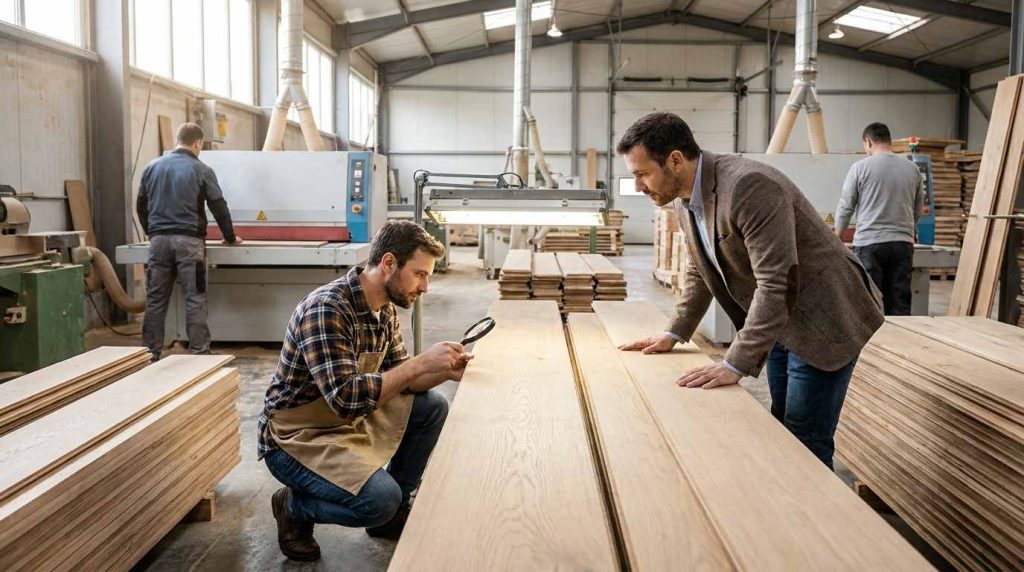
A reliable supplier offers more than a product catalog and price list. For B2B buyers, the priority is finding a partner who can maintain consistent specifications, meet production standards, and accommodate different project requirements. These capabilities influence installation quality, customer satisfaction, and order profitability.
Manufacturing experience is an important factor. Suppliers should understand wood grading, moisture control, milling tolerances, surface finishing, and packaging. Proper processes help minimize dimensional inconsistencies, surface defects, and installation waste. Product availability also matters. While some businesses require standard flooring dimensions, others need customized widths, thicknesses, finishes, or plank lengths. An experienced supplier should clearly explain available options, production requirements, pricing, and lead times.
Clear communication is equally essential. Buyers need reliable updates on quotations, sample approvals, production progress, inspections, and shipping documentation. Responsive suppliers can also help resolve issues before they affect larger projects.
What to Expect From an Engineered Hardwood Flooring Manufacturer
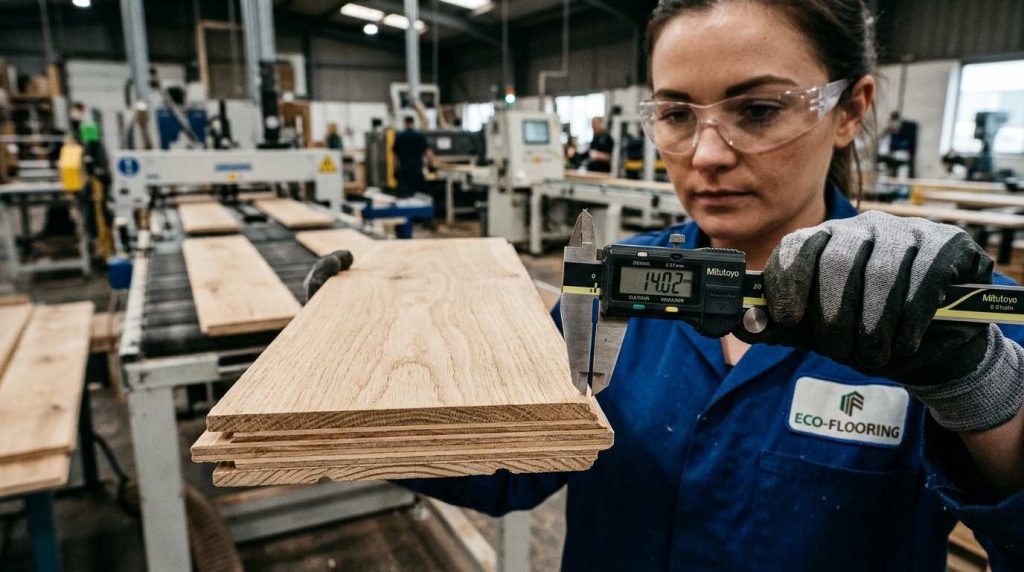
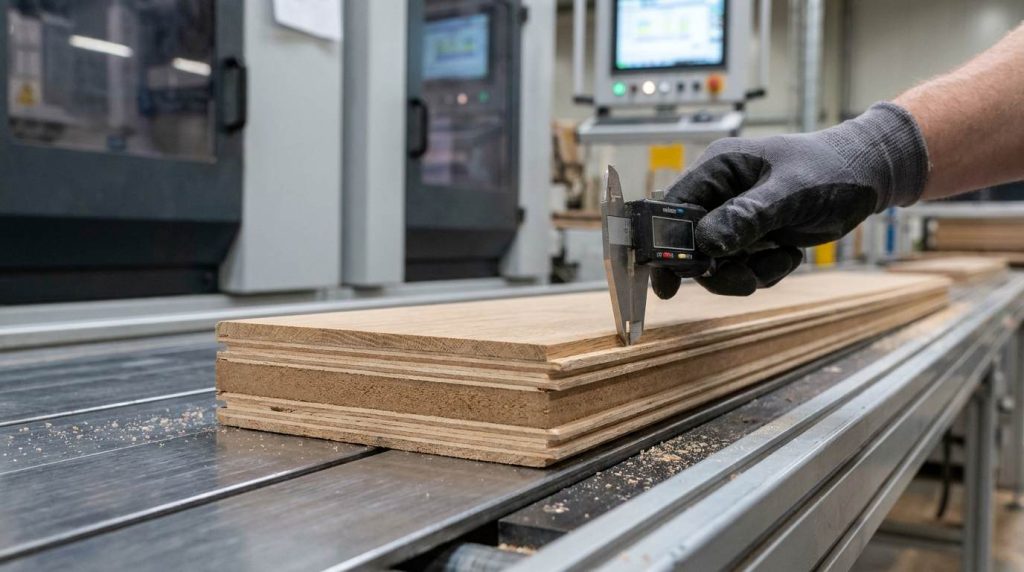
Engineered hardwood flooring is widely used in residential developments, hotels, offices, and commercial spaces. Its layered construction combines a real hardwood wear layer with a supporting core, offering dimensional stability under changing environmental conditions compared with traditional solid wood flooring.
However, performance depends on material quality, construction, and manufacturing precision. Buyers should request technical details instead of assuming all engineered products offer the same performance. An established manufacturer should explain the flooring’s layer structure, wear-layer thickness, core material, dimensions, surface treatment, and recommended installation method. Moisture specifications and acceptable production tolerances are also important when evaluating products for commercial projects.
Quality assurance deserves equal attention. Ask whether the manufacturer conducts moisture checks, dimensional inspections, surface grading, and final product assessments. Buyers should also understand how defects are handled when delivered products fail to meet agreed specifications. Packaging is another consideration for wholesale orders. Flooring should be protected against moisture, handling damage, and transportation risks. Clear carton labeling and proper pallet preparation also simplify warehouse management, particularly when handling multiple product specifications.
Some buyers search for Engineered Hardwood Floor Manufacturers because they want direct access to production capabilities rather than relying on intermediaries. Direct sourcing can improve communication and provide better visibility into specifications. However, minimum order quantities, quality documentation, production capacity, and after-sales support should still be evaluated. Ultimately, choosing an expert hardwood flooring supplier means finding a partner whose manufacturing standards can support the quality and performance requirements of your projects.
How Wood Species Affect Engineered Hardwood Flooring Selection
Wood species influence the appearance, hardness, grain pattern, and finishing options of engineered hardwood flooring. Choosing the right species requires balancing design preferences with the intended application.
Oak is popular for its versatile grain and broad design appeal. Its natural color variations suit contemporary interiors, hotels, offices, and residential developments. Different finishing techniques can create lighter, darker, or textured appearances.
Teak features distinctive grain patterns and naturally occurring oils associated with durability. It is often selected for premium interiors that benefit from warm tones and recognizable wood character. Buyers should still verify construction quality, finishing specifications, and sourcing documentation. Hevea, also known as rubberwood, offers an alternative for businesses seeking lighter wood tones and different price points. Its suitability depends on construction, drying processes, protective treatments, and intended application.
Businesses researching Hevea Engineered Hardwood Floor Manufacturers should examine core construction, moisture management, surface quality, and available finishes. Similarly, buyers comparing Teak Engineered Hardwood Floor Manufacturers should evaluate wear-layer thickness, grade consistency, finish durability, and timber traceability.
Hardness is another consideration for spaces exposed to frequent foot traffic and furniture movement. However, overall flooring performance also depends on finish quality, installation methods, maintenance, and environmental conditions. An expert hardwood flooring supplier should help buyers compare these factors through clear specifications and product samples, making it easier to select flooring that meets both design expectations and practical requirements.
What B2B Buyers Should Verify Before Placing a Flooring Order

Before placing a wholesale order, buyers should establish clear requirements and agree on commercial terms. Misunderstandings about dimensions, finishes, or packaging can become costly when thousands of square feet are involved.
Start by confirming technical specifications, including wood species, product construction, plank dimensions, wear-layer thickness, surface finish, grade, and manufacturing tolerances. Ensure the flooring is suitable for the intended installation method and commercial environment.
Next, request physical samples to evaluate color, grain, texture, and workmanship. For larger projects, confirm in writing that approved samples represent the agreed product standard. Natural wood variations should also be discussed beforehand. Pricing should cover all relevant order terms. Clarify charges for packaging, customization, and inspection, as well as applicable Incoterms, shipping responsibilities, insurance, payment schedules, and destination costs for international purchases. Minimum order quantity (MOQ) also deserves attention. Customized finishes or dimensions may require larger commitments than standard products. Compare these requirements with warehouse capacity, cash flow, and expected sales volume.
Request a clear production schedule, estimated manufacturing timeline, and shipping window. This is particularly important when flooring must arrive before installation or when multiple suppliers coordinate a commercial project. Before shipment, verify the required documentation. Depending on the destination, this may include commercial invoices, packing lists, certificates of origin, timber legality documents, and relevant product certifications. Importers should confirm applicable requirements with local authorities. Finally, clarify the inspection and claims process. Understand how to report damaged cartons, specification discrepancies, or quality issues, including submission deadlines and required evidence. These preparations help businesses evaluate an expert hardwood flooring supplier through measurable standards rather than relying solely on marketing promises.
Choosing a Hardwood Flooring Supplier for Long-Term Business Needs

A good sourcing relationship should deliver value beyond the first shipment. For distributors and commercial buyers, consistency across repeat orders is just as important as initial product quality.
Start by assessing whether the supplier can meet your purchasing volume. Growing businesses may require greater production capacity, additional product options, or better inventory planning. Discuss these needs early to understand how the supplier handles changing demand.
Product consistency is equally important. Differences in color, dimensions, finishes, or grading between shipments can create problems for retailers and contractors. Ask how specifications are recorded and maintained for repeat orders. Customization can also support business growth. Depending on production capabilities, options may include specific finishes, packaging, branding, and dimensions. For OEM or private-label arrangements, clarify branding ownership, approval procedures, and minimum order quantities. Sustainability is another consideration in international flooring markets. Check whether suppliers provide documentation covering timber origin, legal sourcing, and applicable environmental certifications. Responsible sourcing claims should be supported by valid evidence.
Communication also matters. Suppliers who respond promptly, explain limitations honestly, and provide realistic delivery schedules can help businesses manage purchasing decisions more effectively. When evaluating an expert hardwood flooring partner, consider total sourcing costs, including product pricing, shipping, quality-related losses, and potential delivery delays.
FAQ
- What is the typical MOQ for wholesale hardwood flooring?
MOQ varies by supplier, wood species, product specifications, and customization requirements. Request a quotation based on your preferred product and order volume.
- How long does production and shipping usually take?
Timelines depend on order size, manufacturing schedules, customization, and shipping destination. Confirm production and transit estimates before finalizing your purchase.
- Do hardwood flooring suppliers offer OEM or private label?
Many suppliers offer these services, subject to their capabilities and minimum order requirements. Confirm branding options, packaging specifications, and approval procedures in advance.
- Which certifications matter when importing hardwood flooring?
Relevant documents may include FSC or PEFC chain-of-custody certification, where applicable, and timber legality documentation. Requirements depend on the product, origin, destination, and applicable regulations.
Building a reliable flooring supply chain starts with choosing quality products and partnering with a manufacturer that understands your business goals. From selecting the right wood species to maintaining consistent product standards and dependable production schedules, every detail matters for long-term sourcing success. Working with an experienced expert hardwood flooring supplier can help your business meet customer expectations while creating greater confidence in repeat orders.
Ready to find the right hardwood flooring partner for your next project? Make Jati Luhur Agung your sourcing partner. Visit our website today to explore available products, discuss your specifications, and contact the Jati Luhur Agung team to find the right flooring solutions for your wholesale or commercial requirements.
Take the next step toward building a stronger and more dependable flooring supply chain with Jati Luhur Agung.
-

Sourcing Thin Wood Cutting Boards for Wholesale Buyers
Wooden kitchen accessories remain popular with retailers and distributors seeking practical products with a natural appearance. Cutting boards are everyday essentials that can also complement a kitchen’s style. For wholesalers, thinner designs offer lightweight options that are easy to handle, store, and display. Sourcing these products in bulk requires more than comparing prices. Buyers need…
-

Expert Hardwood Flooring Supplier: A B2B Buyer’s Guide
Choosing the right flooring partner is an important decision for distributors, importers, contractors, and commercial project developers. Beyond attractive wood patterns and competitive prices, businesses need consistent product quality, dependable production schedules, clear specifications, and reliable communication. These factors become even more important when purchasing large quantities or managing projects with strict deadlines. Working with…
-

Amsterdam White Oak Engineered Hardwood Flooring for Commercial Projects
Selecting flooring for a commercial property involves more than choosing an attractive color. Businesses must consider durability, maintenance, installation conditions, long-term appearance, and the demands of daily use. For hotels, offices, retail spaces, apartments, and hospitality developments, flooring also shapes the impression a property creates for visitors, tenants, and customers. Amsterdam white oak engineered hardwood…
- By:PT. Jati Luhur Agung
- Tags: buyers wood guide, wood supplier
- Category: Engineered Wood
- 0 comment