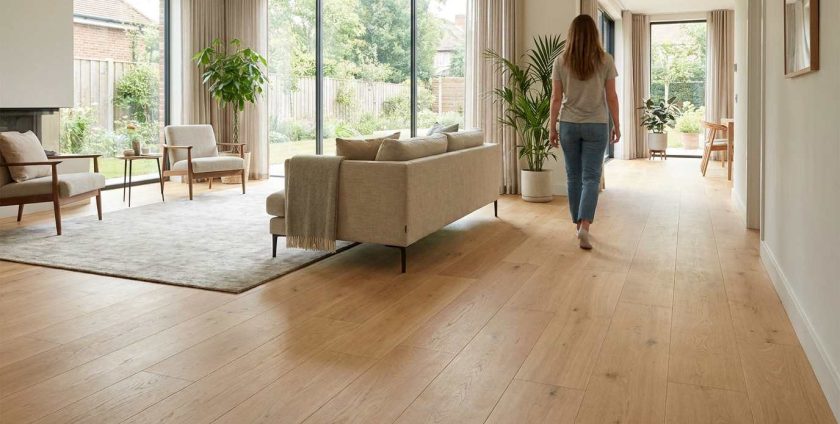
Hevea engineered flooring can bring a warm, natural character to an interior while offering the practical structure needed for everyday use. Made with a real wood surface and engineered construction, this flooring can be a suitable choice for homes, offices, hospitality spaces, and other interiors where appearance and stability both matter. However, good performance does not come from the flooring material alone. The condition of the subfloor, installation environment, moisture level, cleaning routine, and daily use all influence how well a floor performs over time.
That is why knowing a few practical hevea engineered flooring tips before buying and installing the floor can make a meaningful difference. Rather than focusing only on color or grain, consider the conditions in the room, the construction of the flooring, and the maintenance it will require. With the right preparation and care, Hevea flooring can retain its natural appearance and provide a comfortable surface for years.
Another consideration is the purpose of the room. Bedrooms and private living spaces may prioritize comfort and visual warmth, while offices, showrooms, and hospitality areas may place greater emphasis on traffic resistance and ease of care. Thinking about how people will actually use the space helps prevent choosing a floor based on appearance alone. It also makes it easier to discuss technical requirements with a manufacturer or installer before production and installation begin.
Natural wood also benefits from thoughtful design planning. Samples should be viewed under the lighting conditions of the actual project because daylight, artificial lighting, wall colors, and furniture can change how the wood tone appears. Reviewing samples in context can help create a more balanced final result before placing the final flooring order.
Choose the Right Hevea Engineered Flooring for Your Space
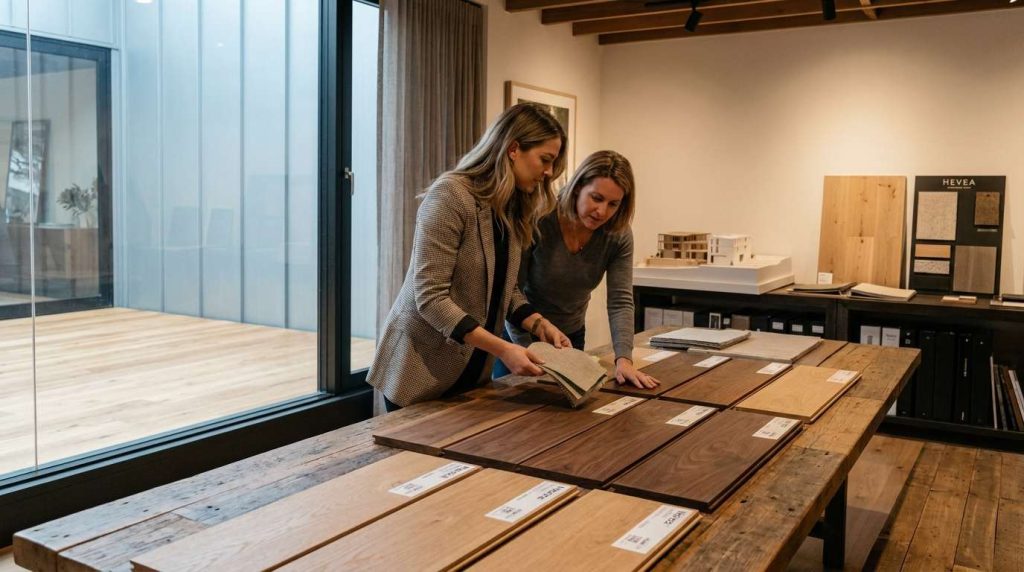
The first step is choosing a flooring specification that suits the room where it will be installed. Not every interior has the same traffic level, temperature, humidity, or maintenance requirements. A quiet bedroom has different demands from a busy office, hotel corridor, retail area, or living room.
Start by considering the expected level of foot traffic. Areas that receive frequent movement need flooring with appropriate construction, surface quality, and wear characteristics. In a residential setting, you may have more flexibility, while commercial applications generally require closer attention to durability and installation requirements.
The visual character of Hevea should also be considered. Natural wood can contain variations in grain, tone, and texture, and these features are part of its appeal. Decide whether the desired interior calls for a more uniform appearance or a design that highlights natural variation. The finish is equally important because it affects how the surface looks and how easy it is to maintain.
For projects that require consistent quality and reliable specifications, working with experienced Engineered Hardwood Floor Manufacturers can help simplify the selection process. A knowledgeable manufacturer can provide information about construction, wood sourcing, grading, finishing, and suitable applications.
A useful approach is to treat hevea engineered flooring tips as a planning tool rather than a last-minute checklist. The more clearly the project requirements are defined before ordering, the easier it becomes to select flooring that fits both the design and the practical demands of the space.
Prepare the Subfloor Before Installation
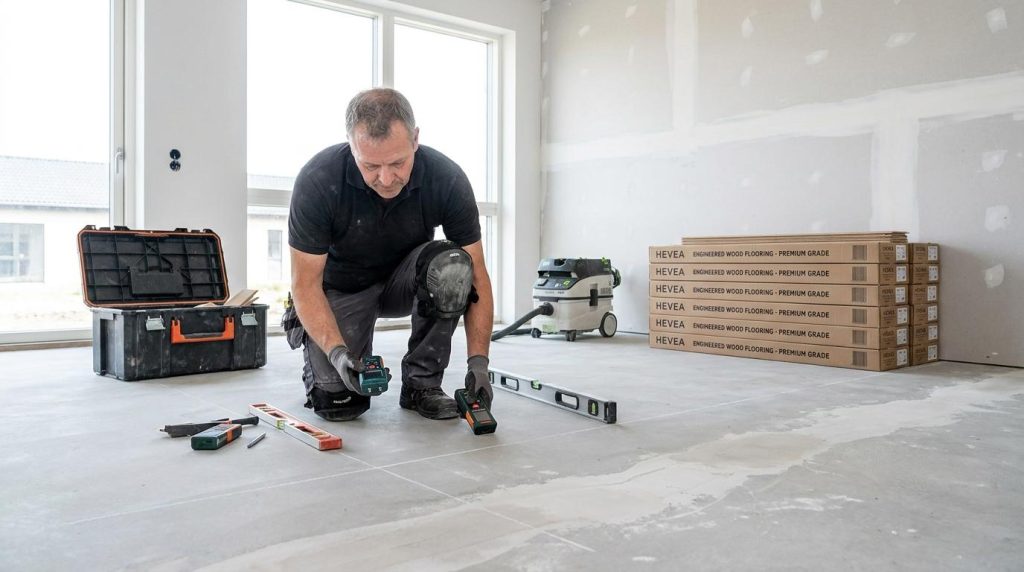
Even high-quality engineered flooring can perform poorly when installed over an unsuitable subfloor. Subfloor preparation is therefore one of the most important parts of the installation process.
The surface should be clean, dry, stable, and sufficiently level for the selected installation system. Dust, debris, loose material, old adhesive residue, and other contaminants can interfere with bonding or create uneven areas beneath the boards. Any significant cracks, movement, moisture problems, or irregularities should be assessed and corrected before installation begins.
Moisture deserves particular attention. Concrete subfloors can retain moisture even when the surface appears dry. Depending on the project and flooring system, moisture testing may be necessary before installation. The acceptable moisture level should follow the flooring manufacturer’s recommendations and the requirements of the installation system.
The installation environment should also be appropriate for the flooring product, adhesive, underlayment, and other materials being used. Following the installation instructions is more reliable than relying on assumptions based on previous flooring projects.
Acclimate Engineered Flooring Before Installation
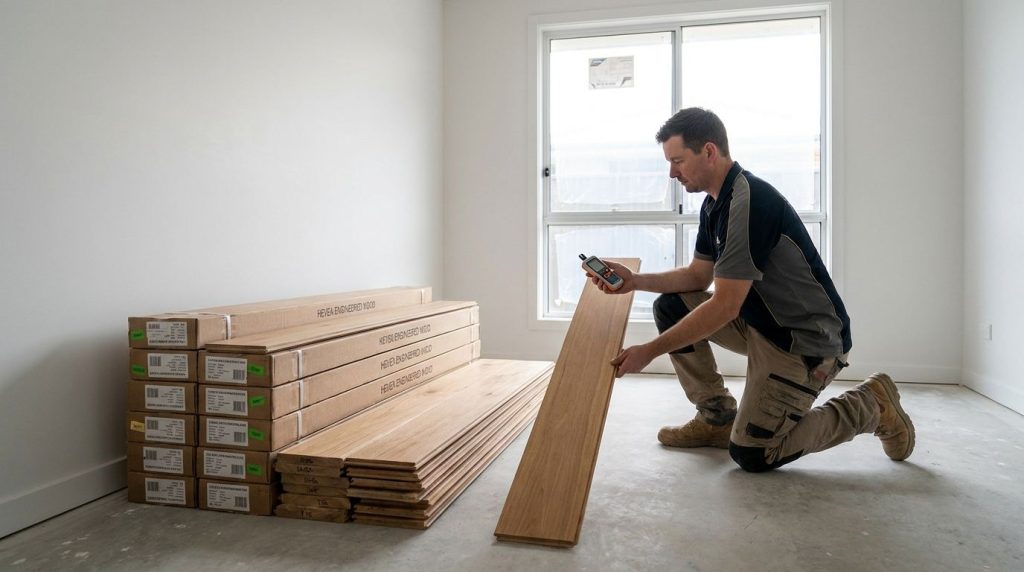
Acclimation gives engineered flooring time to adjust to the environmental conditions of the installation area. This step should not be treated as an optional formality. Wood is a natural material that responds to changes in moisture and temperature, so allowing the flooring to reach a suitable condition before installation can help reduce the risk of unwanted movement.
The exact acclimation procedure depends on the flooring construction, packaging, site conditions, and manufacturer’s instructions.
For projects sourcing products from Hevea Engineered Hardwood Floor Manufacturers, it is important to follow the specific technical guidance provided for the flooring rather than assuming that one acclimation period applies to every product. The manufacturer’s recommendations should always take priority.
Before the flooring is delivered, the room should ideally be ready for installation. Wet trades should be completed, major sources of moisture should be controlled, and the building should be maintained within the conditions recommended for the flooring. Bringing boards into an unfinished or highly variable environment can undermine the purpose of acclimation.
Following these hevea engineered flooring tips can help create a more controlled installation process. Acclimation does not eliminate every possibility of movement, but it supports better preparation and allows the flooring to enter the installation stage under more suitable conditions.
Protect Hevea Engineered Flooring From Moisture and Humidity
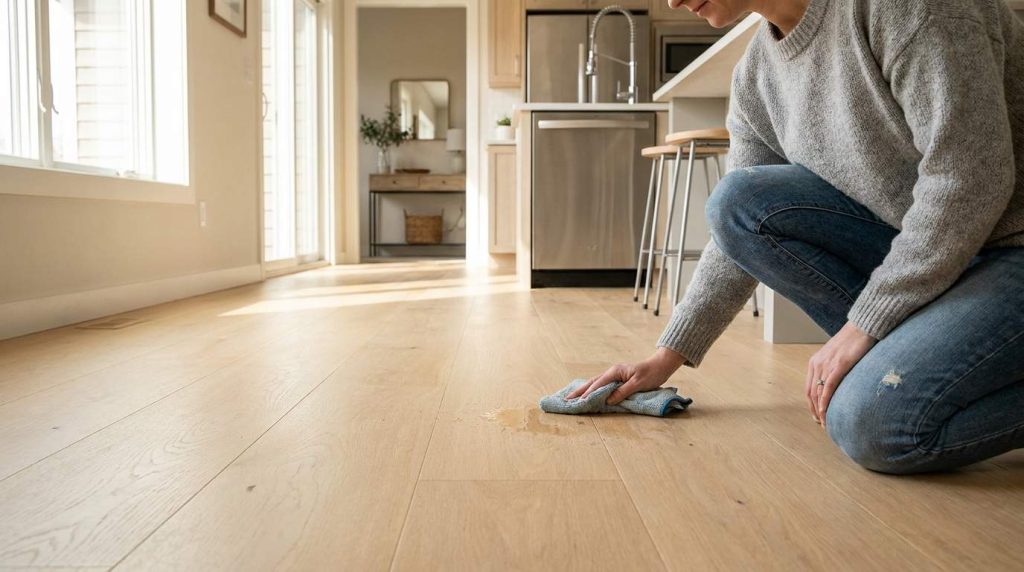
Moisture is one of the key environmental factors to manage throughout the life of a wood floor. Although engineered construction can provide improved dimensional stability compared with some solid wood applications, it does not make wood completely unaffected by moisture.
Keep standing water away from the floor whenever possible. Spills should be wiped up promptly rather than being left on the surface. Pay extra attention to areas around sinks, entrances, kitchens, bathrooms, and other locations where water may be introduced during everyday activities.
Indoor humidity should also be kept within a reasonable range recommended for the flooring. Large or prolonged changes in humidity can contribute to expansion, contraction, gaps, or other forms of movement. Consistent indoor conditions are generally more favorable for wood flooring than repeated swings between very dry and very humid environments.
If the building has a history of leaks, condensation, rising damp, or other moisture-related issues, those problems should be addressed before the floor is installed. Otherwise, the flooring may be exposed to conditions that routine maintenance cannot correct.
Entrance areas deserve special attention because outdoor moisture, dirt, and grit can be carried inside by footwear. Mats placed at entrances can help reduce the amount of moisture and abrasive particles that reach the floor. In commercial settings, an effective entrance system can be particularly useful because of higher levels of foot traffic.
Maintain the Floor With Simple Cleaning Habits
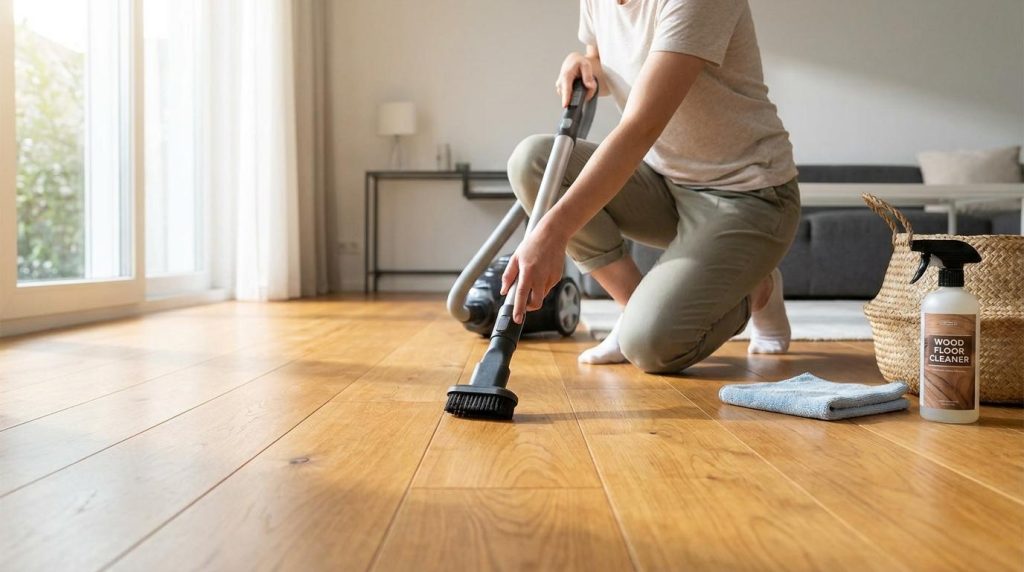
Routine maintenance does not have to be complicated. In many cases, simple habits can prevent dirt and grit from becoming a long-term problem. Fine particles carried by shoes can act as abrasives when repeatedly walked across the floor, so regular removal helps protect the finish.
Sweep or vacuum the surface regularly using equipment suitable for wood flooring. A soft cleaning attachment can help reduce the chance of scratching the finish. For light cleaning, use a well-wrung damp mop only when recommended by the flooring manufacturer, and avoid saturating the surface with water.
Cleaning products should also be selected carefully. Strong chemicals, abrasive cleaners, or products not intended for finished wood surfaces may affect the appearance or performance of the finish. Always check the flooring care instructions before introducing a new cleaning product.
Inspect the floor periodically rather than waiting for a visible problem to become serious. Small scratches, finish wear, loose components, or moisture-related changes may be easier to manage when noticed early. A consistent maintenance routine can also make the floor easier to keep clean.
Another practical point in hevea engineered flooring tips is to avoid excessive water during cleaning. Wood flooring generally benefits from controlled moisture rather than heavy wet cleaning. The goal is to remove dirt while keeping the surface as dry as practical
Choosing the right flooring is only one part of creating a lasting interior. Proper installation, a suitable environment, and consistent care also play an important role in how the floor performs over time. When these elements are considered together, Hevea engineered flooring can offer more than natural visual appeal. It can provide a comfortable and durable surface for everyday use while preserving the distinctive warmth and character of real wood, making it suitable for spaces where practicality and natural aesthetics need to work together seamlessly.
For projects that require dependable engineered wood flooring while retaining the natural character of Hevea, Jati Luhur Agung offers wood flooring solutions backed by decades of manufacturing experience. The company has been producing wood flooring and components since 1974, with a focus on Indonesian-made wood products and controlled manufacturing processes. Whether the project is residential, commercial, hospitality, or another interior application, you can explore Jati Luhur Agung through jla.co.id to find flooring solutions suited to your specific requirements.
Choosing the right Hevea engineered flooring is only the beginning of creating a floor that performs well over time. Proper preparation, installation, moisture control, and regular maintenance all contribute to maintaining its appearance and performance. By considering these factors from the start, you can make a more confident flooring decision for your space.
Ready to find the right Hevea engineered flooring for your project? Speak with the our team to discuss your project requirements, explore available specifications and finishes, and identify a flooring solution that fits your space.
-
Hevea Engineered Flooring Tips for Better Performance and Longevity
Hevea engineered flooring can bring a warm, natural character to an interior while offering the practical structure needed for everyday use. Made with a real wood surface and engineered construction, this flooring can be a suitable choice for homes, offices, hospitality spaces, and other interiors where appearance and stability both matter. However, good performance does…
-
Amsterdam Engineered Wood Flooring for Commercial Projects
Amsterdam combines historic architecture with modern offices, hotels, restaurants, and retail spaces. Each setting has a different atmosphere, but flooring has to serve a common purpose: it should look good, cope with daily use, and remain practical to maintain. For designers exploring natural timber, Amsterdam engineered wood can offer a balance between visual character and…
-
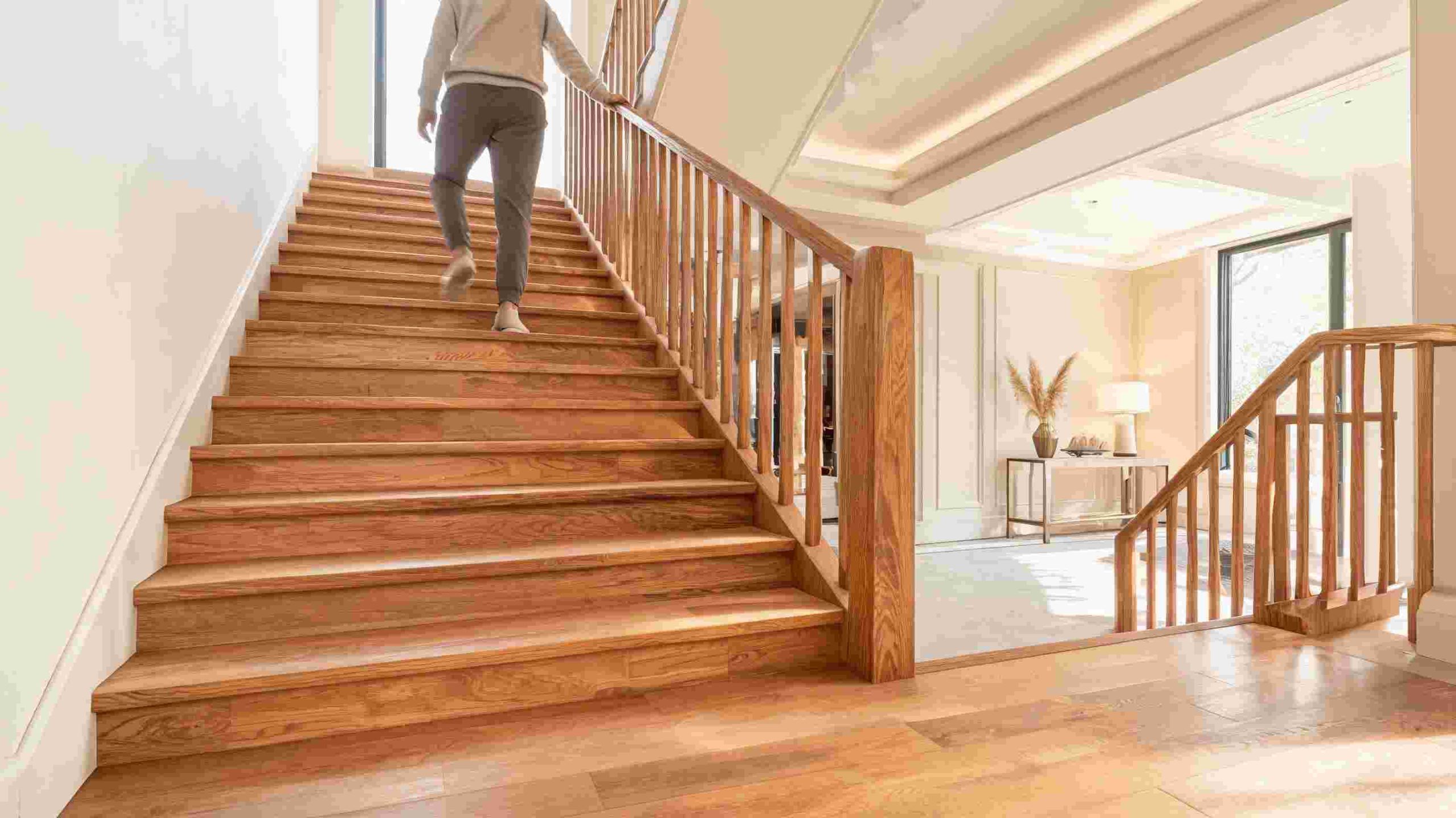
Is Engineered Wood Flooring Suitable for Stairs?
Stairs are more than a way to move between floors. They are a visible part of an interior and become architectural details people notice. Because they are used every day, the material chosen for a staircase needs to balance appearance, durability, safety, and maintenance. Natural wood remains a popular option because it brings warmth and…
- By:PT. Jati Luhur Agung
- Tags: engineered hardwood, Engineered Hardwood Floor Manufacturers, hevea engineered
- Category: Engineered Wood
- 0 comment