Basketball is no longer confined to school gyms or professional arenas. Across the UK, the sport has become part of urban culture, education, and even lifestyle-driven property development. From public regeneration projects in London boroughs to private sports facilities in Manchester and Birmingham, basketball courts are being built, rebuilt, and redesigned at a rapid pace. With this growth comes a renewed focus on standards, precision, and performance especially when space, safety, and long-term durability are involved.
Social media has also played a role. Viral clips of streetball tournaments, outdoor training routines, and architectural court designs have sparked curiosity among players and property owners alike. Many people are inspired to create their own courts, yet quickly realize that the most basic question is often the most confusing: how big is a basketball court, and which standard should be followed in the UK?
This is not merely a technical detail. Court size directly influences player spacing, injury prevention, tactical movement, and even maintenance costs over time. A court built a few centimeters off standard can feel cramped, distort gameplay rhythm, and create long-term usability issues. That is why understanding official dimensions and markings is essential before construction begins.
How Big is a Basketball Court in the UK?
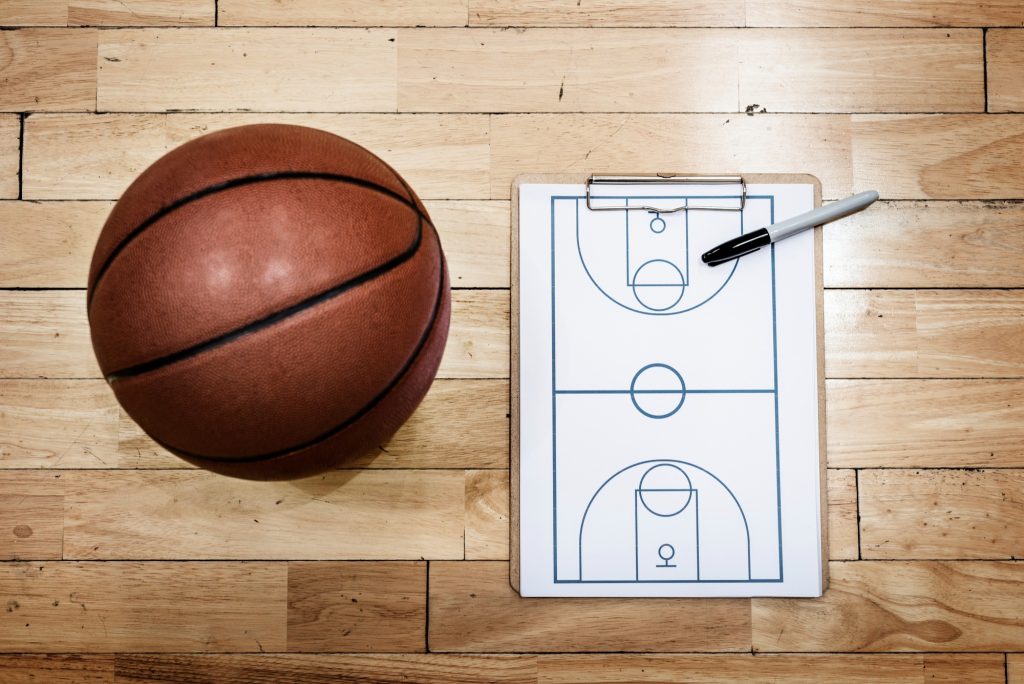
In the United Kingdom, basketball courts are built in accordance with FIBA regulations, which govern most national and international competitions outside North America. These standards are widely adopted by schools, universities, community sports centers, and professional facilities across the country. When discussing how big is a basketball court, a full-size FIBA court measures 28 meters in length and 15 meters in width, creating a rectangular playing surface designed for balanced spacing and consistent gameplay.
However, focusing only on the painted playing area can be misleading. A well-functioning court must be planned as a complete environment, not just a marked rectangle. FIBA guidelines place strong emphasis on safety and operational efficiency beyond the boundary lines.
A minimum clearance zone of 2 meters is required on all sides of the court. This space allows players to slow down safely, prevents collisions with walls or equipment, and provides room for officials to operate without interfering with play. In professional venues, this clearance may be extended to accommodate team benches, scorer tables, and media equipment.
Vertical space is equally important, particularly for indoor courts. FIBA recommends a minimum ceiling height of 7 meters to ensure unobstructed ball movement, proper lighting distribution, and adequate ventilation. Facilities that fall short of this requirement may face limitations in both compliance and playing comfort.
NBA vs FIBA vs NCAA Dimensions
Basketball is a global sport, yet it is shaped by different regulatory philosophies depending on where it is played. Rather than applying a single universal standard, major governing bodies such as FIBA, NBA, and NCAA have established their own court dimensions to reflect the style of play, athlete profile, and competitive structure they promote. These differences influence everything from player spacing and tactical execution to facility planning and construction requirements.
Below is a clear comparison of official dimensions used by each organization:
| Organization | Court Length | Court Width | Total Area |
| FIBA | 28 m (91.86 ft) | 15 m (49.21 ft) | 420 m² |
| NBA | 28.65 m (94 ft) | 15.24 m (50 ft) | 436.3 m² |
| NCAA | 28.65 m (94 ft) | 15.24 m (50 ft) | 436.3 m² |
At first glance, the differences may seem minimal. However, the additional length and width of NBA and NCAA courts create a noticeably more open playing environment. This extra space supports isolation-based offenses, wider driving lanes, and deeper corner positioning, all of which are characteristic of American basketball. The larger surface area also contributes to a slower, more physical game tempo that emphasizes individual matchups and strength.
FIBA courts, by contrast, are slightly more compact. This reduced footprint encourages quicker ball movement, closer defensive rotations, and faster transitions between offense and defense. As a result, FIBA-style basketball often places greater emphasis on teamwork, spatial awareness, and tactical discipline. Confusion often arises when people discuss how big is a basketball court without identifying which governing body they are referring to. While NBA dimensions are widely recognized due to global media exposure, they are not the official standard in most countries outside North America. In the UK, FIBA dimensions remain the primary reference for competitions, educational institutions, and public sports facilities, even though NBA-style courts may appear in branded venues or private training environments.
However, the specifications of a high-level court extend far beyond just its physical boundaries. While dimensions dictate the pace of the game, the actual composition of the playing surface is what defines the quality of movement and player safety. To understand this, one must first look at the fundamental facts regarding basketball flooring and the meticulous process behind its selection.
Basketball Court Markings
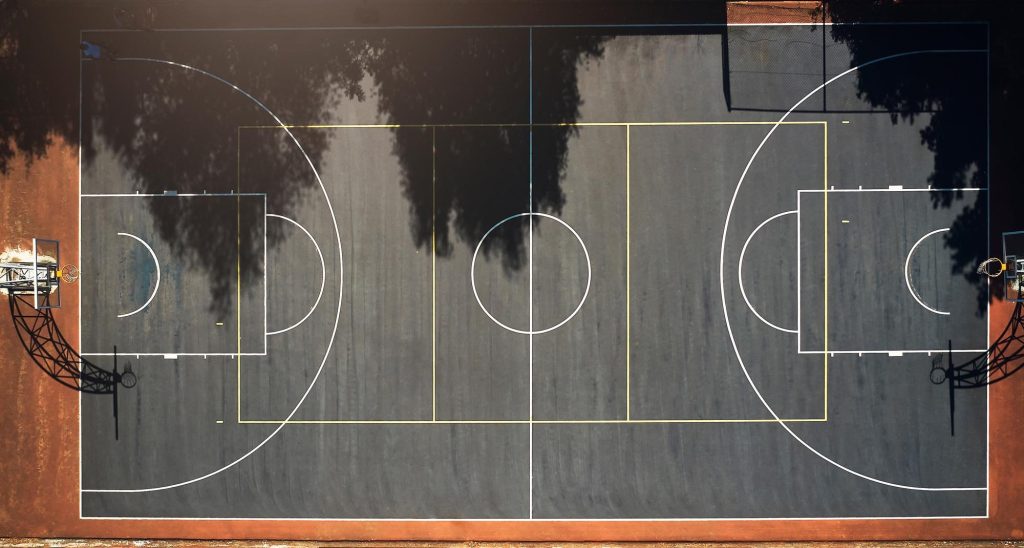
Court markings define how basketball is played at every level. More than simple visual guides, each line carries tactical, regulatory, and safety-related functions that shape player movement, officiating decisions, and the overall rhythm of the game. Accurate markings ensure that rules are applied consistently and that players can rely on spatial cues instinctively during fast-paced action.
On a FIBA-regulated court, the center line divides the playing surface into two equal halves, establishing balance and orientation. At its midpoint sits the center circle, with a radius of 1.8 meters, used for jump balls and game restarts. These elements provide the structural reference from which the entire court layout is aligned, making their accuracy essential for symmetry and fairness from the opening tip-off.
The three-point line is one of the most influential markings in modern basketball. Under FIBA regulations, it is positioned 6.75 meters from the basket, with the distance reduced to 6.6 meters at the corners due to court width limitations. This configuration subtly alters offensive spacing and shooting angles compared to NBA courts, encouraging ball movement and off-ball action rather than static isolation play.
Equally important is the free throw line, located 5.8 meters from the baseline, which defines the top of the key area—commonly known as the paint. This rectangular zone, measuring 4.9 meters wide, regulates post play, defensive positioning, and lane violations. Its dimensions influence rebounding dynamics, interior defense, and player positioning during set plays and free throw situations.
Additional markings include the no-charge semi-circle beneath the basket, designed to reduce dangerous collisions and clarify charging versus blocking fouls. The baseline and sidelines define the legal playing area and determine possession, out-of-bounds calls, and inbound positioning. Though visually simple, these boundary lines play a constant role in officiating accuracy and game flow.
All court lines must be applied with a uniform width of 5 centimeters, using durable, non-slip materials that remain visible under varied lighting conditions. Precision is critical. Even minor deviations in line placement or thickness can distort player perception, affect ball response, and lead to inconsistent officiating, reinforcing the importance of professional layout, measurement, and execution.
Half Court Dimensions
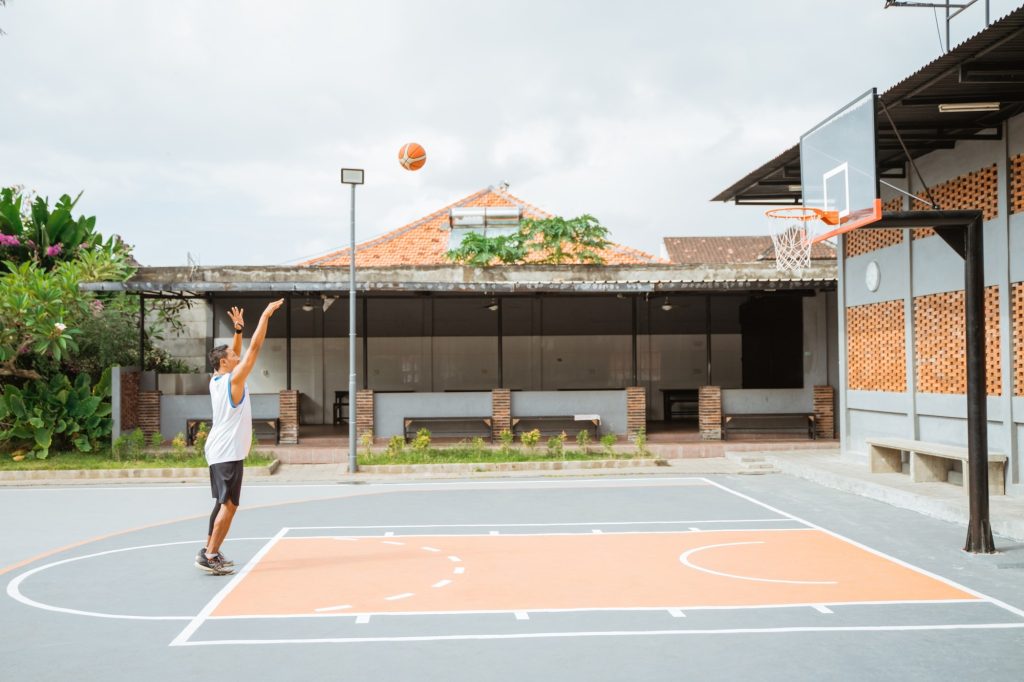
Not every basketball enthusiast has access to a large plot of land or a dedicated sports facility. For homeowners who want to enjoy the game without sacrificing too much space, a half court becomes the most realistic and efficient solution. This option is increasingly popular in residential areas, private villas, schools with limited land, and compact urban environments where maximizing function is more important than scale.
A standard FIBA half court typically measures 14 meters in length and 15 meters in width, using one basket while maintaining the full width of the court. This layout allows players to experience authentic shooting angles, proper spacing, and natural ball movement, making it ideal for individual training, family recreation, and casual games. The proportions remain familiar, so skills developed on a half court translate effectively to full-court play.
For homes with tighter outdoor areas, half courts can be customized and scaled down proportionally. The most important principle is not size, but balance. Preserving key reference points such as the free throw line, the three-point arc, and the distance from the basket, ensures that the court still feels natural and playable. Even with reduced run-off space, thoughtful planning can maintain comfort and safety.
When designing a home basketball court, functionality should take priority over visual size. A well-planned half court can support daily shooting practice, fitness routines, friendly competitions, and youth development without overwhelming the surrounding landscape. Many homeowners find that a compact yet well-built court integrates seamlessly into gardens, driveways, or side yards.
Outdoor half courts also require special attention to surface durability, drainage, and shock absorption. Exposure to weather, temperature changes, and moisture can quickly degrade poorly constructed courts. Choosing the right materials and installation method ensures consistent ball bounce, reduces joint impact, and keeps the surface safe over time. With professional planning and execution, a home half court can deliver long-term enjoyment while maintaining a clean, premium appearance that enhances the property rather than dominating it.
Frequently Asked Questions:
- How big is a basketball court?
A regulation basketball court generally measures between 28 and 28.65 meters in length and 15 to 15.24 meters in width, depending on the governing organization. These dimensions apply to the playing area itself and do not include additional safety clearance zones around the court. When planning a facility, extra space is always recommended to accommodate player movement, officials, and equipment placement without compromising safety or comfort.
- How far is the 3-point line from the basket in FIBA? Under
Under FIBA regulations, the three-point line is set at a distance of 6.75 meters from the center of the basket. At the corners, this distance is slightly reduced to 6.6 meters due to court width limitations. This configuration creates a balanced shooting challenge while maintaining consistent spacing for offensive and defensive play across international competitions.
- What are the size and dimensions of an NBA basketball court?
An NBA basketball court measures 94 feet (28.65 meters) in length and 50 feet (15.24 meters) in width. This slightly larger surface allows for wider offensive spacing, deeper corner movement, and a more isolation-oriented playing style. The increased size also influences pacing and physicality, which are characteristic of NBA-level games.
- Are FIBA, NBA, and NCAA courts the same size?
No, the dimensions are not identical. FIBA courts are marginally smaller than NBA and NCAA courts, particularly in overall length and width. While the differences may appear minimal on paper, they significantly affect gameplay flow, spacing, and tactical execution. For this reason, facilities should always align their court dimensions with the primary governing body they intend to follow.
- How far is a free throw?
The free throw line is positioned 4.6 meters (15 feet) from the face of the backboard across all major basketball regulations. This standardized distance ensures consistency in shooting mechanics and officiating, regardless of whether the game is played under FIBA, NBA, or NCAA rules.
- How wide are the lines on an NBA court?
All official court markings, including boundary lines and key markings, are 2 inches or 5 centimeters wide. This uniform width ensures visibility without interfering with ball movement or player footing, maintaining both aesthetic clarity and functional performance.
- How far are the timeout hashes from the baseline?
On NBA courts, timeout hash marks are located 28 feet from the baseline. These markings assist officials and teams in organizing inbounds plays and maintaining proper positioning during stoppages, contributing to smooth game management and consistent rule enforcement.
Understanding how big is a basketball court is not just about measurements; it is about creating a playing surface that performs consistently, supports proper movement, and remains reliable through years of intensive use. Accurate dimensions, precise markings, and carefully selected materials work together to influence player safety, game rhythm, and long-term maintenance efficiency.
For schools, developers, sports facilities, and private clients who demand dependable basketball court solutions, knowing how big is a basketball court also helps ensure proper planning, material selection, and long-term operational efficiency. This is where Jati Luhur Agung offers far more than technical execution alone. With deep expertise in hardwood sports flooring, structural preparation, and precision installation, every project is guided by a clear understanding of performance standards, environmental conditions, and usage intensity.
Jati Luhur Agung approaches each court as a complete system, where subfloor construction, material stability, and surface finishing are aligned to deliver consistent ball response and player comfort. From full-scale competition courts to customized solutions for unique spaces, the company transforms technical specifications into surfaces that feel balanced, durable, and professionally engineered. Supported by a proven track record across professional venues and bespoke developments, Jati Luhur Agung helps clients convert design intent into a long-term investment that enhances playability, visual quality, and structural value.
Discover trusted basketball court solutions and elevate your project with confidence at our official website! Click the button below!
-
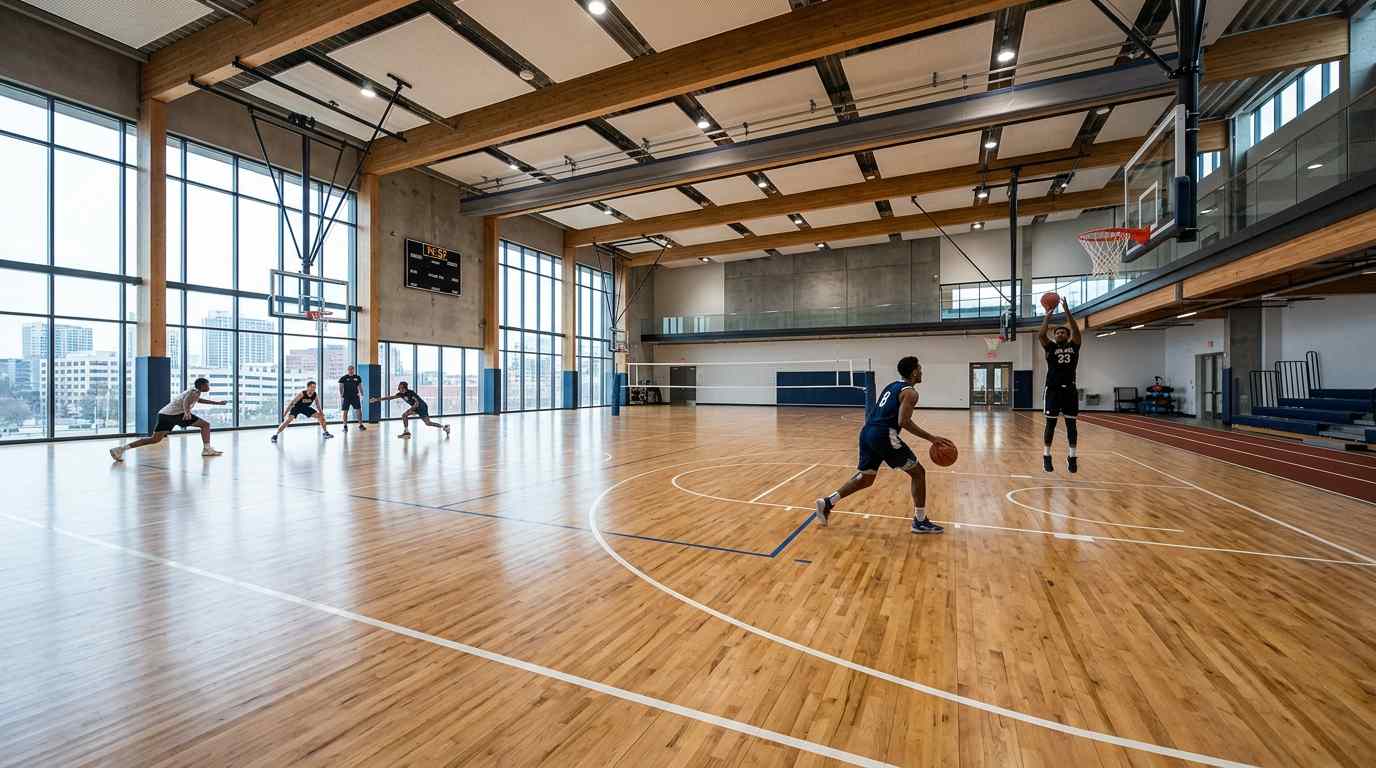
What Is a Wood Gym Floor? Expert Guide for Sports Facilities
The floor is one of the most important elements in an indoor sports facility. It affects how athletes move, stop, jump, land, and change direction. It also influences comfort, maintenance, and the appearance of the venue. For basketball courts, school gyms, training centers, and multipurpose halls, choosing suitable flooring is an important part of the…
-

What to Look for in an End Grain Cutting Board Manufacturer
Choosing the right cutting board manufacturer can be more important than it first appears. For retailers, distributors, restaurant suppliers, and kitchenware brands, the manufacturer behind a product directly influences its consistency, appearance, durability, and overall customer experience. A cutting board may look simple, but producing one that performs well requires careful material selection, precise processing,…
-
Hevea Engineered Flooring Tips for Better Performance and Longevity
Hevea engineered flooring can bring a warm, natural character to an interior while offering the practical structure needed for everyday use. Made with a real wood surface and engineered construction, this flooring can be a suitable choice for homes, offices, hospitality spaces, and other interiors where appearance and stability both matter. However, good performance does…
- By:PT. Jati Luhur Agung
- Tags: how big is a basketball court, sports floor
- Category: Sports Floor
- 0 comment